Soft metamaterial dampens vibrations at the touch express
An ordinary rubber pad dampens vibration the way a thick blanket muffles sound: the thicker and heavier, the better. Engineers have long dreamed of a material that is light yet "eats" oscillations as well as a massive damper. In the new study, such a material was assembled from two disparate parts: a soft elastic lattice printed on a 3D printer and tiny droplets of liquid metal hidden inside it.
The key to success lies in how these two components interact. The elastomer lattice provides elasticity and shape, while the liquid metal droplets, located in the lattice channels, begin to resonate at the desired frequency. Together they create a "band gap": waves at a frequency of about 200 hertz (roughly the hum of a transformer or the vibration of a power tool handle) cannot pass through the material but are reflected or attenuated within it. At the same time, the material itself remains soft and flexible, like ordinary silicone.
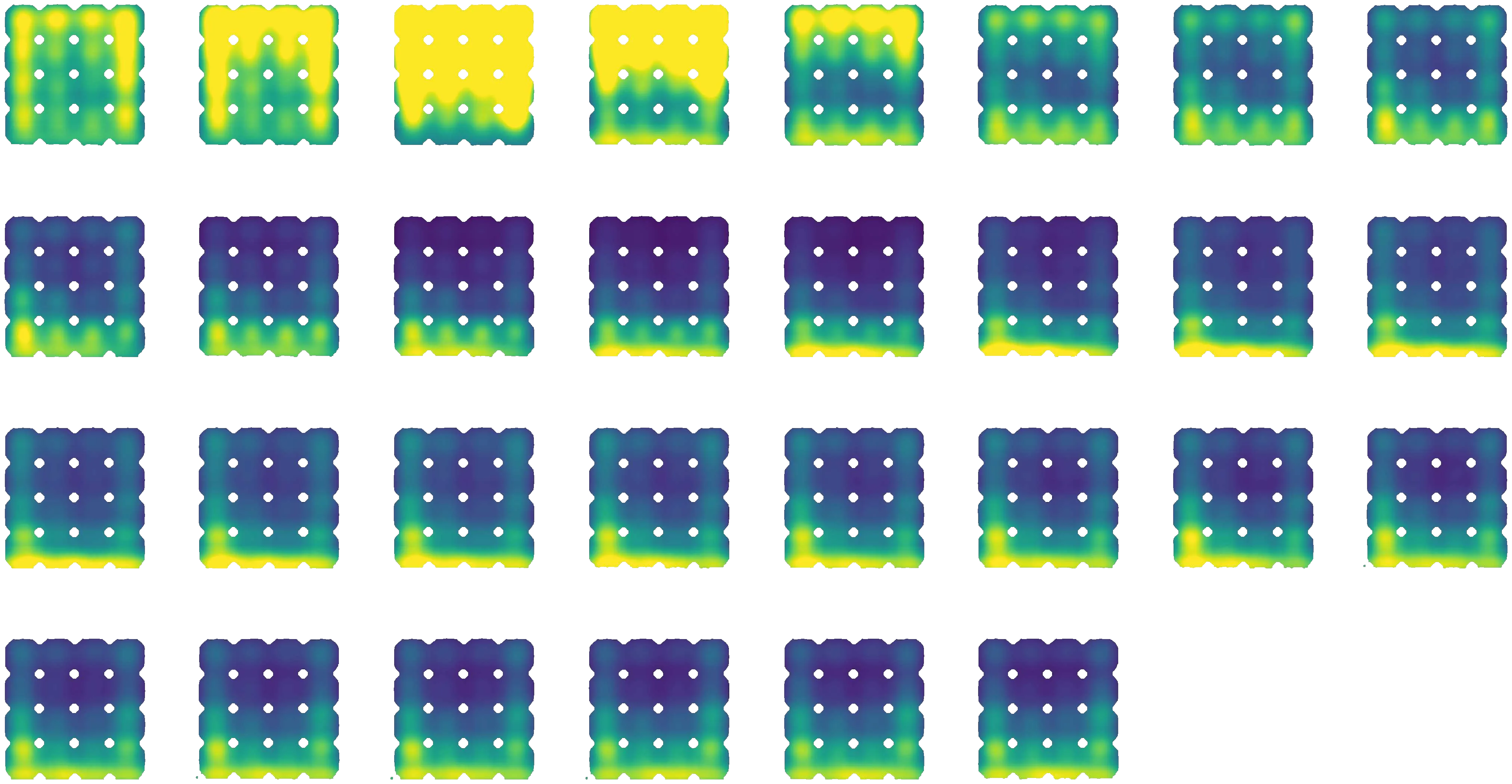
To see how waves behave inside the metamaterial, the scientists used a camera that captures rapid surface oscillations. This allowed them to directly observe how waves "get stuck" at the edge of the band gap and do not propagate further. Accelerometer measurements confirmed that the new material dampens vibrations more strongly than ordinary silicone, while weighing half as much.
This combination (lightness, softness, and strong vibration absorption) makes the material promising for tool handles, sports equipment, and protective pads. Instead of adding thickness and mass, one could use a smart internal structure that "catches" harmful vibrations and does not transmit them to the person.
The liquid metal inside the elastomer is typically an alloy of gallium and indium, which remains liquid at room temperature and is safe for the skin, unlike mercury.