How a Dwarf Galaxy Shook the Milky Way express
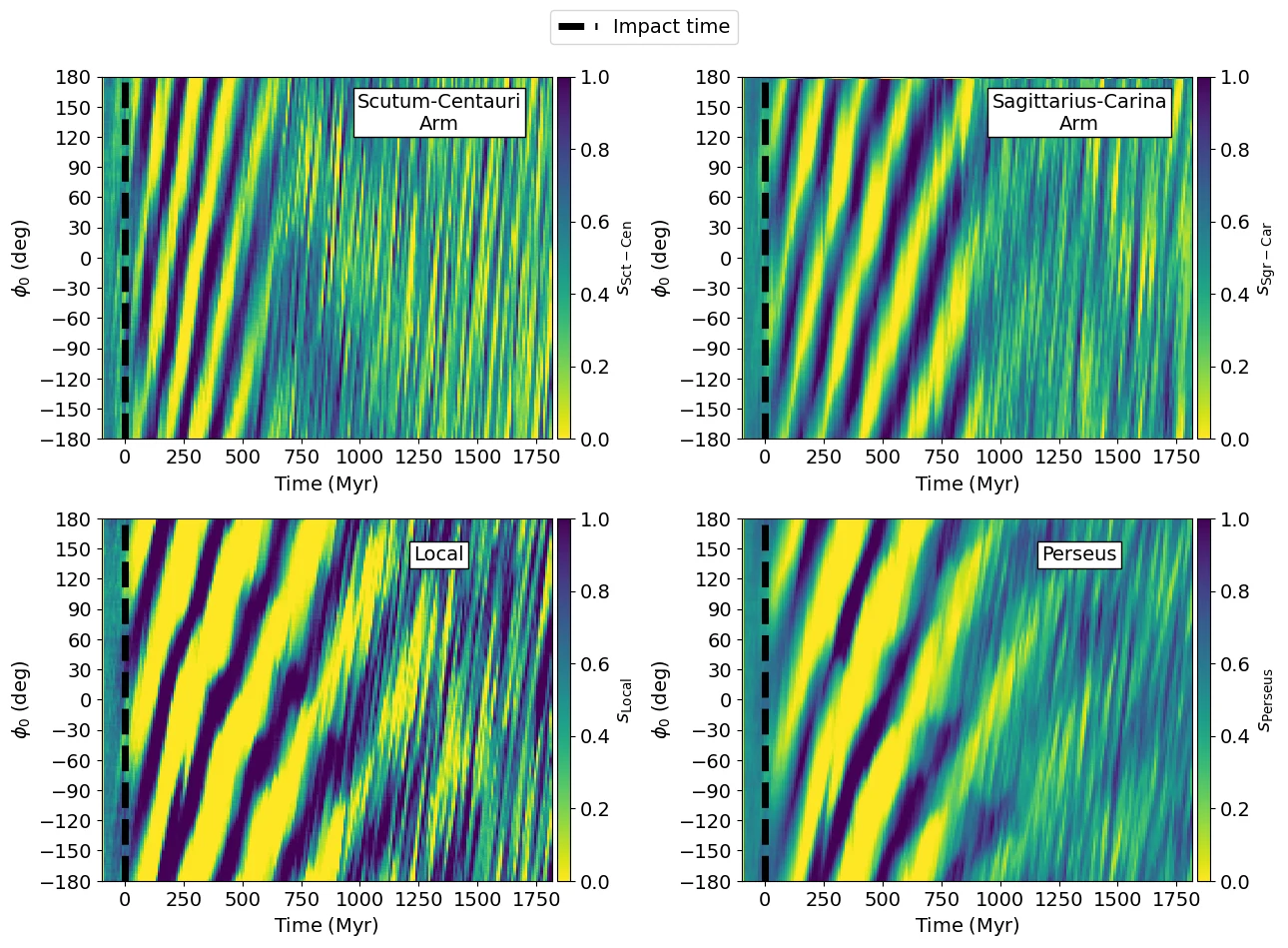
The Sagittarius galaxy plunged into the disk of the Milky Way and passed through again and again, like a stone thrown into a still pond. Each strike left ripples: waves and warps in the star field. Once, Sagittarius brimmed with invisible mass (dark matter), but the collisions stripped away its gas and stars, turning it into a faint trail.
Astronomers simulated the last major impact about a billion years ago to see if it could spawn spiral arms, a warped disk, and subtle oscillations in star velocities. Motion measurements via spectroscopy confirmed: the impact explains the arms and warp, but more complex wave patterns aren’t fully reproduced. So our Galaxy remembers other shoves — from the dense central bar or other dwarf companions.
The most surprising part: Sagittarius itself has nearly vanished, but its dark matter likely still permeates the Milky Way, invisibly swaying stellar orbits. Like cosmic detectives, scientists piece together the Galaxy’s violent past.
The Sagittarius dwarf galaxy is still visible in the sky as a faint ribbon of stars, stretched thin by the Milky Way's gravity.