Light Faster Than Thought: Catching Particles in 33 Picoseconds express
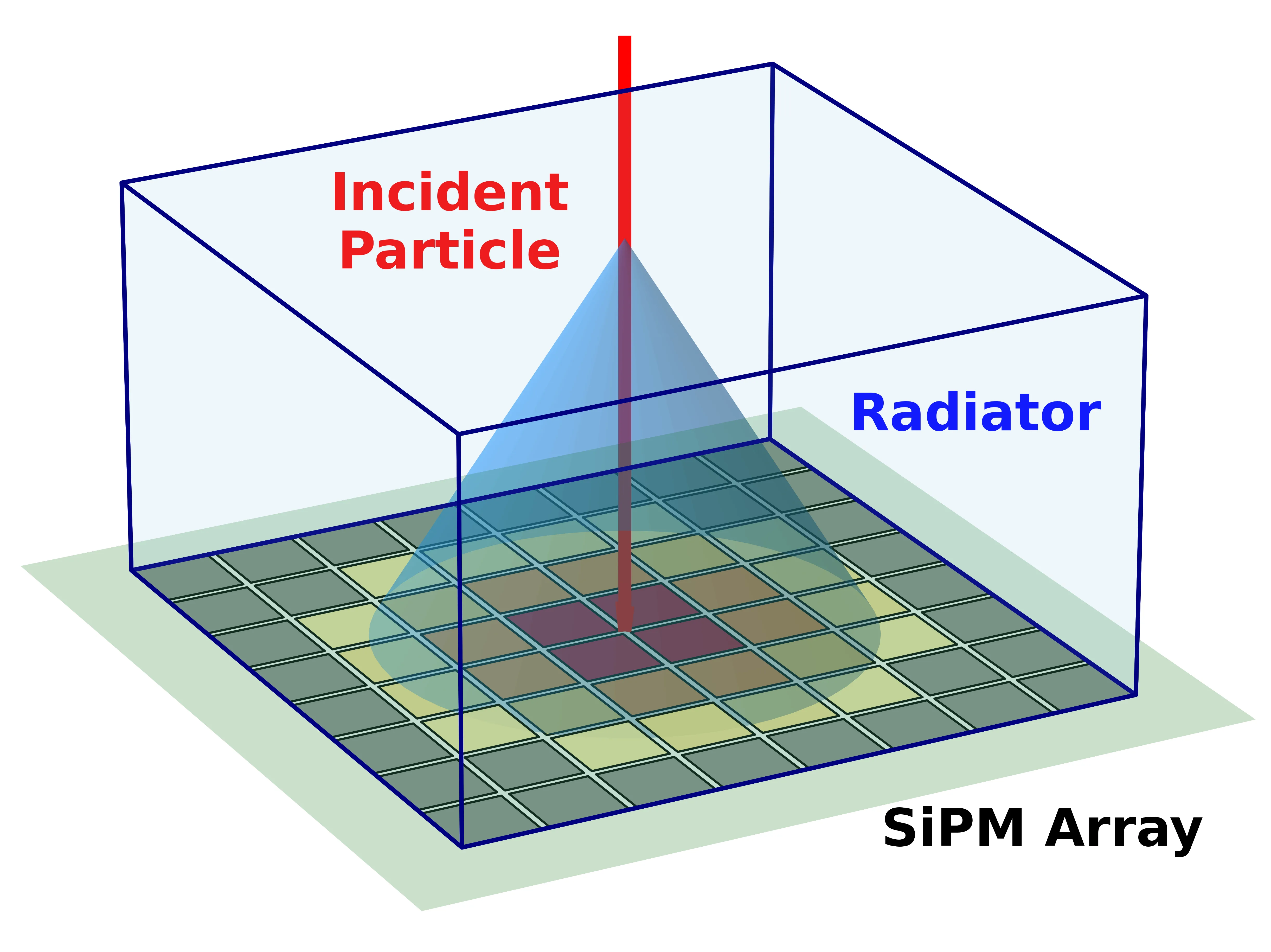
When a particle zips through a transparent material faster than light can travel through it, it leaves behind a faint blue flash, just as a jet breaking the sound barrier creates a shock wave. This Cherenkov radiation fires instantly, with no delay, making it perfect for ultra-precise timing in the world of elementary particles.
Scientists built the detector from a thin plate with a high refractive index and silicon photomultipliers — devices that convert single photons into electrical signals. They tuned the plate's thickness, shape, and how it connected to the sensors so that the flash reaches the detector by the shortest possible path. In tests at CERN's accelerator, the detector measured a particle's flight time with a precision better than 33 picoseconds — less than one trillionth of a second.
Every particle that hit the detector was registered — not a single miss. This combination of reliability and precision paves the way for new particle identification systems: in large experiments where thousands of particles are born at once, it's crucial not only to catch each one but also to instantly know what's what.
You can see Cherenkov radiation in nuclear fuel pools: the water glows blue because particles travel faster than light in water.