The refractive index (n) is a dimensionless quantity equal to the ratio of the speed of light in vacuum (c ≈ 3×10⁸ m/s) to its phasevelocity in a given medium. When light transitions between media with different n, it undergoes refraction according to Snell's law: n₁ sin θ₁ = n₂ sin θ₂. The phenomenon is explained by the electromagnetic nature of light: the interaction of the wave with the electrons of the material slows its propagation.
History
The law of refraction was empirically discovered by Willebrord Snell (1621) and later mathematically formulated by René Descartes. Isaac Newton and Christiaan Huygens debated the nature of light, explaining refraction with corpuscular or wave theories, respectively. In the 19th century, James Clerk Maxwell derived the electromagnetic theory of light, linking the refractive index to dielectric and magnetic permittivities: n ≈ √εᵣμᵣ (for non-magnetic media n ≈ √εᵣ). This allowed quantitative prediction of n from the electrical properties of materials.
How it works
Light is an electromagnetic wave. The electric field of the wave polarizes the atoms of the medium, i.e., displaces electron shells relative to nuclei, creating oscillating dipoles. These dipoles re-emit secondary waves that interfere with the original wave, slowing its propagation. On a microscopic level, the refractive index is related to molecular polarizabilitythrough the Clausius–Mossotti equation. Dispersion (dependence of n on wavelength) is explained by resonantabsorption near natural frequencies of electronic transitions; far from resonances, n decreases smoothly with increasing wavelength (normal dispersion), described by the Cauchy formula.
In practice
Without accounting for refractive index, eyeglass lenses or camera objectives would not focuslight, and fiber optic internet would be impossible.
Fun fact
Diamond has n ≈ 2.42 — one of the highest among natural materials, so cut diamonds sparkle so intensely: light reflects many times inside the stone due to total internal reflection.
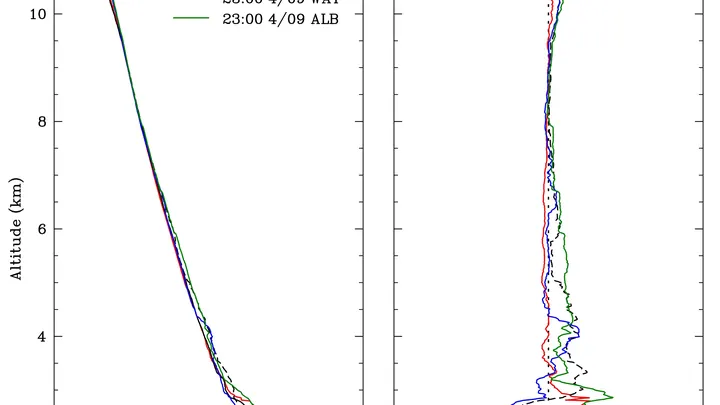
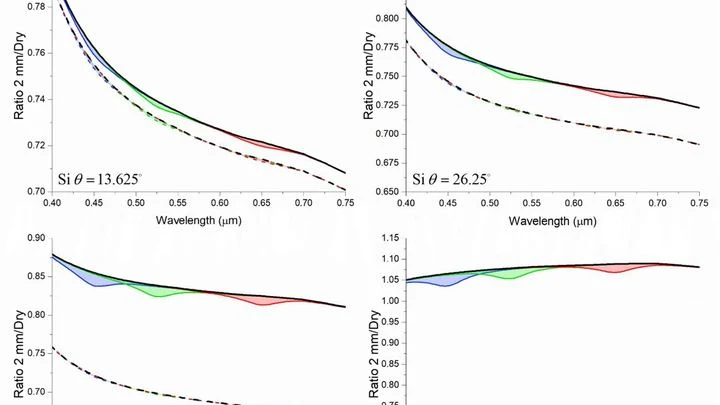
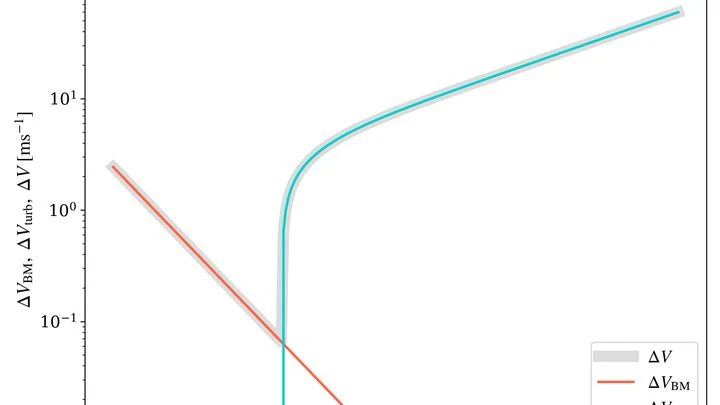
Every second, thousands of passenger aircraft in the sky transmit radio signals: that's how air traffic controllers track where each flight is. These signals don't travel in a straight line: air of varying humidity bends them like a lens. If you can measure that bending, you can work out where the air is drier and where it's more humid.
When light hits ordinary plastic, some of it reflects, like a glare on a window. To eliminate this glare, a special coating made of tiny structures is applied to the surface, which cancels out the reflection.
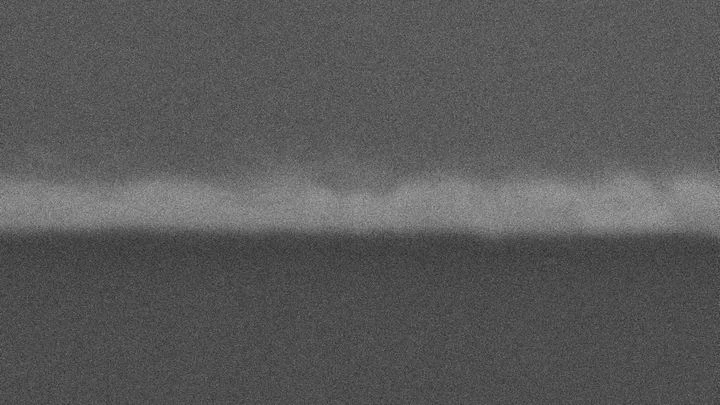
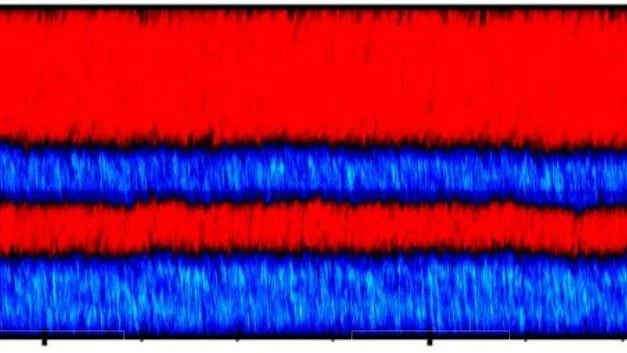
At 359.8 K (about 87 °C), a substance made of bent, banana-shaped molecules transitions into a liquid crystal phase where the molecules assemble into layers. But unlike ordinary layers where all the 'bananas' lie the same way, here they are tilted in two directions at once, like cherry pits in a jar that can point both up and sideways.
A laser beam is like a swift vortex that briefly captures a passing electron. As the particle moves through the pulse, its spin (the intrinsic rotation, like a tiny top) experiences a weak kick. After leaving the beam, the top no longer points in the same direction; it has turned a little.
In extreme cold — minus 268 degrees — a crystalline perovskite film starts transmitting light differently depending on its polarization. The beam seems to split in two: one part travels slightly faster, the other slightly slower.
Imagine a smart antenna panel, a phased array, that steers radio waves traveling at the speed of light. It works like an orchestra: hundreds of tiny emitters, like musical instruments, shift their phase (the moment they 'join' the overall sound) on command via a variable voltage.
A Tesla coil crackles, and a beam of light begins to rotate around it. The medium it passes through is still stable, but the field grows, and the rotation intensifies. This is not a trick but the behavior of special materials that couple electricity and magnetism. For such coupling, there is a fundamental limit — the Tellegen limit.
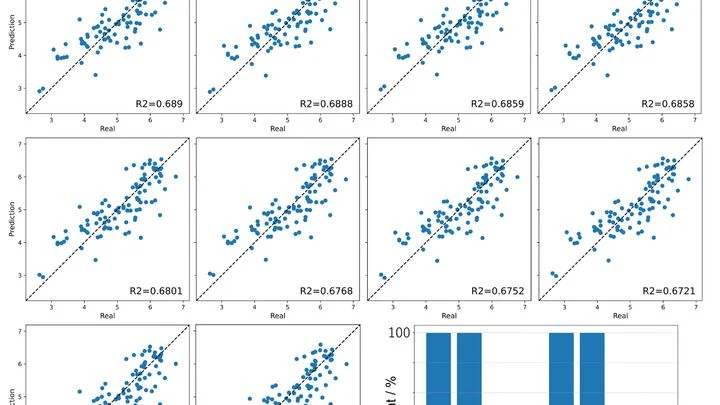
Every month, satellites measure temperature and humidity over different parts of the planet. Over 24 years, thousands of such paired measurements have accumulated. Normally, temperature and humidity change in concert: when it warms, the air holds more water; when it cools, it releases it. But before a sharp climate shift, this coordination breaks down.
In the brain's white matter, the signal travels along axons — long neuronal processes wrapped in an insulating myelin sheath. Water fills the space inside axons and outside, in the narrow gaps between fibers.
Throw a ball almost parallel to a wall — it will slide along it before bouncing off. The same happens with a light beam: when reflected at a shallow angle, it shifts by microns. This Goos–Hänchen shift was long considered a mere amusing paradox.
An ordinary photometry detector can't tell a left photon from a right one. But let it start moving, and everything changes.
Imagine a rower moving between two flutists playing the same note. His ear is perfectly tuned to that note and ignores all others. As he moves, the pitch from the flutist ahead sounds higher, and from the one behind sounds lower.
A pebble tossed into a pond sends ripples spreading in all directions. Now imagine the pond itself suddenly turning into jelly — instantly, faster than the wave can complete a single crest. Some ripples would keep spreading but change their spacing, while others would unexpectedly turn around and run back toward the point of impact, as if time were flowing backward for them.
A squad of soldiers marches across a parade ground. As long as everyone keeps in step, the movement remains sharp and coordinated. But if someone falls out of line, the order is lost. In the microworld, electrons play the role of such a squad: when their oscillations are synchronized, the substance emits a narrow, sharp line.
Diamond crystals sometimes harbor 'guests'—single atoms of other elements that take the place of carbon. One such guest, a tin atom, emits light of a strictly defined color when irradiated by a laser. This color changes if the diamond is squeezed. Physicists calculated exactly how much.
Light from thin semiconductor layers can be polarized: its waves oscillate in a single plane. Previously, it was thought that the direction of oscillation was set by how the sample was illuminated.
A copper wire hit by a laser is like a kitchen where the chef turns on the stove and watches the stopwatch at the same time. Copper atoms start to dance, losing the order of the crystal lattice, while electrons, like waiters in the dining room, instantly feel the change. But how much disorder do they need to notice?
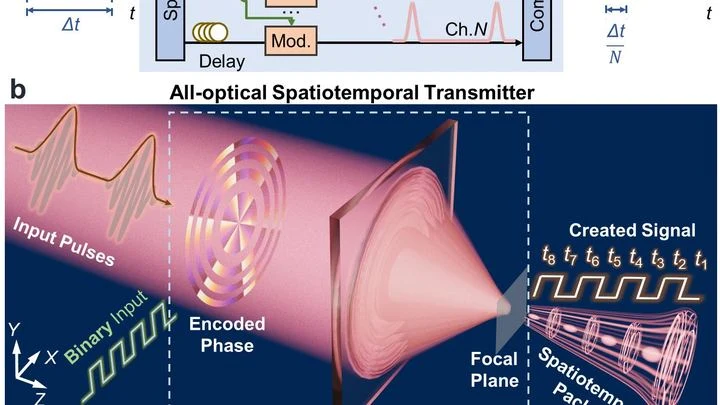
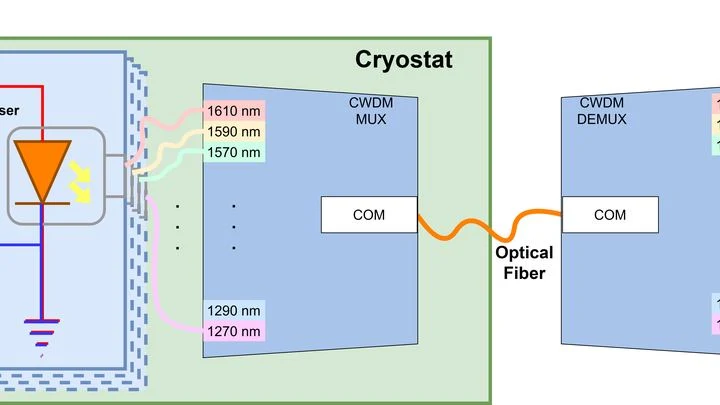
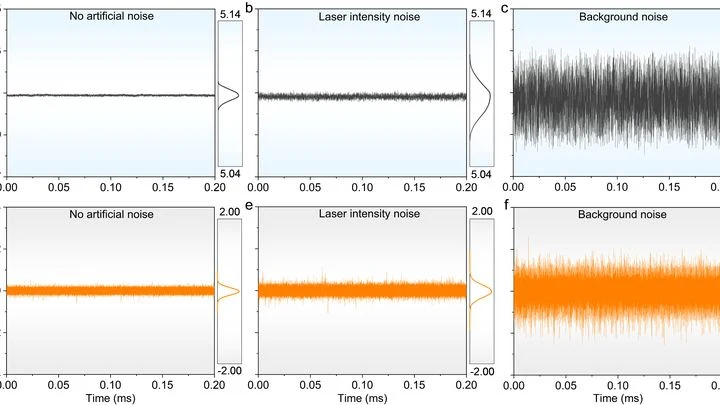
Light can carry information faster than any electronics. But usually, between a computer and a laser sits a digital-to-analog converter — a device that turns zeros and ones into electrical signals. It's the bottleneck.
The new transmitter does away with this middleman.
A water droplet on a leaf disappears faster under the sun than heat calculations would predict. A few years ago, a hypothesis emerged: light itself, without heating, could knock water molecules off the surface. This was dubbed the photomolecular effect. If it exists, clouds, climate, and even everyday clothes drying could work differently.
Astronomers measure distances in the universe using explosions of special stars — Type Ia supernovae. These flashes always have nearly the same brightness, like light bulbs of known wattage. Knowing how much light reached us, you can calculate how far away the explosion is.
A pot of water heated from below is a simple example of turbulence. Hot fluid rises, cold fluid sinks, and the flow spontaneously breaks into rotating cells that look like horizontal rolls. In a new study, physicists took a wide rectangular container (ten times longer than its height) and tracked how many such rolls appear.
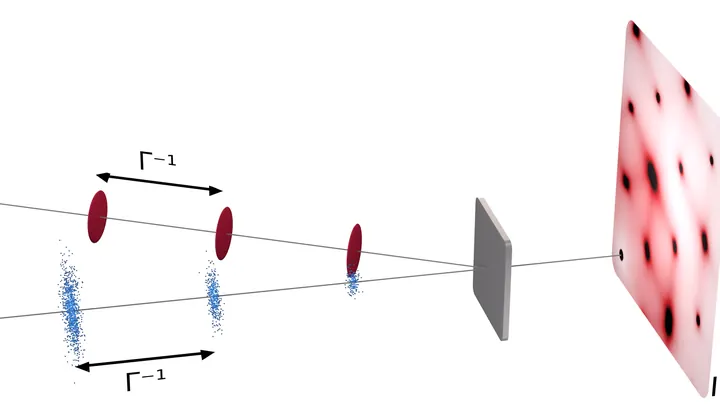
A camera that captures not light but a stream of electrons reflected off a crystal is a hybrid pixel detector. It can count every electron that hits it, generating almost no noise of its own. In normal mode, when the electron beam flows continuously, the detector works perfectly.
A thermos of liquid xenon cooled to minus 100 degrees Celsius. Inside are sensitive sensors that catch rare signals from dark matter particles. To bring these signals out, copper cables are usually used. But over the long haul, the signal weakens, and adjacent cables start 'cross-talking' — that's called crosstalk.
In the cold clouds of gas and dust where stars will one day ignite, some atoms have lost electrons and become charged. Charged particles feel the magnetic field, while neutral ones do not, so the charged ones slip through the neutral ones like water through a sieve. Astronomers have measured this drift speed: about a hundred meters per second.
A flashlight beam in fog spreads out within a couple of meters. Light particles scatter in all directions, like a crowd in a square. But sometimes they can march in formation — without spreading, without mixing. That's exactly the kind of march achieved in a tiny perovskite crystal.
The crystal was placed between two mirrors.
Light traveling through an optical fiber is like a runner in a narrow corridor: it can run straight, or it can weave from side to side. The direction of these "weaves" is polarization. Physicists have learned to keep the runner on a straight path: they constantly check its trajectory and gently correct it, not letting it veer off.
The diffusion equation, a mathematical tool describing how particles spread out in space, has long painted a paradoxical picture: a disturbance, like ripples on Water, instantly engulfs the entire universe. This challenged the theory of relativity, which holds that nothing can move faster than light.
Light is trapped in a tiny cavity and circles around like a ball in a groove. If you slightly change the material inside, the light notices immediately, and gives a signal. Usually, such sensors work like spring scales: the harder you press, the more noticeable the shift. But there's another, trickier approach: make even a weak perturbation produce a disproportionately large response.
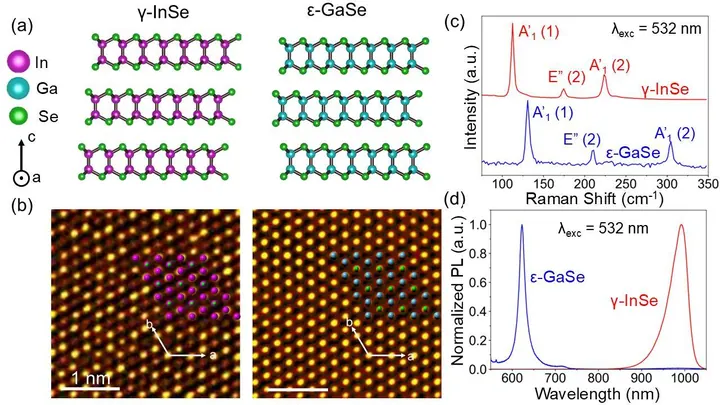
Light passing through a window pane refracts the same in all directions. But in thin layered crystals, it's a different story: light traveling along the layers sees the material differently than light traveling across them. It's as if a sheet of paper were transparent but transmitted light differently along and across its fibers.
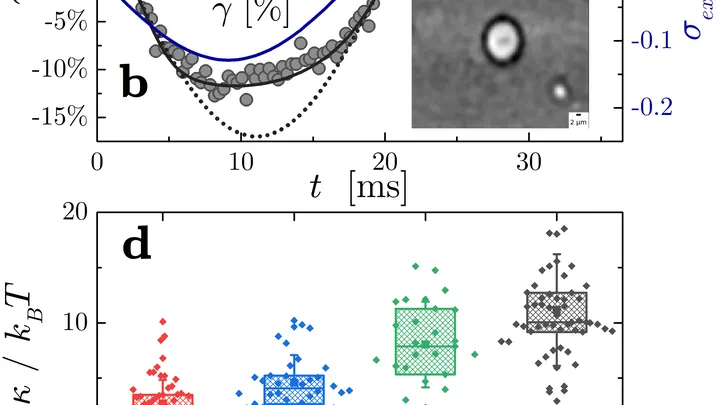
A microscopic gel bead or a tiny oil droplet squeezes through a narrow channel whose walls rhythmically contract and relax. The particle flattens and then recovers its shape, and by how quickly it does so, you can infer its internal elasticity and viscosity.
Vanadium oxide is a material that can act as an insulator, not conducting electricity, or as a conductor, like a metal. The switch takes trillionths of a second, and that's what makes it a candidate for ultrafast electronic devices.
But exactly how it happens has long been a mystery.
A camera on a tripod shoots the same landscape for decades. If you don't touch the lens, the images get hazy: the landscape changes, but the focus stays put. That's roughly how climate norms work. According to World Meteorological Organization rules, they are calculated as the average over the last 30 years.