Particle identification is the art of telling one type of particle apart from another in the debris of high-energy collisions or cosmic rays. When protons smash together in accelerators, they produce a zoo of particles — pions, kaons, protons, electrons, muons, and more — that fly out at nearly the speed of light. Knowing exactly what each detected particle is, rather than just its energy or trajectory, is crucial for reconstructing what happened in the collision and for searching for rare new phenomena. The challenge is that different particles can leave very similar signals in detectors, so physicists use a combination of measurements to make the call.
History
Particle identification has been central to experimental physics since the 1950s, when bubble chambers first allowed visual separation of tracks by curvature and ionization. The technique was systematized with the advent of electronic detectors in the 1960s and 1970s, and machine-learning approaches became widespread in the 2010s.
How it works
The most common method exploits the fact that particles of different masses behave differently as they travel through matter. In a magnetic field, a particle's curvature reveals its momentum, while its speed can be measured by time-of-flight detectors or Cherenkov radiation — the light emitted when a particle outruns light in a medium. Combining momentum and speed gives mass, which uniquely identifies the particle. For neutral particles like neutrons and gamma rays, identification relies on their interaction patterns: neutrons scatter off protons in water, producing a characteristic recoil signal, while gamma rays create electromagnetic showers. Modern experiments also train neural networks on simulated data to recognize subtle patterns in detector responses that distinguish, say, a pion from a kaon in a dense 'fireball' of particles.
In practice
Particle identification is essential in every high-energy physics experiment, from the LHC to neutrino observatories, and is also used in medical imaging (e.g., PET scans) and in space-based cosmic-ray detectors to distinguish particle types.
Fun fact
In some experiments, a single particle's identity is inferred from the faint Cherenkov light it emits in a radiator — a signal so weak that it can be captured by just a few photons.
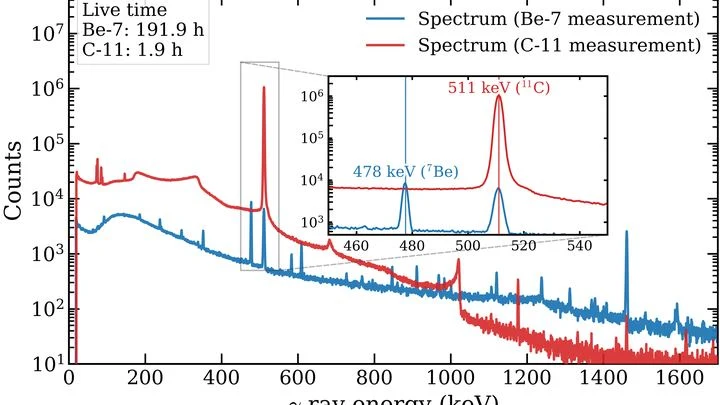
Deep inside a mountain, where cosmic-ray muons are muffled by a thick layer of rock, stands a detector that catches not light but its absence. Positronium is a tiny atom in which an electron and its antiparticle, the positron, circle each other like a pair of dancers. Usually they come together and vanish in a flash of two or three gamma quanta.
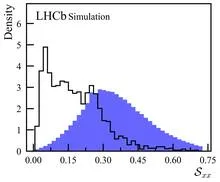
Imagine a conveyor belt carrying 30 million parcels every second, and a controller who must instantly decide what is inside: a valuable shipment or junk. At the Large Hadron Collider, that conveyor belt is the trigger of the LHCb experiment, picking out rare particle decays among billions of collisions.
A pot of boiling soup bubbles away, and you'd love to know how hot individual droplets are inside. But you can only dip your thermometer at the edge, where things are calmer. Laser fusion is a bit like that: a powerful laser pulse hits a target, creating a cloud of fast protons.
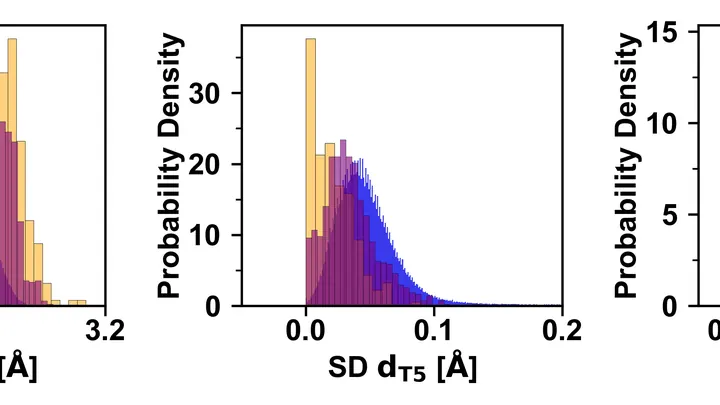
Usually, isotopes are separated by exploiting the difference in nuclear weight. That difference is tiny, like sorting grains of sand that differ by one hundredth of a millimeter. The new method ignores weight and instead looks at the nucleus's rotation: its spin.
The laser hits the molecules twice with a short pause in between.
When two particles fly at almost the same speed in the same direction, their signals in the detector merge, like two voices in unison. Telling a duet from a soloist is an art in itself.
Inside every atom lives a proton. For a long time, it was considered as eternal as matter itself. But theories that unify all forces of nature predict that, sooner or later, the proton will decay. The only question is how long we have to wait.
In the Japanese detector Super-Kamiokande — a giant tank of ultra-pure water — physicists searched for signs of such a decay.
At the Large Hadron Collider, protons collide, and from the flash dozens of particles are born. Among them may be traces of rare processes — for example, the decay of a Standard Model Higgs boson into two W bosons. But these particles fly apart so quickly that their tracks merge into a single wide jet.
In collisions of heavy nuclei, a fireball of thousands of particles is born. Among them are pions and kaons, two kinds of light particles that look very much alike. To understand what happens in this fireball, physicists need to know exactly how many of each particle flew out.
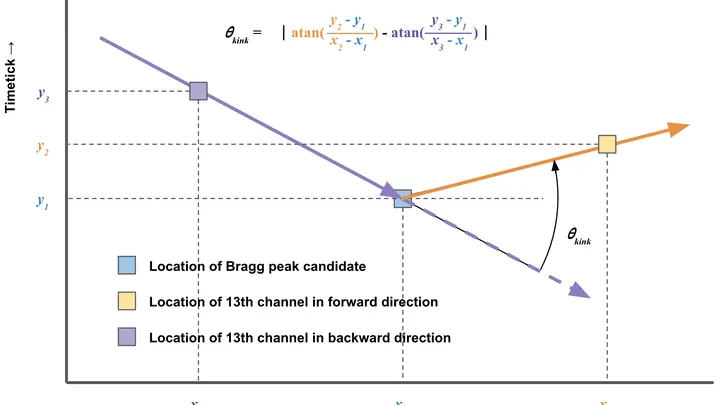
The MicroBooNE detector is a large tank of liquid argon that catches particles flying through it. When a particle passes, it leaves a trail of charge and a flash of light. These trails combine into a three-dimensional picture of the event, as if the particle were drawing its path in a transparent cube.
Porous zeolite minerals work like tiny sponges with holes of a strictly defined size. Through such holes, molecules of one kind pass while others get stuck: this is the basis for water purification, gas separation, and catalysis in petrochemistry.
In a tank of pure water, particles traveling faster than light in that medium leave bluish flashes, like a plane breaking the sound barrier creates a sonic boom. From these flashes, you can tell what kind of visitor passed through: a gamma quantum or a neutron. This is no idle task: at borders and warehouses, you need to quickly distinguish a harmless radioactive cargo from weapon-usable material.
In a dark room, you might notice a faint blue glow around some radiation sources. This is Cherenkov light: it appears when a charged particle travels through a medium faster than light can propagate in it. The result is a light shock wave, similar to the sonic boom from a supersonic jet, but made of photons.
Many molecules, like amino acids, are like musical notes: their left and right versions sound almost identical, yet the difference is critical. One heals, the other is poison. Picking up this difference is hindered by inescapable noise, like in a room where a fan is loudly running. Regular spectroscopy misses the nuances.