A Superconductor That Remembers express
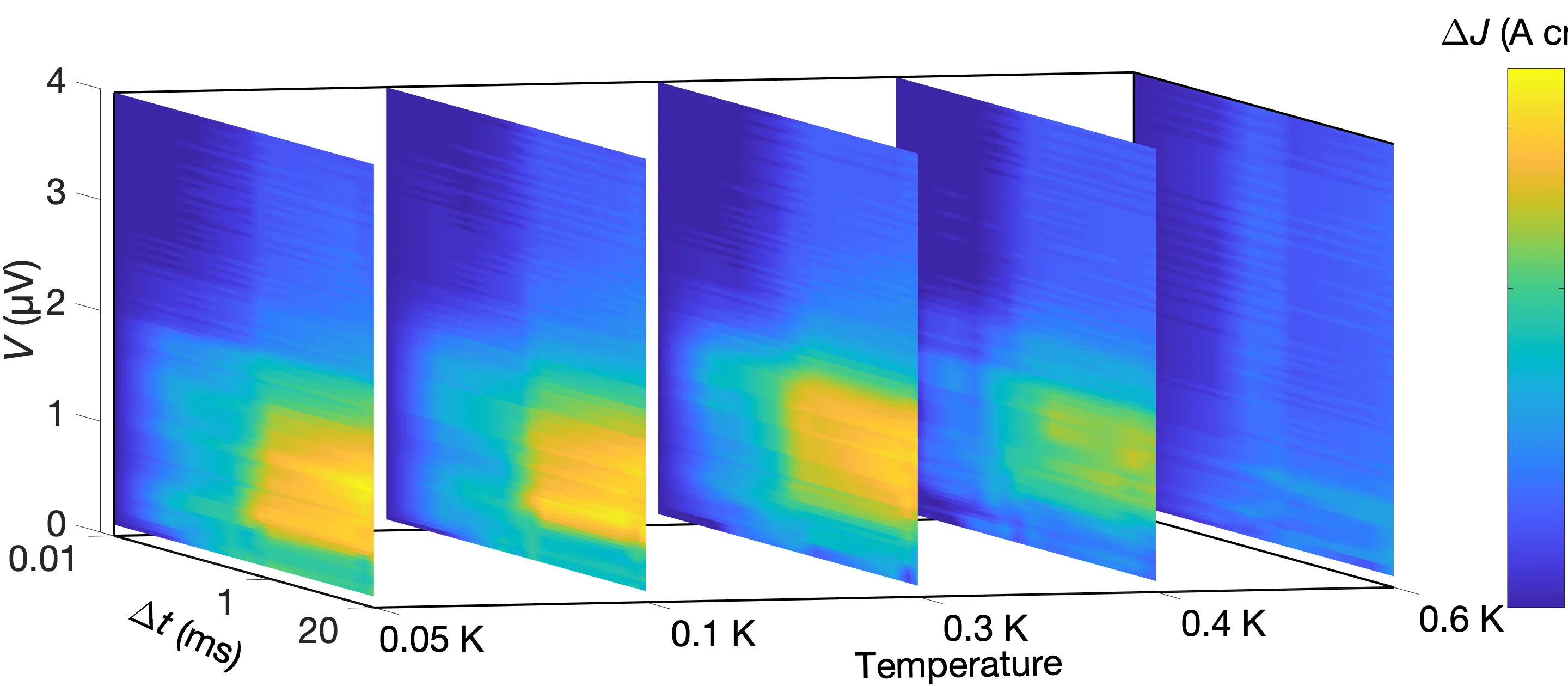
Ordinary computer memory constantly uses energy to store ones and zeros. Superconductors, on the other hand, carry current with zero loss — if you could build memory from them, it would barely draw any power. The catch is that superconductors can't remember: their state changes too easily.
Uranium ditelluride crystals turned out to be the exception. When placed in a magnetic field and hit with a short current pulse, they transition to a state where current flows even better. A second pulse flips them back. The material 'remembers' its state for hours.
Inside a superconductor, magnetic field lines gather into vortex filaments — tiny tubes around which current flows. Uranium ditelluride has two types of these filaments. A current pulse stirs them up, creating disorder that pins the filaments more firmly in place, so current flows more strongly. It's like a pile of sand: shake it, and the grains settle tighter, making the pile more stable.
This kind of memory doesn't need extra layers of magnets or semiconductors — everything required is already in the crystal itself. That opens the door to ultra-efficient memory devices for future computers.
The superconductor uranium ditelluride remains superconducting even in very strong magnetic fields, where ordinary superconductors give up.