Stellar Flares as a Source of Life express
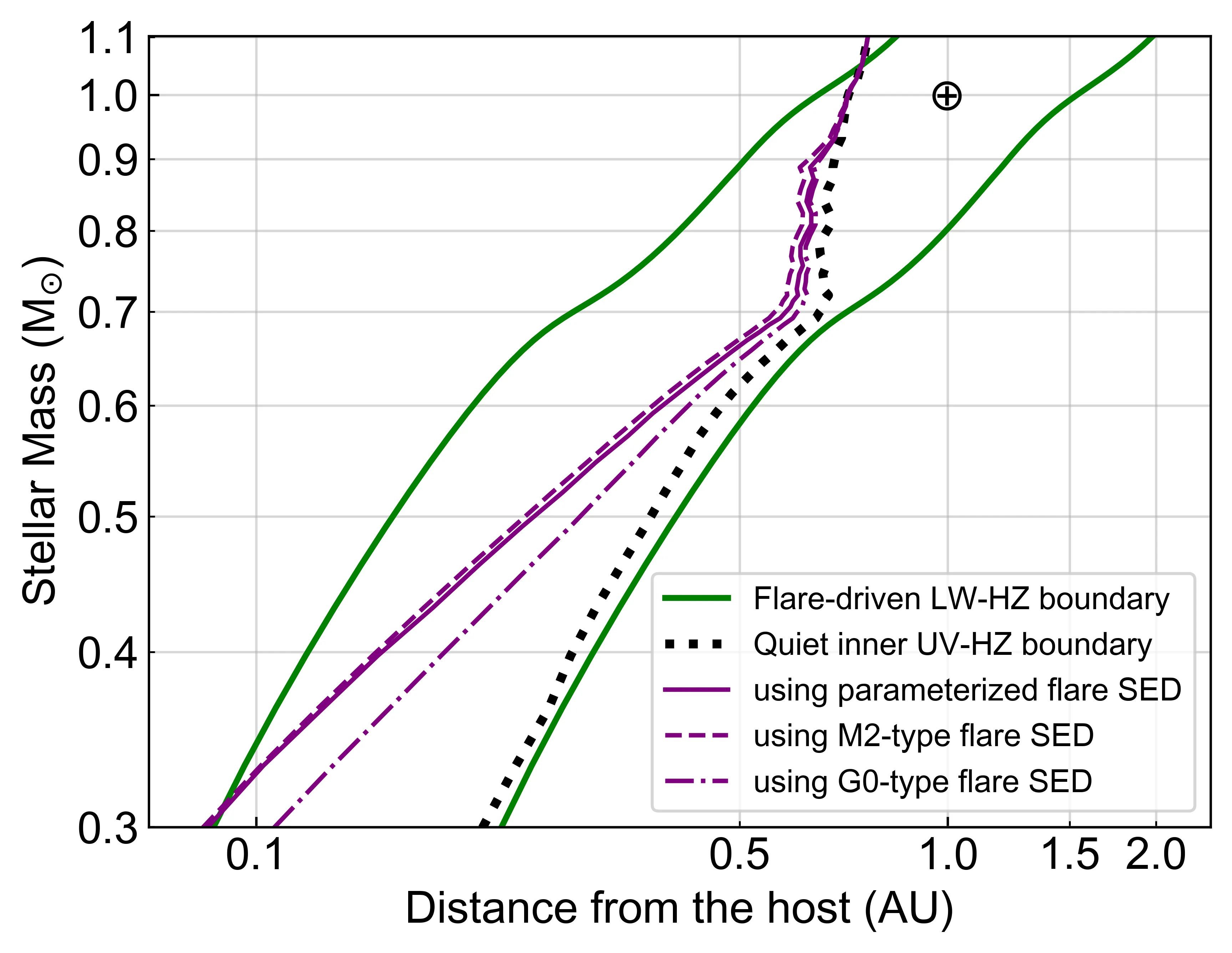
Water isn't the only thing life needs. To assemble the first RNA-like chains from simple molecules, you need ultraviolet light, like the sunlight that helps plants, but harsher and with shorter wavelengths. Big stars like the Sun emit plenty of this light. Small, dim stars, however, have almost none: they shine mostly in red and infrared, like a glowing ember. It would seem that planets around such stars are out of luck.
But these stars have another habit: they flare often. A flare is like a brief, bright lightning bolt on the star's surface. In minutes or hours, the star releases a burst of ultraviolet that it normally lacks. If a planet is not too far away, such a flare can kick-start the very chemical reactions that later produce the building blocks of life. The scientists took data on how often different stars flare and built a model: how much UV a planet receives over long periods — not at a single moment, but on average, accounting for all flares.
Then they applied the model to real planets found by the Kepler telescope. Of nine planets around flaring stars, three turned out to be in a double zone: water remains liquid, and flare UV is sufficient for synthesizing the needed molecules. At the same time, the dose isn't high enough to destroy the ozone layer — the planet's protective blanket. So flares don't hinder life; they help it get started. Previously, the habitable zone was defined only by water. Now it has a second dimension — light that drives chemistry forward.
Red dwarfs, the most common stars in the Galaxy, can flare hundreds of times more often than the Sun. Some flare every few hours.