Climate Waves: How Solar Cycles Echo in Brazil's Rainfall ✛
The Sun pulses in a slow rhythm, and that rhythm can be heard in the rains over Brazil. Sunspots on the solar disk thicken and thin roughly every eleven years, and along with them, pressure in the Pacific Ocean shifts, sea surface temperatures change, and then rainfall amounts in the northeast of the country follow suit. If climate is an orchestra, the solar cycle sets the low bass line, and the ocean and atmosphere pick it up on different instruments.
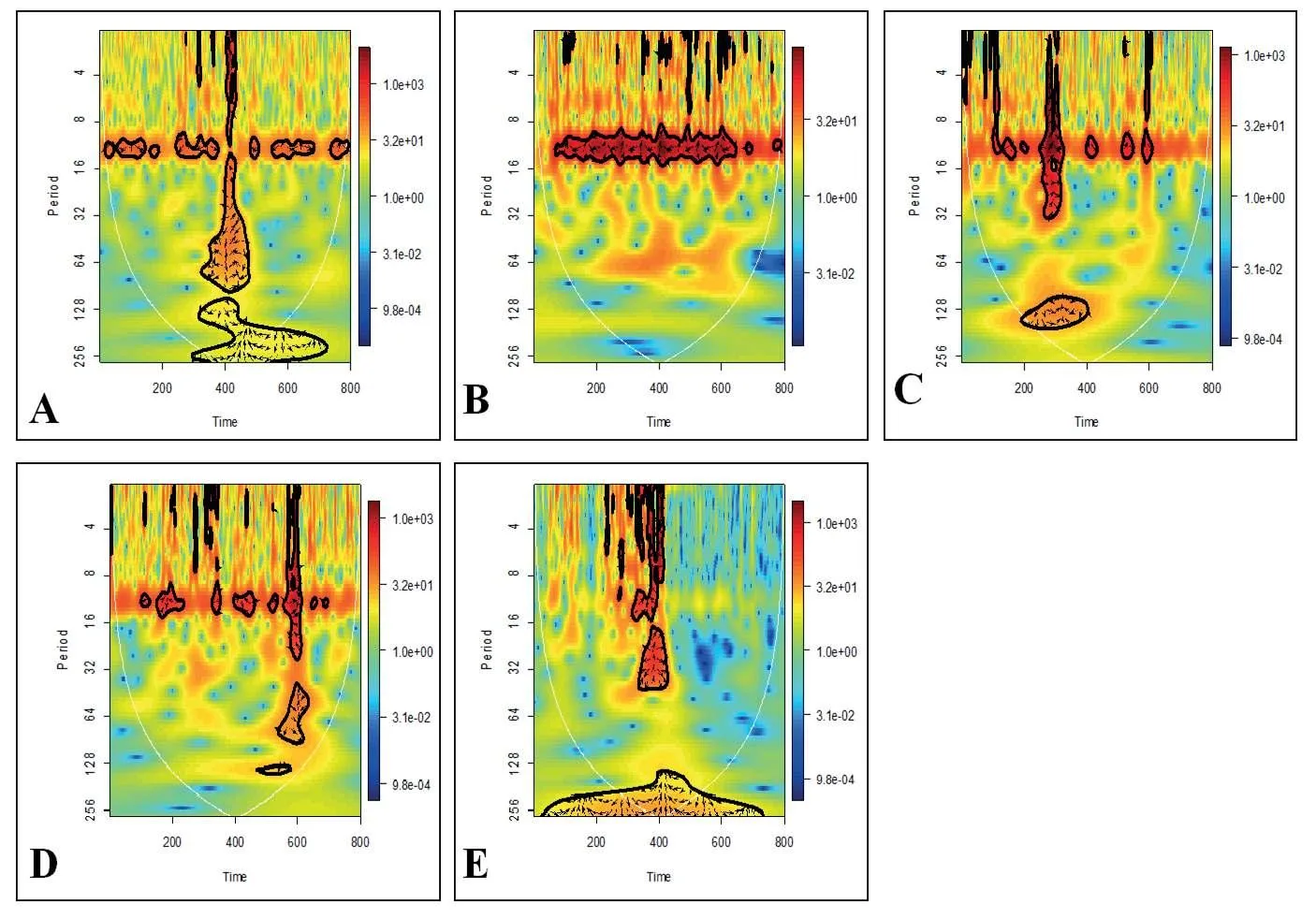
To hear this slow music, scientists used wavelet analysis, a method that decomposes a long observational record into waves of different durations, much as a prism splits light into colors. Instead of notes, here we have periods: 2.66 years, 5.33 years, 10.66 years, and 21.33 years. These four waves turned out to be common to three global records: the Southern Oscillation Index (SOI), the Pacific Decadal Oscillation (PDO), and Wolf numbers, which count sunspots.
Next, the researchers took rainfall records from five meteorological stations at the airports of Belém, São Luís, Fortaleza, Natal, and Fernando de Noronha, spanning 66 years. And there, in the rains, the same periods emerged: 5.33, 10.66, and 21.33 years. The 11-year cycle is especially clear in Belém, Fortaleza, and Natal, while the 21-year cycle appears in Belém and on the island of Fernando de Noronha. This means that rainfall in these places is not just random noise: it follows a rhythm set by the Sun and picked up by the Pacific Ocean.
Previously, it was unclear whether multidecadal cycles of solar activity and oceanic indices appear in the rainfall of a specific region of Brazil. Now it has been shown that the rainfall at five stations in the north and northeast of the country contains the same periods as the SOI, PDO, and Wolf numbers. Long observational records were compared using wavelet analysis, which reveals time-varying periodicities and their synchrony between series. This is not just a statistical coincidence: the common cycles point to a possible mechanism linking solar influence to oceanic circulation and regional rainfall.
For a farmer planning crops years ahead, or an engineer designing a reservoir, such a rhythm is not abstract theory. If it is known that the probability of drought is higher every 11 or 21 years, that can be factored into calculations. The results can be used for statistical long-term forecasting of dry and wet periods in agriculture and water resource management in Brazil. The Sun continues its slow theme, and the rains in northeastern Brazil sing along, and now this duet is more clearly heard.
The sunspot cycle lasts on average 11 years, but over the past 80 years its length has varied from 8 to 17 years. Wavelet analysis allows you to see this period instability directly on the spectrogram.