Solar telescope catches the sky's twinkle express
By day in Chile's Atacama Desert, the air shimmers with heat like the haze above a hot skillet. Sunlight passing through this shimmer begins to dance and flicker. Astronomers call this airy trembling "seeing" — and it keeps telescopes from getting a sharp view of the stars.
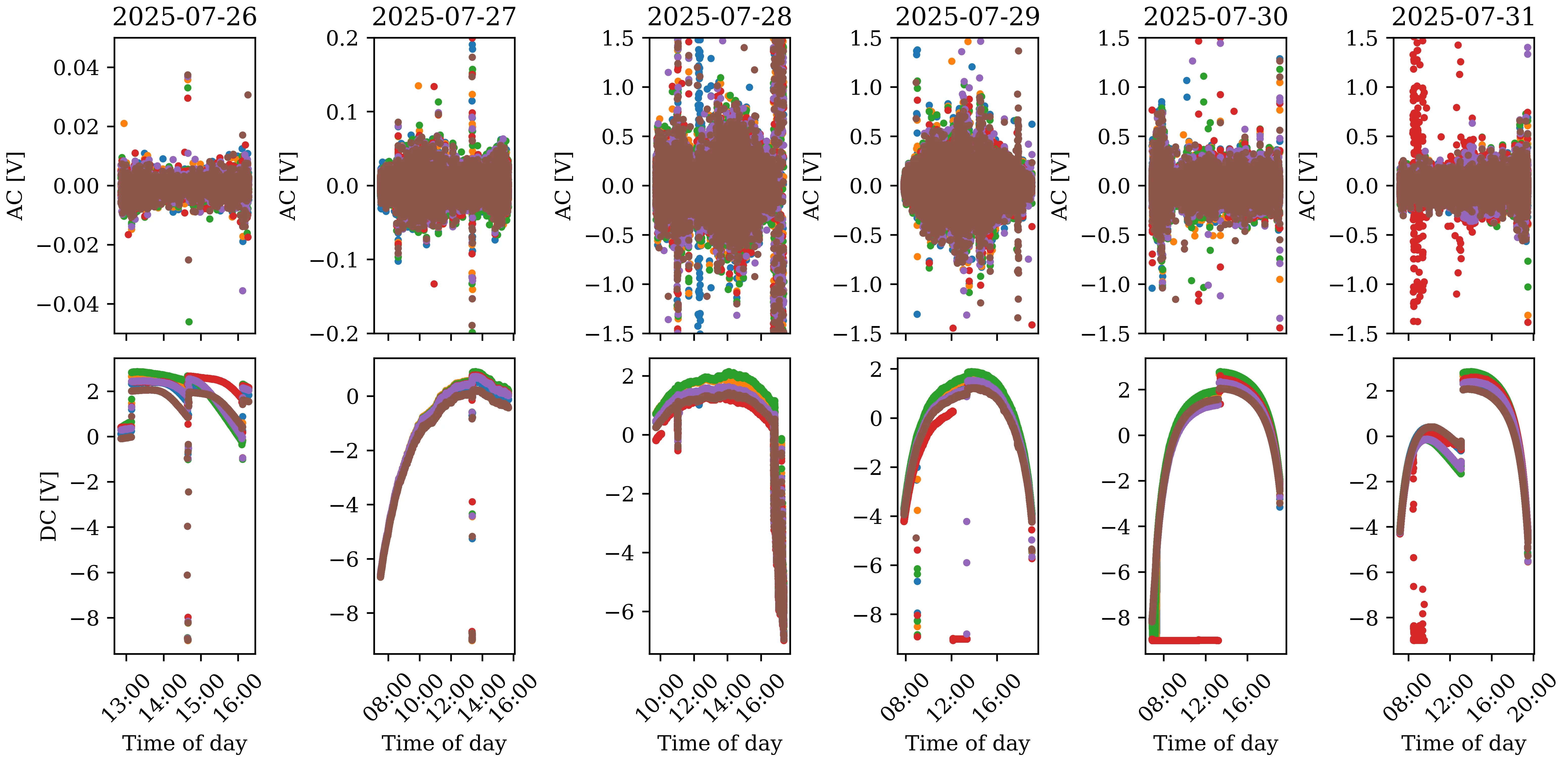
To fight this nuisance, engineers have built a special instrument — a solar seeing monitor. It sits next to the future PoET telescope at Paranal Observatory and, during the day, tracks how strongly sunlight trembles. The device can aim at any patch of the solar disk and measure the shimmer over areas from 1 to 55 arcseconds (that's like looking at a coin from a few kilometers away).
The seeing monitor's data will reveal the calmest hours and the optimal aperture size for the telescope to get the sharpest images. In this way, the sky's trembling turns from a nuisance into an ally: knowing it, astronomers can hunt more precisely for rocky planets around distant stars.
Original abstract
as written by the authors arXiv:2604.10140
Atmospheric seeing arises from stochastic fluctuations in the refractive index of the Earth's atmosphere, producing random variations in the apparent direction of incoming light from astronomical sources. Scintillation refers to the associated intensity fluctuations induced by these refractive index inhomogeneities. A quantitative relationship between seeing and scintillation was established in 1993, enabling daytime seeing measurements by exploiting the Sun as an extended, bright source and using non-telescopic instrumentation. PoET, the Paranal solar ESPRESSO Telescope, will feed the Echelle SPectrograph for Rocky Exoplanets and Stable Spectroscopic Observations, ESPRESSO, at the European Southern Observatory (ESO) Very Large Telescope (VLT). By using the Sun as a proxy for solar-type stars, PoET will facilitate detailed investigations of the physical processes that drive stellar noise in ultra-high-precision radial-velocity measurements for exoplanet studies. The instrument is capable of targeting any region on the solar disk and acquiring spatially resolved spectra over areas ranging from 1 to 55 arcseconds. Accurate characterization of daytime atmospheric seeing is therefore essential for selecting the optimal observing aperture and ensuring the scientific performance of PoET. To support this requirement, we have developed and implemented a dedicated solar seeing monitor for daytime deployment at Paranal, Chile, where PoET will operate. In this work, we describe the instrument design and present the results from commissioning and initial on-sky validation.
The twinkling of stars at night and the trembling of sunlight by day are the same phenomenon: the air in the atmosphere is constantly moving and bending light in different ways.
In Stanisław Lem's novel "Solaris," the planet's ocean shimmers and shifts shape — not unlike the way Earth's atmosphere makes the light of distant stars tremble.