Heat Disrupts the Light Orchestra express
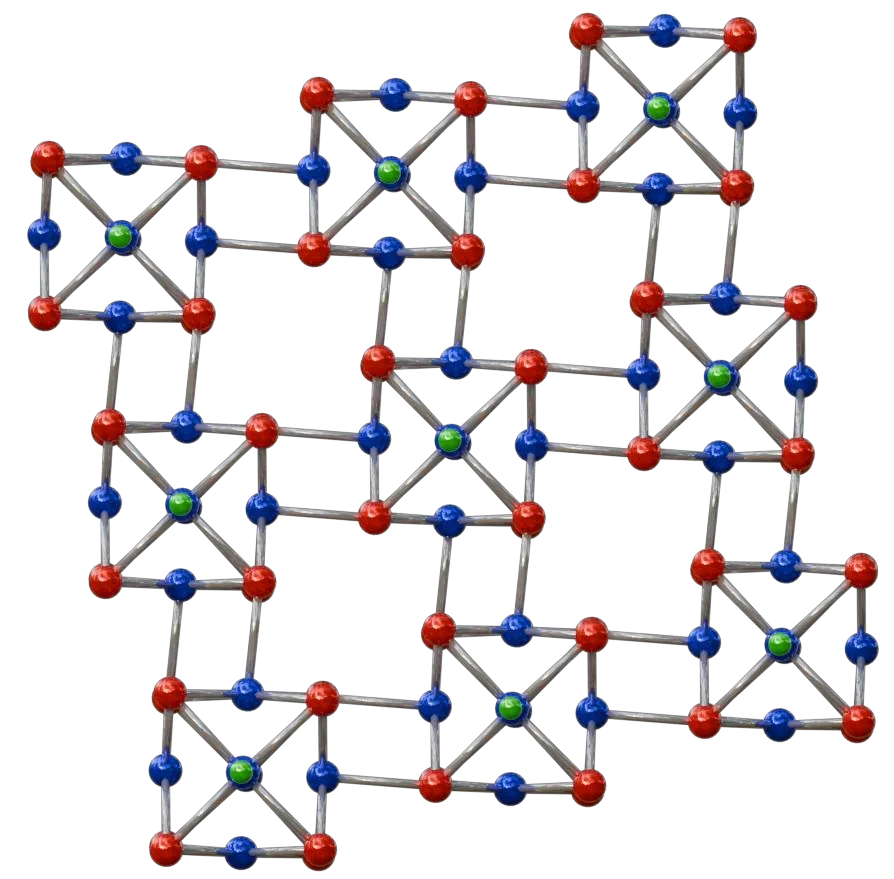
A laser strikes the crystal, and it responds with flashes of light, like a bell ringing after a blow. But if the bell is warm, its sound wavers and fades. Same here: the crystal's atoms constantly jitter from heat, and this jitter disrupts the electrons' smooth flight, making the light dim and blurry.
Scientists took a crystal of Re6Se8Cl2—a material where atoms are assembled into large blocks, like building bricks. They cooled it and watched how the brightness of emitted light changed. Down to 50 kelvin (minus 223 degrees Celsius), brightness grew slowly, but below that, it jumped sharply. It is at this temperature that atomic jitter nearly stops.
Calculations showed that jitter not only weakens light from each region but also desynchronizes waves from different places. Together, this acts like sand in a clock's mechanism — making the ticking uneven. The authors described this via the time over which electrons lose coherence, and this time depends on temperature.
This discovery matters for ultrafast electronics, where light is controlled in femtoseconds (millionths of a billionth of a second). And superatomic crystals can be tuned by choosing desired properties, like a construction set whose pieces can be assembled into devices for controlling light.
50 kelvin is colder than the surface of Pluto (about 44 K). At such temperatures, even nitrogen becomes solid.