Quantum computer catches cosmic particles express
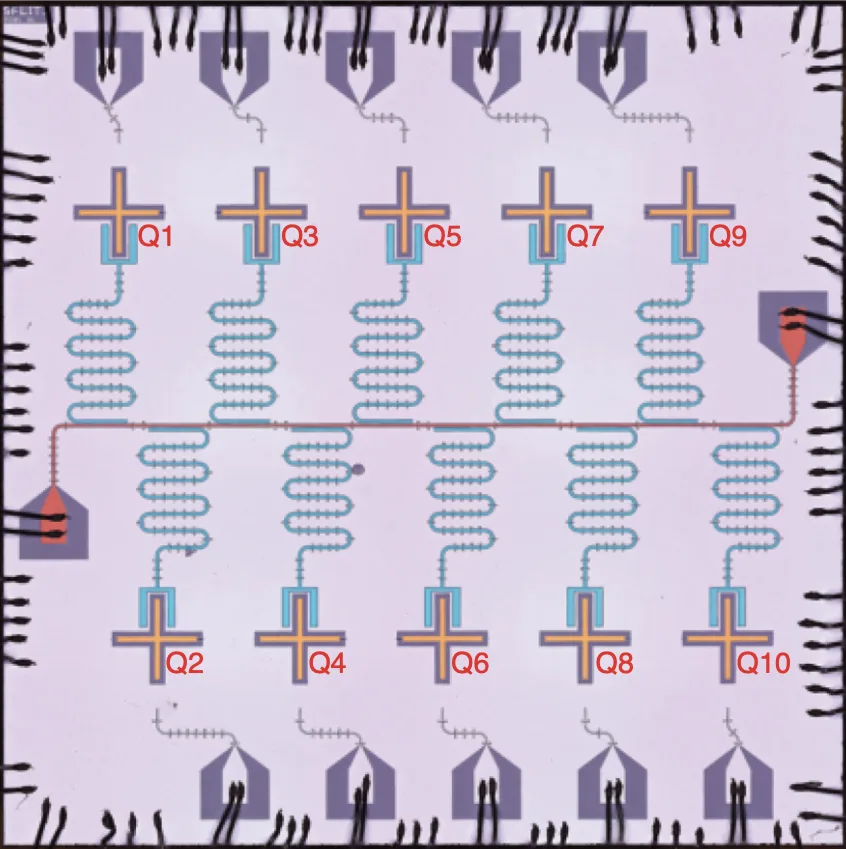
Qubits in a superconducting quantum computer are like tightly stretched strings. When a particle from space or from a radioactive decay flies by, it strikes these strings and they start to vibrate. This vibration disrupts the fragile quantum states, and computations go awry.
Scientists traced how exactly the vibration decays after the impact. It turns out that energy leaves in two ways: parasitic particles either recombine into pairs or stick to material defects. The rate of these processes depends on how much energy the impact left behind. By measuring the decay in several qubits at once, the authors were able to compute the energy of the original particle — much like estimating the weight of a thrown stone from the ripples on water.
This method turns the quantum processor into a particle detector. For now, it's a laboratory tool, but it helps understand which materials and designs suffer less from radiation. In the future, this will be useful for building reliable quantum computers that can operate without constant errors.
A single cosmic particle strike can spoil several qubits at once, even if they are far apart.