The Dance of Light Around a Black Hole: How to Keep the Main Frame Sharp express
Photographing the vicinity of a black hole is like shooting a fountain: a short exposure freezes the droplets, a long one blends everything into blurry streaks. Light from the superheated gas swirling around the hole reaches us along different paths. Some rays curve around it in an arc, others make multiple loops due to spacetime curvature. A single image mixes events that happened hours or years apart. Common methods: 'slow light' is accurate but computationally prohibitive; 'fast light' is quick but ignores delays and blurs details. The new 'brisk light' sorts rays into key time intervals defined by the geometry of curved spacetime. Its complexity matches fast light, while its accuracy approaches slow light. The most surprising part: rays delayed for years bring the past into the frame. Every image of a black hole is a collage from different epochs. Future radio telescope arrays must capture the exquisitely thin photon rings at the horizon, and without 'brisk light', even a tiny error will destroy that picture. That's why the method is so important: it prepares us for a live broadcast from the abyss. The names John Wheeler and Kip Thorne remind us how long we've come to this day.
Original abstract
as written by the authors arXiv:2605.12659
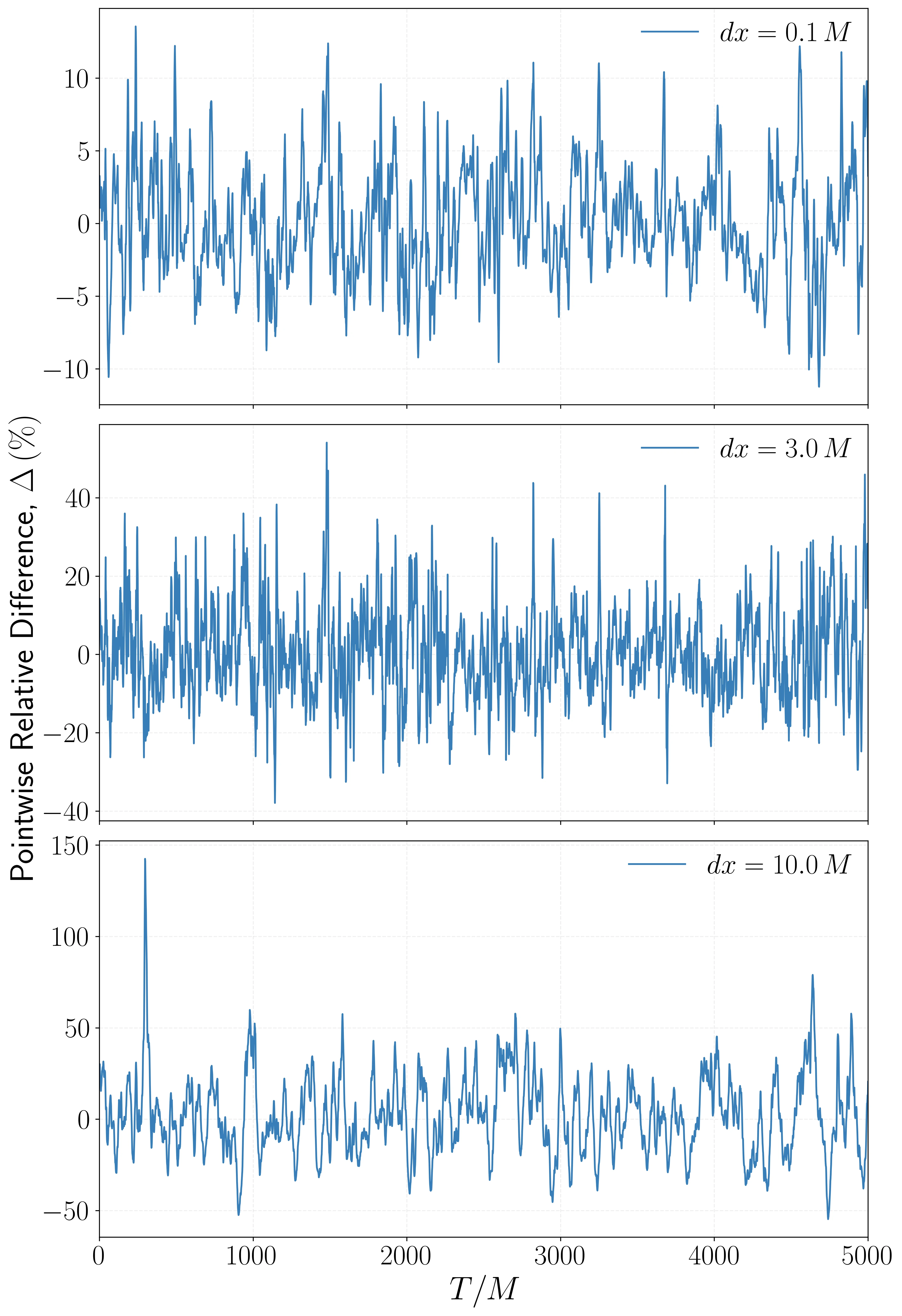
The spatiotemporal content of a black-hole movie is set jointly by source variability and by the distribution of light-travel times across the image. In the slow-light prescription, an image evaluated at fixed observer time contains photons emitted at different source times, whereas in fast light all rays sample a single source emission time. In this work we compare these light-propagation prescriptions through the lensing-band structure of Kerr geodesic delays in a controlled semi-analytic setting. For a given emitting geometry, black-hole spin, and observer inclination, we show how the coordinate-time delay distributions of Kerr null geodesics, decomposed by image order across lensing bands, can be compared with the source correlation time to quantify differences between light-propagation prescriptions. We find that when the intrinsic variability timescale is comparable to, or shorter than, the relevant delay spread, the high-inclination mismatch between fast- and slow-light curves can reach several tens of percent. Motivated by this geometric structure, we introduce brisk light, an intermediate prescription that compresses each lensing-band delay map to its dominant temporal interval rather than collapsing the full image to a single source time. The proposed methodology provides both a practical criterion for when slow light matters and an efficient route to black-hole movies that retain the leading temporal imprint of strong lensing, a regime of direct relevance for future space-based VLBI targeting photon-ring observables.
Rays delayed for years bring the past into the frame. So every black hole image is a temporal collage.
The movie Interstellar, with Kip Thorne's involvement, showed light distortions near a black hole. Now the 'brisk light' method primes us for real shoots.