The Invisible Particle Conductor express
In the very beginning, moments after the Big Bang, the universe was ridiculously symmetric: particles and antiparticles in equal measure. But a tiny imbalance occurred, like one extra grain of sugar in a kilogram, and the entire familiar world, stars, planets, people, arose from that surplus. How nature created this imbalance remains a mystery.
One suspect is superheavy neutrinos. Their decays produced a slight excess of matter. But on their own, they don't solve another puzzle: why ordinary neutrinos, which stream through us by the billions every second, have mass at all. Enter the majoron — an invisible particle. It emerges when a certain global symmetry (a rule governing particles) breaks, like a branch snapping under the weight of snow. The majoron not only gives neutrinos their mass but might also fill the cosmos, masquerading as dark matter.
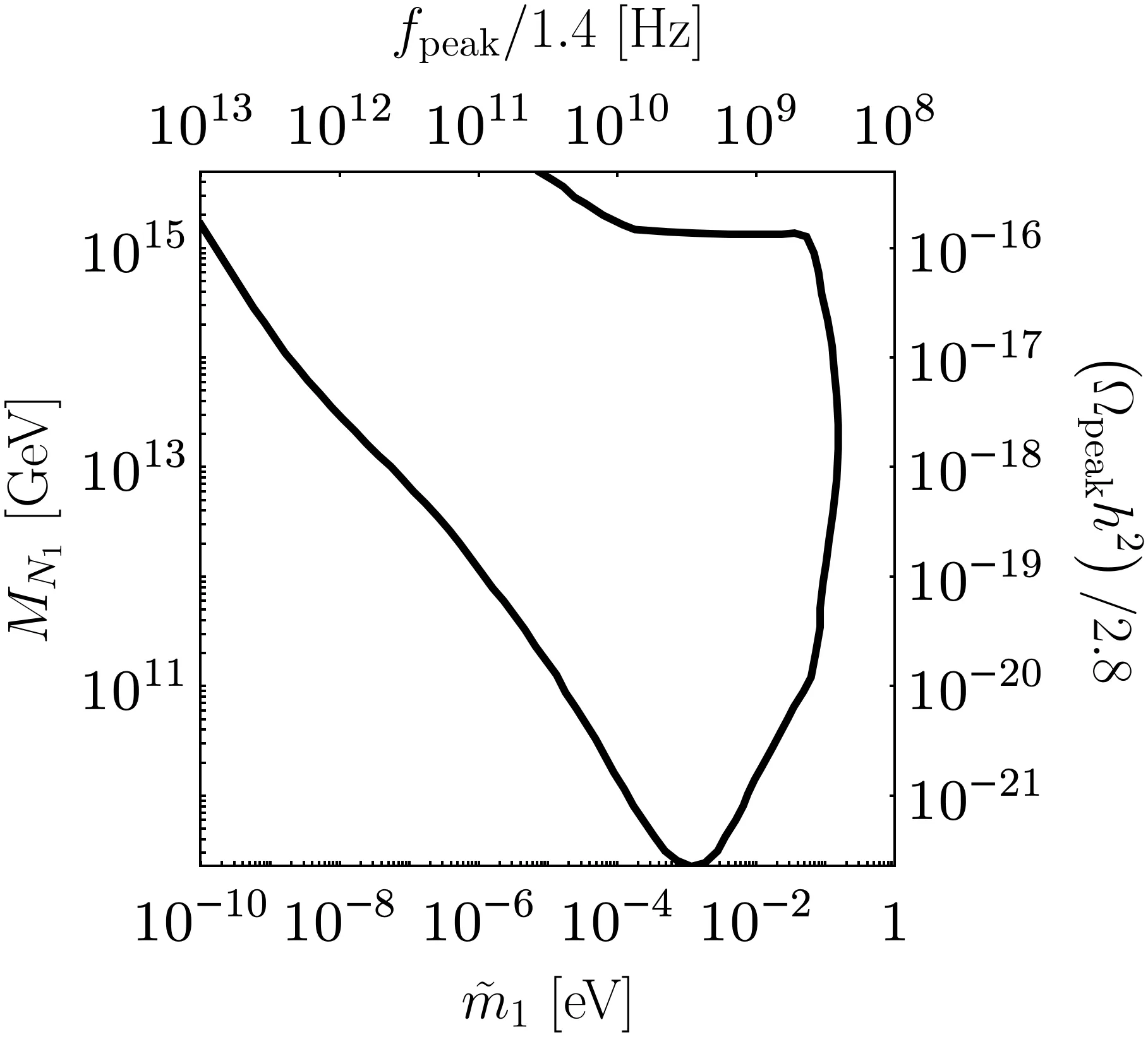
The authors of the new study found a narrow corridor where all three roles of the majoron converge: it is dark matter, the source of neutrino mass, and a witness to that ancient imbalance. The key lies in the mass of superheavy neutrinos. If it's too small, so many majorons are produced that they would have heated the cosmos more than we observe. If it's too large, there are too few to account for dark matter. Calculations showed that majorons must have been produced mainly through "freeze-in"—a slow accumulation from the early universe's plasma, like frost forming on a window on a cold day.
So one and the same particle ties together three great mysteries: where matter came from, why neutrinos aren't massless ghosts, and what lurks behind the mask of dark matter. If future telescopes see the characteristic decay signal, a tiny flash in the void, we'll know that the ancient imbalance that gave rise to everything left behind not only us but also a quiet echo in the form of ubiquitous majorons.
The majoron is named after Italian physicist Ettore Majorana, who mysteriously disappeared in 1938. The particle, like its creator, remains elusive.