Light at the Tunnel’s End: A Wormhole Looks Just Like a Black Hole ✛ ✦
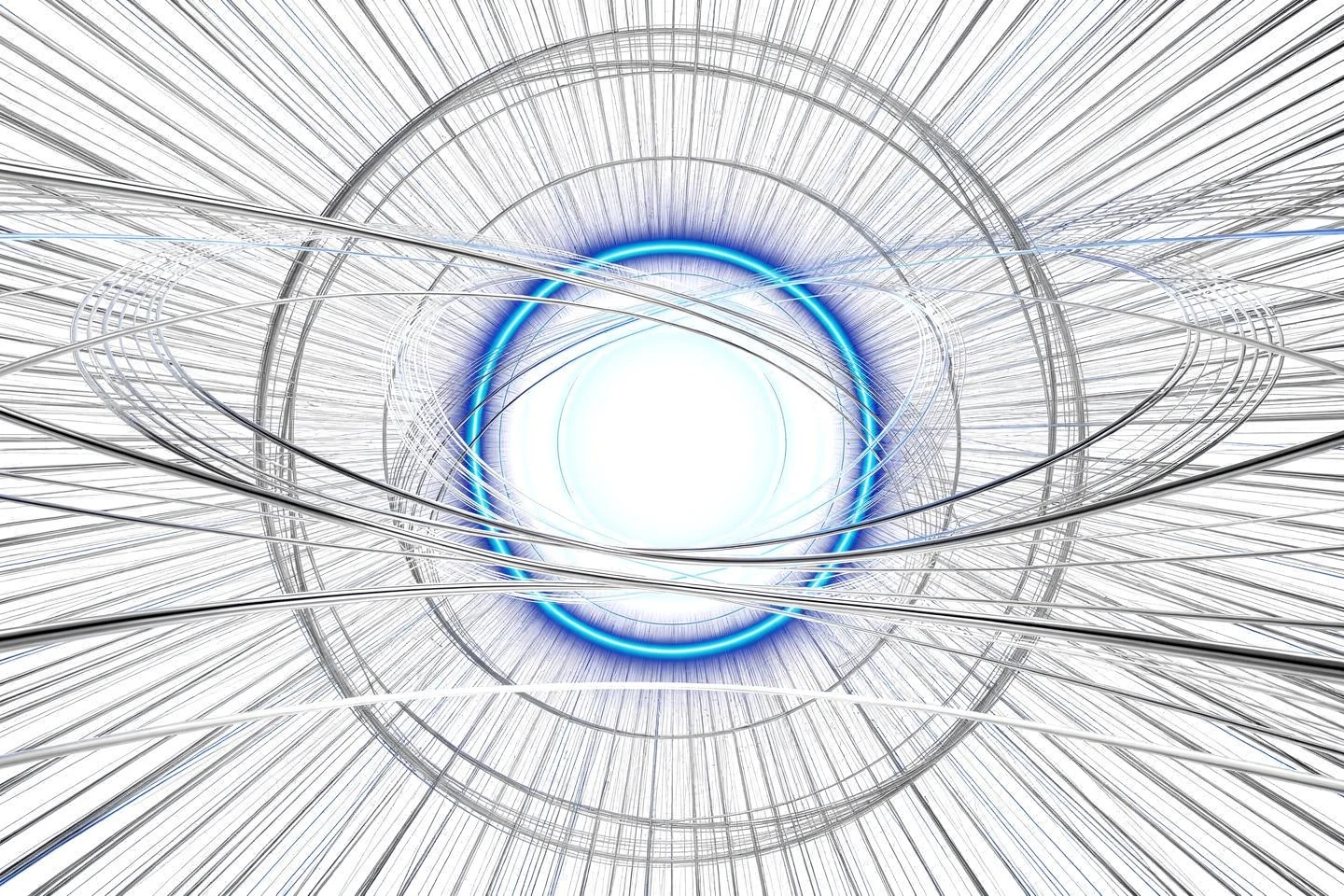
Two tunnels: one hits a dead end, the other passes through. That's the difference between a black hole (a light trap) and a wormhole — the brainchild of John Wheeler, which connects distant regions of curved spacetime. Light bends around both objects, forming a bright ring — this is gravitational lensing.
Scientists modeled a wormhole and a black hole (described by Karl Schwarzschild) with superheated gas falling onto them. Using brightness measurements of the gas and cosmic dust in the galaxy M87, they simulated their shadows. The wormhole lets light from the other side through, so it's a tad brighter, but time dilation near a massive body nearly cancels out the difference. Even the mighty Event Horizon Telescope can't tell it apart from a black hole's shadow.
Surprising fact: Wheeler also coined the term 'black hole.' The famous object M87*, blazing like a quasar, might not be an abyss but a portal — a wormhole masquerading as a black hole.
A wormhole has no event horizon — that point of no return where even light vanishes. Theoretically, traveling through one is possible, but whether the tunnel itself would hold up is an open question.
In the movie 'Interstellar,' a wormhole acts as a portal through which the protagonists travel to planets near a supermassive black hole.