Little Red Dots: The Secret Behind the Growth of Early Black Holes ✛ ✎ ✦
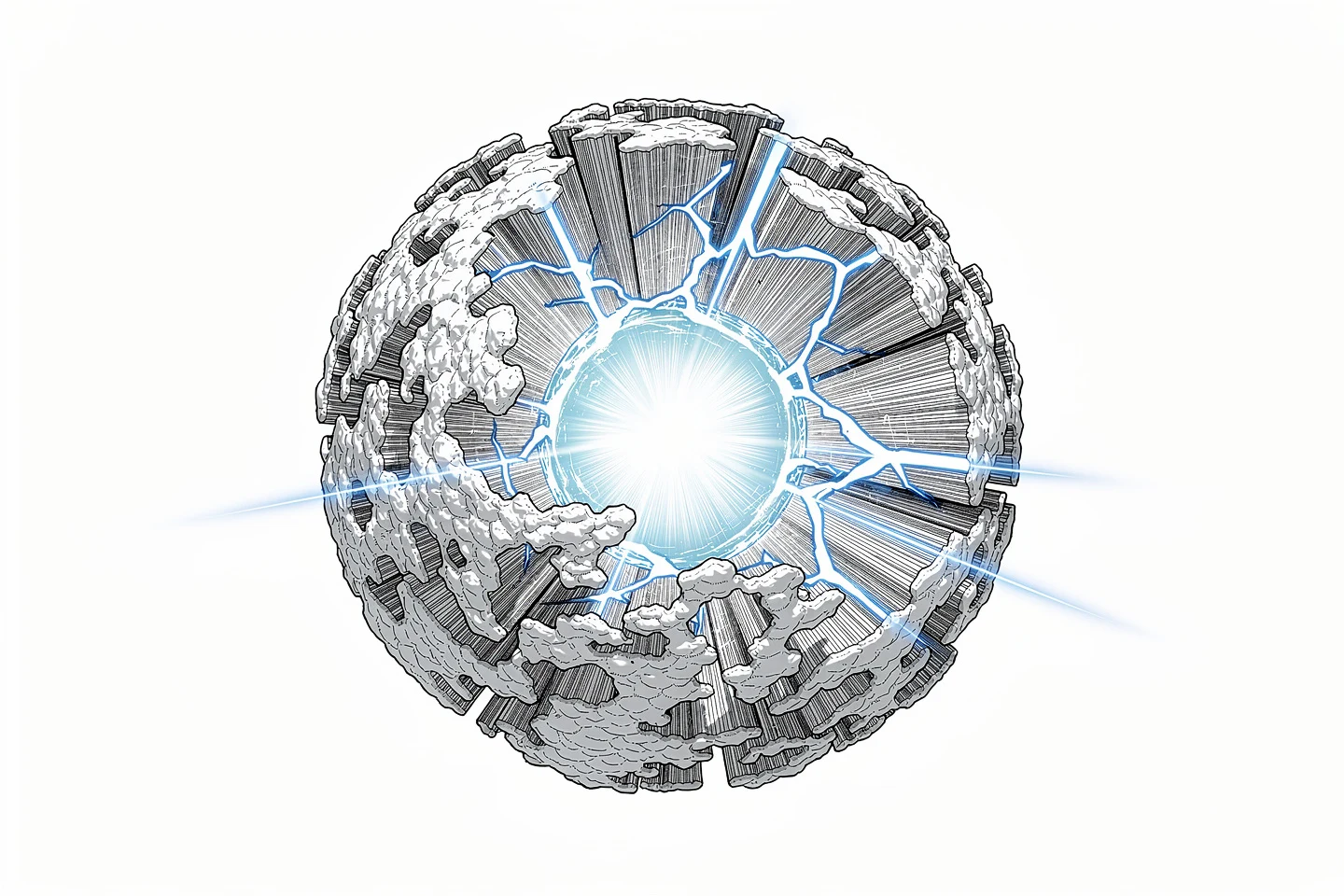
The James Webb Space Telescope discovered a scattering of red dots in the early universe: they are smaller than any galaxy and glow with a deep crimson light. Breaking down the light (a technique called spectroscopy) revealed hydrogen (the very lines studied by Balmer), carbon, helium, and oxygen, but all the glow struggles to get out, as if through a thick dark fabric. It turns out each dot is a supermassive black hole (an object first described by Schwarzschild), wrapped in a hot gas shroud. That shroud muffles the black hole's own brilliant light, making it mysteriously red. In the future, these hidden giants will become dazzling quasars, discovered back in the days of Hubble, but for now we see them under their gas blanket. The most surprising fact: the mass of these 'infants' is already a billion suns, even though matter is only just beginning to gather around them.
The name 'little red dots' was coined by astronomers when they saw a scattering of scarlet spots in the images. Someone remarked that they looked like ladybugs in the vast cosmos.
These objects resemble the mysterious black monoliths from '2001: A Space Odyssey' — compact sources of hidden energy, possibly steering the growth of their galaxies.