The Magnetic Pump: How Plasma Compression Accelerates Particles ✛ ✎ ✦
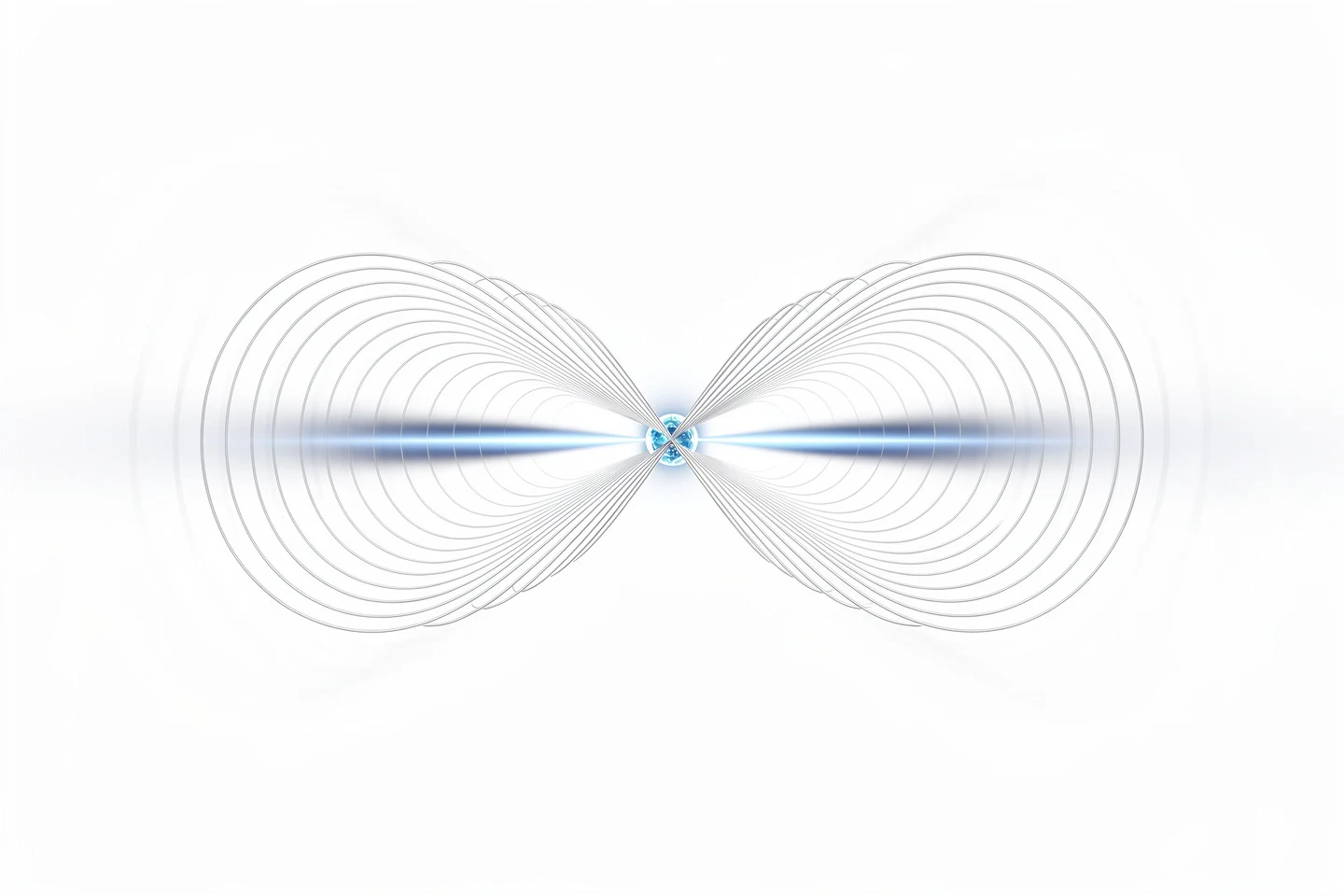
In rarefied cosmic gas, plasma, lonely particles are sometimes found rushing almost at the speed of light. Ordinary accelerators, shock waves or magnetic field reconfiguration, can't explain their energy. Recent computer modeling pointed to an unexpected candidate: the magnetic pump. If plasma is repeatedly compressed and expanded, the energy of these pulsations doesn't dissipate but is injected into individual particles. Like a bicycle pump that heats the air with each stroke, cosmic 'pumping' adds speed with each cycle.
The authors recreated on a supercomputer the pulsations similar to those raging near black holes and neutron stars. It turned out that after just five compressions, some particles were accelerated to near-light speed. Their energy distribution took on a characteristic shape with a long 'tail'—such sprinters are few, but they exist. The secret of efficiency lies in disorder: the plasma boils with small instabilities that transfer energy from large eddies to the fastest particles. Nature simply follows the path to maximum disorder, which was first realized by Ludwig Boltzmann.
Such a 'pump' helps explain the mysterious glow of gas around supernovae, in the Sun's corona, in disks near black holes, and even in the voids between galaxies. Astronomers are preparing to test the model by scrutinizing the radiation from these objects with spectroscopy.
The idea of 'magnetic pumping' was proposed back in 1958 for heating plasma in fusion reactors, and today it explains the most energetic particles in the Universe.