How a foreign particle in a quantum sea learns to walk express
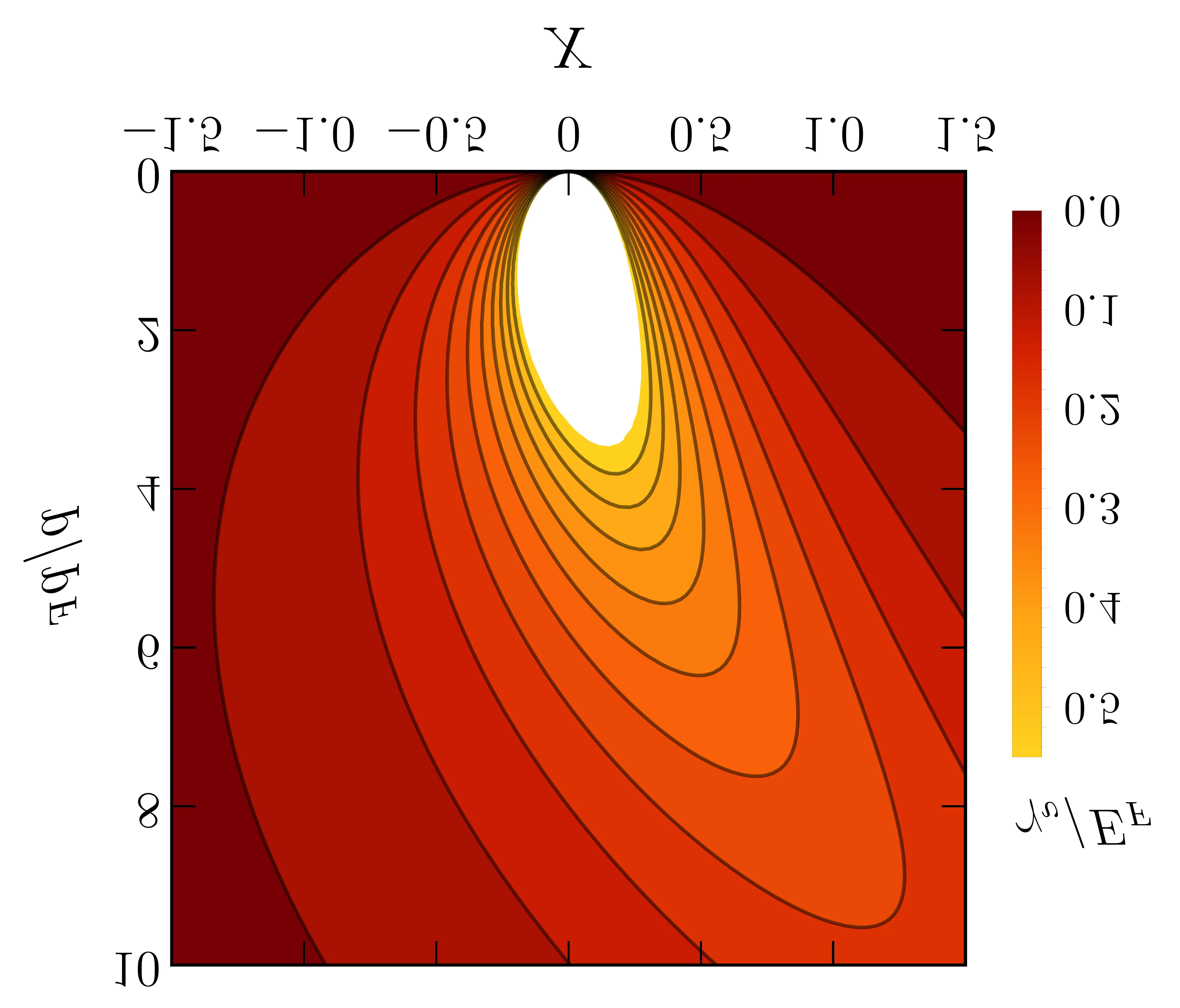
A pebble falls into a pond, and ripples spread across the water. In the quantum world, the pond is not made of water but of many identical particles, and the pebble is also a particle, just a foreign one. Such a foreign particle is called a Fermi polaron. For decades, physicists have studied how a polaron behaves when it stays in one place. But what happens when it starts moving? The answer has just been obtained by experimentalists working with ultracold atomic gases.
In the new experiment, the polaron was accelerated using a clever Raman scheme, essentially giving it a laser kick, and its energy was tracked with great precision. At low speeds, the polaron behaves like a dignified gentleman in a heavy coat: its effective mass is constant, and its energy grows smoothly. At very high speeds, the coat seems to fall off — the polaron becomes almost bare and stops noticing its surroundings. And in between, wonders begin.
So motion itself induces a quantum phase transition — a change in the particle's state without any change in temperature or density. This result is not just a line in a textbook. It teaches us how impurities behave in superfluid media, in neutron stars, or in future quantum materials. The quiet pond of a quantum gas has answered a question that has long hung in the air: motion is not just speed, but new physics.
Original abstract
as written by the authors arXiv:2606.21567
The Fermi polaron, formed by an impurity interacting with a surrounding Fermi sea, exemplifies the canonical quasiparticle concept as a cornerstone in our description of quantum many-body systems across a wide range of energy scales. Experiments on atomic quantum gases have provided profound insights into the universal nature of the Fermi polaron. While most previous studies have focused on the case of zero impurity momentum, finite-momentum properties have remained largely uncharted. Here, we investigate the moving Fermi polaron by combining a novel Raman acceleration scheme with high-precision radio-frequency spectroscopy, exploring the quasiparticle dispersion relation over a wide range of momenta. We compare our measurements of energy shifts and spectral linewidths with a microscopic theory and reach quantitative agreement for all momenta. For low momenta, we find the energy of the moving polaron to be fully consistent with the Fermi liquid picture of a dressed particle with a constant effective mass. At high momenta, the polaron approaches the behavior of a weakly interacting bare particle, featuring small energy shifts and weak broadening. For intermediate momenta, broadening is generally larger and, most strikingly, the behavior differs for attractive and repulsive polarons. While the repulsive polaron exhibits a smooth connection between both regimes along with a monotonic change of the energy shift, the attractive case shows a peculiar non-monotonic behavior. With increasing momentum, the attractive polaron enters a regime where its energy deviates from the constant effective mass expression and broadening suddenly increases. By comparing this observation with theory, we show that this abrupt behavior coincides with the attractive polaron entering a molecule-hole continuum, where it is no longer the ground state. We interpret this as a motion-induced polaron-molecule transition.
The polaron is named after the physicist Lev Landau, who predicted that an electron in a crystal can "dress" itself in a cloud of phonons and move as a particle with a different mass.
In Peter Watts's novel Blindsight, alien creatures use quantum effects for information processing — perhaps polaron transitions could underlie their biocomputers.