The Phase Transition Nobody Noticed express
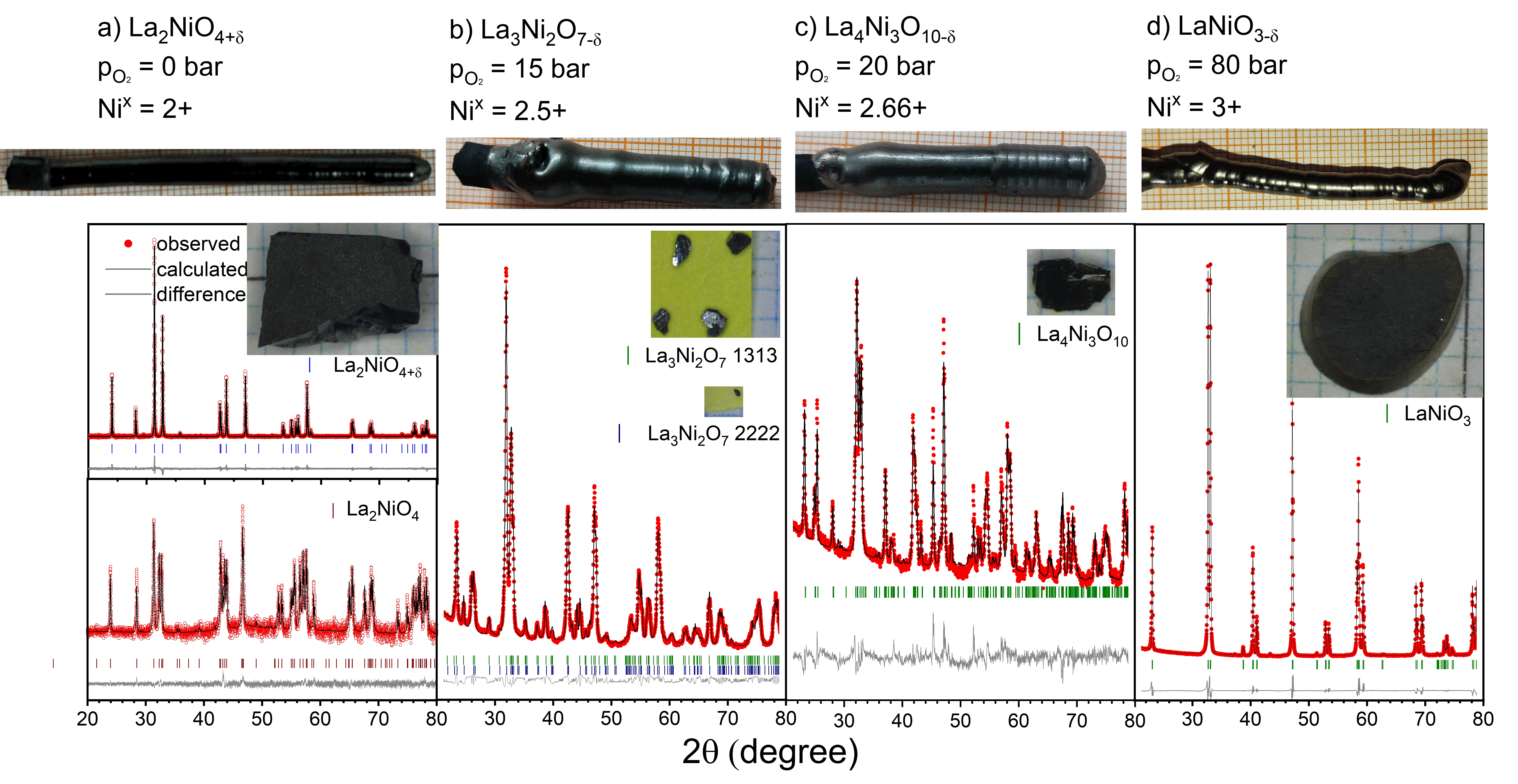
The nickelate family consists of layered crystals, like a stack of pancakes: nickel and oxygen layers alternate with lanthanum spacers. Two years ago, superconductivity was discovered in them — the ability to conduct electricity without resistance when cooled. But data from different labs varied so much that it seemed each was measuring a different material. A group of researchers decided to get to the bottom of it.
They grew flawless single crystals of the entire Laₙ₊₁NiₙO₃ₙ₊₁ series and put them through dozens of tests: from X-ray to magnetic measurements, from two degrees above absolute zero to a thousand degrees Celsius. And they found something that had eluded others: at high temperatures, another atomic rearrangement occurs in the crystal — not the one leading to the tetragonal phase, but a completely different one. It had gone unnoticed because it hides behind a more obvious transition.
This "quiet" phase transition explains the discrepancies in results: depending on synthesis conditions, a crystal can end up on either side of an invisible boundary. Now that we know about it, we can grow nickelates with tailored properties, and get closer to understanding high-temperature superconductivity.
Superconductivity in nickelates was only discovered in 2019, even though the first nickelate was synthesized back in the 1970s — for half a century, no one thought to cool it down and check its resistance.