A Supernova's Heart Beats in Jets express
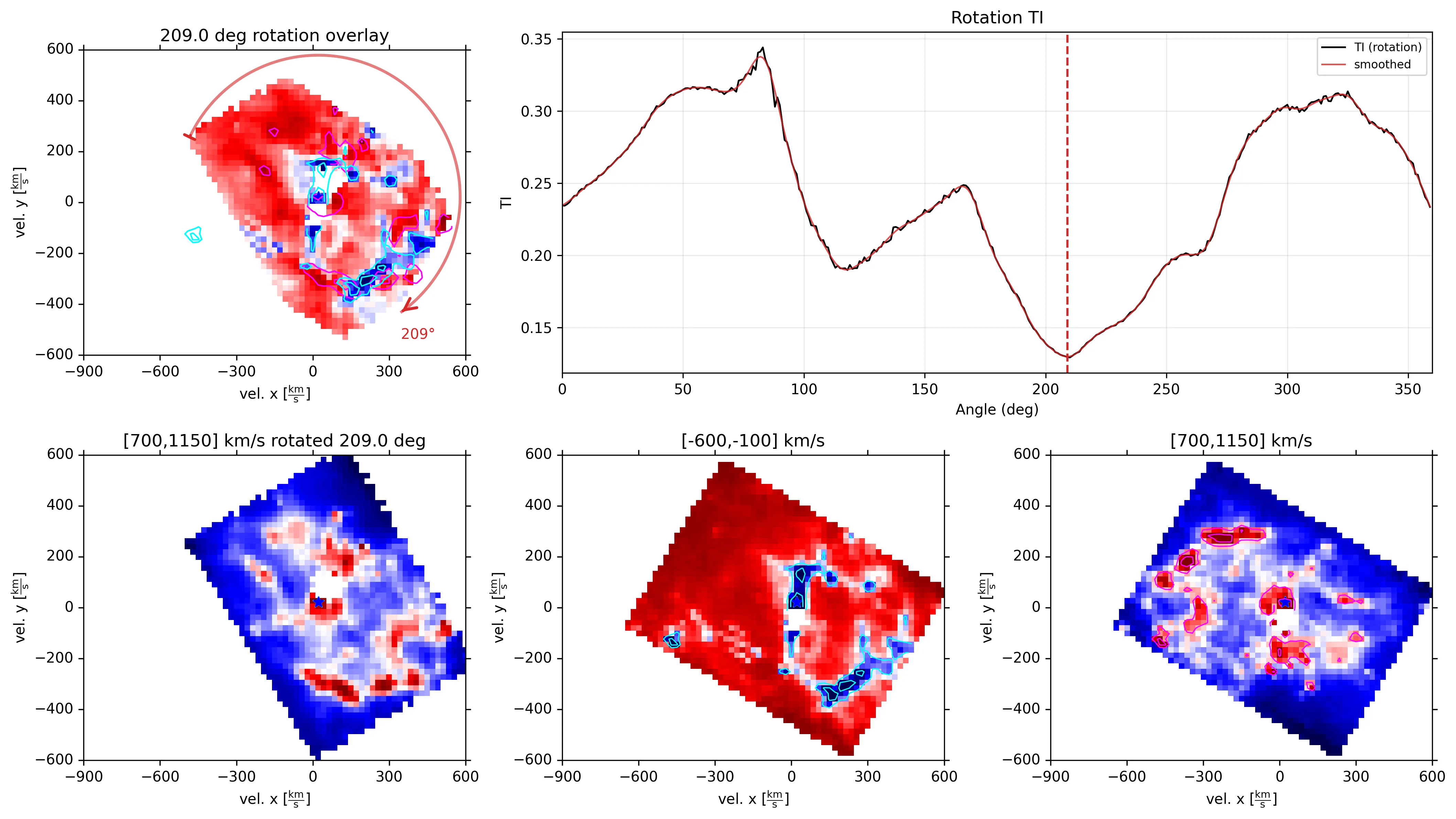
The James Webb Space Telescope JWST has peered into the heart of supernova remnant SNR 0540-69.3 — what remains after a massive star died in a neighboring galaxy. Inside, amid the flying debris, astronomers saw a clear pattern: glowing clumps and voids arranged in a symmetric design. One half looks like a mirror image of the other, but rotated by 189 degrees. Such point symmetry is no accident; it's a trace of powerful jets that plowed through the material during the explosion.
The 'jittering jets' mechanism paints a picture of a chaotic yet orderly process. When a star's core collapses into a neutron star, it doesn't settle down immediately. The newborn object, spinning and wobbling, shoots out narrow beams of particles — jets. These don't fire in one direction; they change direction like a garden hose that slips from your grip. Each pair of jets carves its own channels and cavities into the expanding material. In SNR 0540-69.3, at least three such pairs have been found: one created the main cavities, another made 'nozzles' at a wide angle, and a third may have added asymmetry.
This discovery connects two worlds: the explosions of massive stars and the formation of planetary nebulae. Both share the same signature left by jets. Both show symmetry, cavities, and knots. So nature uses a similar tool regardless of scale. And the Hubble telescope never dreamed of such clarity.
The pulsar at the center of SNR 0540-69.3 is a neutron star the size of a city but with a mass of one and a half Suns. It spins 20 times per second, and its 'kick' at birth was so strong that the center of the explosion was left behind.
In Robert Wilson's novel 'Spin,' neutron stars are used as interstellar beacons — and here nature itself has set up 'signposts' made of jets so we can read the story of the explosion.