The Universe on a Bicycle: Dark Energy Changes Sign ✛ ✎
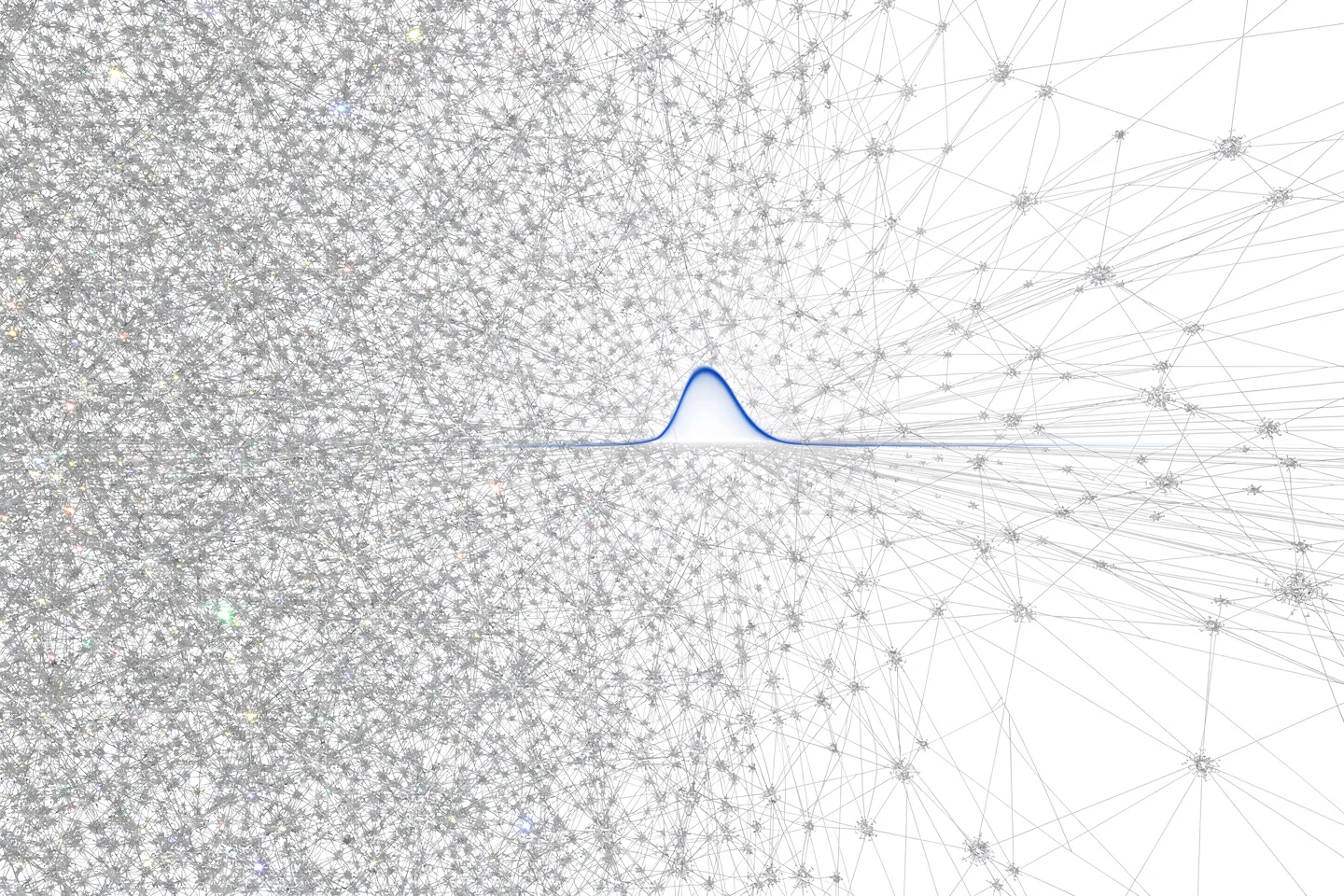
Imagine you're riding a bicycle. At first, the chain is on a low gear — pedaling is hard, speed drops. Then you smoothly switch to a high gear, and start accelerating. Something similar might have happened to the entire Universe. The standard model says that dark energy is always a repulsion, making the Universe expand faster and faster. But then the ends don't meet: measurements of the early Universe (from its "baby picture"—the cosmic microwave background) give one expansion rate, while explosions of distant stars, studied back by Edwin Hubble, give a completely different one. The difference is roughly like a speedometer showing 100 km/h while a roadside camera shows 130, even though both instruments rely on the same standard — the speed of light. This "Hubble tension" is a real mystery.
A new model, tested with spectral surveys and data on primordial hydrogen, solves the problem. In the past, dark energy was negative — meaning it attracted, like an invisible brake. And then it became positive — began to repel. This explains why today's measurements give a higher rate than ancient ones. The theory, first laid out by Georges Lemaître and reinforced by the observations of Vera Rubin, gets a surprising continuation: the "dark" substance itself turned out to be dynamic. Perhaps quantum effects from the earliest moments after the Big Bang are involved here.
Negative dark energy acted like an invisible pit: it attracted everything in the early Universe more strongly than ordinary matter, slowing expansion. Escaping this 'gravitational trap' was only possible when dark energy changed sign — about 3–4 billion years ago.
The idea of dark energy changing its properties echoes the cyclic universes from Liu Cixin's 'Three-Body Problem' trilogy, where fundamental laws can change their nature.