A Noise Filter for Gravitational Waves express
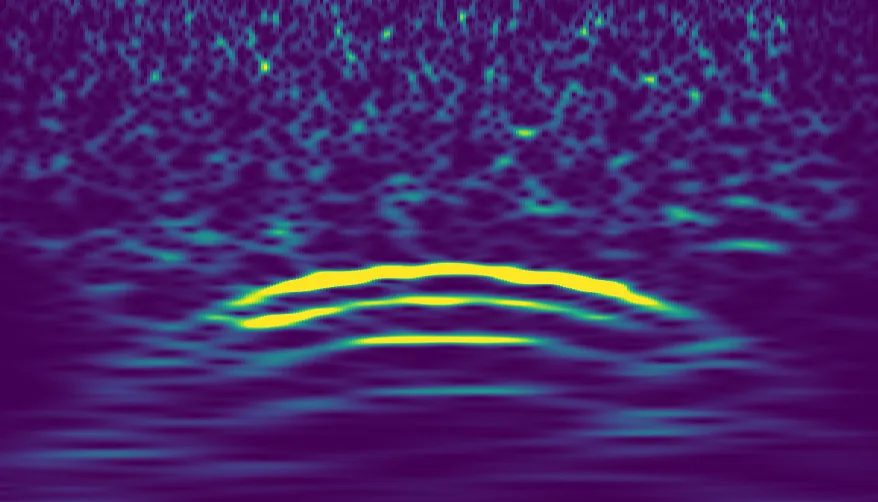
Gravitational-wave detectors are like sensitive microphones, listening for the whispers of distant cataclysms. But every now and then, a sharp crack bursts in — a brief noise spike known as a glitch. Such a crack can resemble a real signal from a black hole merger, and astronomers risk mistaking noise for a discovery.
A new tool, bilby_glitch, works like a sound engineer who hears both the music and the clicks in a recording at the same time. It doesn't try to guess where the signal is and where the glitch is: it builds a model of both right away. It's based on the popular program bilby, to which three noise models were added: slow scattering (like an echo off a wall), a sine-Gaussian burst, and a chirplet — a short signal with a changing frequency, similar to the whistle of a falling rocket.
The method was tested on two real events. For GW191109, the result matched previous analyses — a calm case. But GW200129 proved to be finicky. When the glitch was modeled with wavelets (short wave bursts) and the signal with the IMRPhenomXPHM approximation, the black hole's spin looked confident. However, when the more accurate NRSur7dq4 approximation was used for the signal, the evidence for spin nearly vanished. The takeaway: our ideas about how a black hole spins can depend on how we clean the sound.
So astronomers get not just a tool, but a reminder: in the silence of space, even a tiny glitch can change the story.
Glitches in LIGO detectors are sometimes called "whales" or "ravens"—each type has its own onomatopoeic name based on the signal's shape.