Why Bubbles Don't Immediately Turn into Matter express
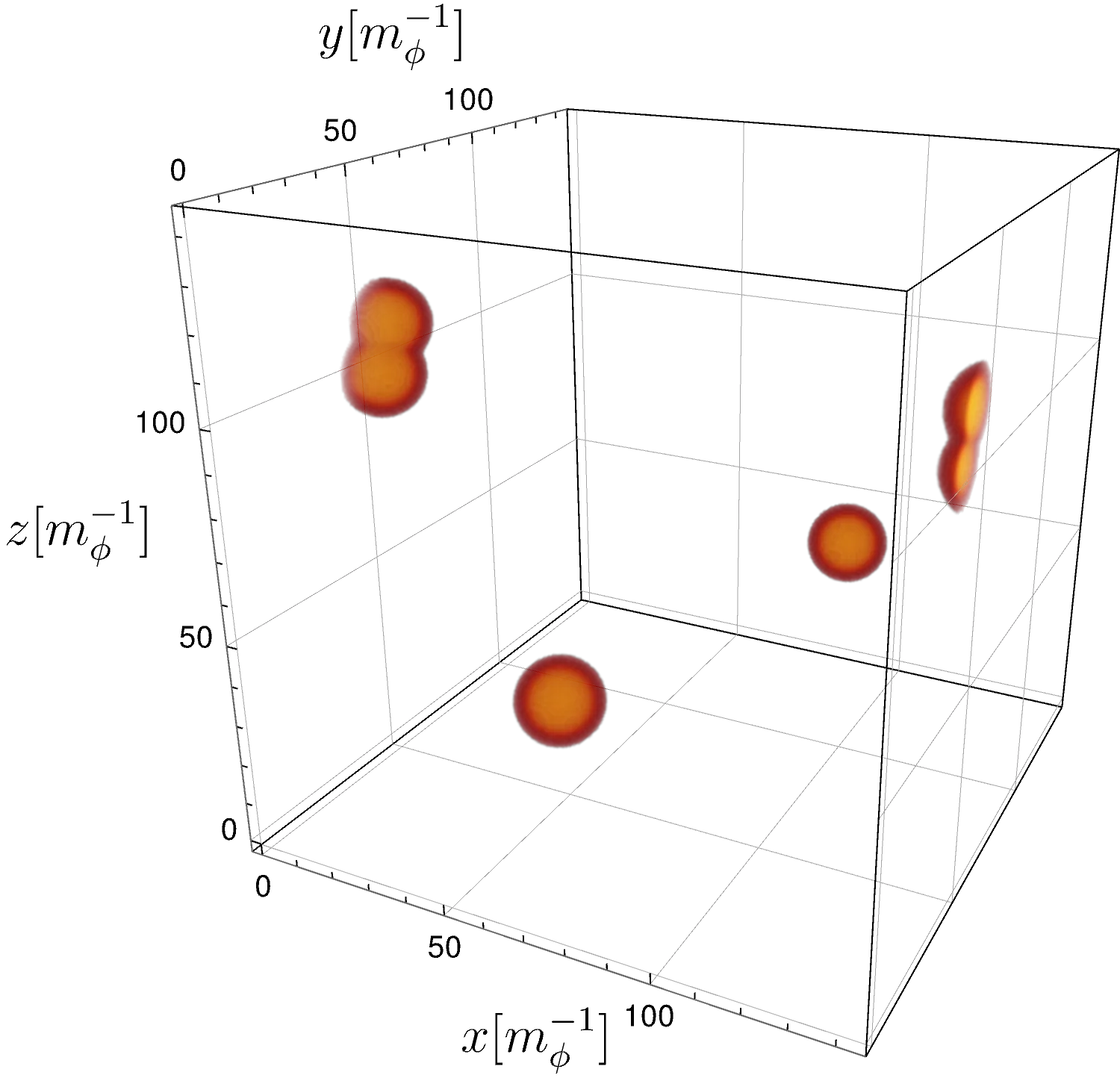
Boiling water in a pot is a good place to start. Bubbles of steam rise, pop, and the surface settles down. Something similar might have happened in the first moments of the universe's life with a special field filling space: bubbles of a new phase inflated and collided, like islands of steam in liquid. Previously, it was thought that after a collision, the field would immediately freeze and turn into ordinary particles. New research says: no, there won't be an immediate calm.
When two bubbles collide, their walls move at tremendous speed — nearly as fast as light. At that instant, the field doesn't spread into a smooth layer but ripples: steep gradients form, like wrinkles in a crumpled sheet. These wrinkles store kinetic energy and take a long time to smooth out. Computer simulations in one, two, and three dimensions showed: the faster the bubble walls moved (and the speed is measured by a number physicists call gamma-star), the longer the field behaves not like heavy matter but like something between matter and radiation. Radiation is when energy is spread out in space, like light in a room; matter is when it's clumped. So after bubble collisions, the mixture is intermediate: neither one nor the other.
The transition to true matter begins only when the wrinkle-like inhomogeneities stretch with the expansion of the universe — roughly like a pattern on a balloon being inflated. Or when the field calms itself through internal collisions and particle transformations. This process drags on: matter starts to dominate only when the universe becomes older by a factor equal to that gamma-star. If the bubbles were moving with gamma-star equal to one thousand, you'd have to wait a thousand times longer than previously thought. And that changes the picture for many phenomena born in that era.
Such a delay is no trivial matter. It directly affects which gravitational waves (ripples in space itself) reach us from those times, how many primordial black holes could form, and how invisible dark matter was distributed. All this no longer resembles a pot but rather a slow-motion shot of a soap bubble popping: the film doesn't vanish instantly but quivers and gathers into droplets only after a noticeable time.
If bubbles in the early universe collided at speeds close to light, their energy would be so great that a single such bubble could briefly outshine an entire galaxy, but there was no one around to see it.
In Carl Sagan's novel "Contact," a machine built from alien blueprints creates a bubble of spacetime that travels through wormholes — an echo of the idea of bubbles altering the very fabric of reality.