Stars in Dusty Cocoons: The Search for Dyson Spheres Continues express
A star wrapped in an invisible blanket warms up more than it should. That's exactly how ten red dwarfs look, which astronomers from the Hephaistos project have been monitoring. These stars lie within 300 parsecs (about 1000 light-years) of us and emit far more infrared energy than their modest sizes can explain.
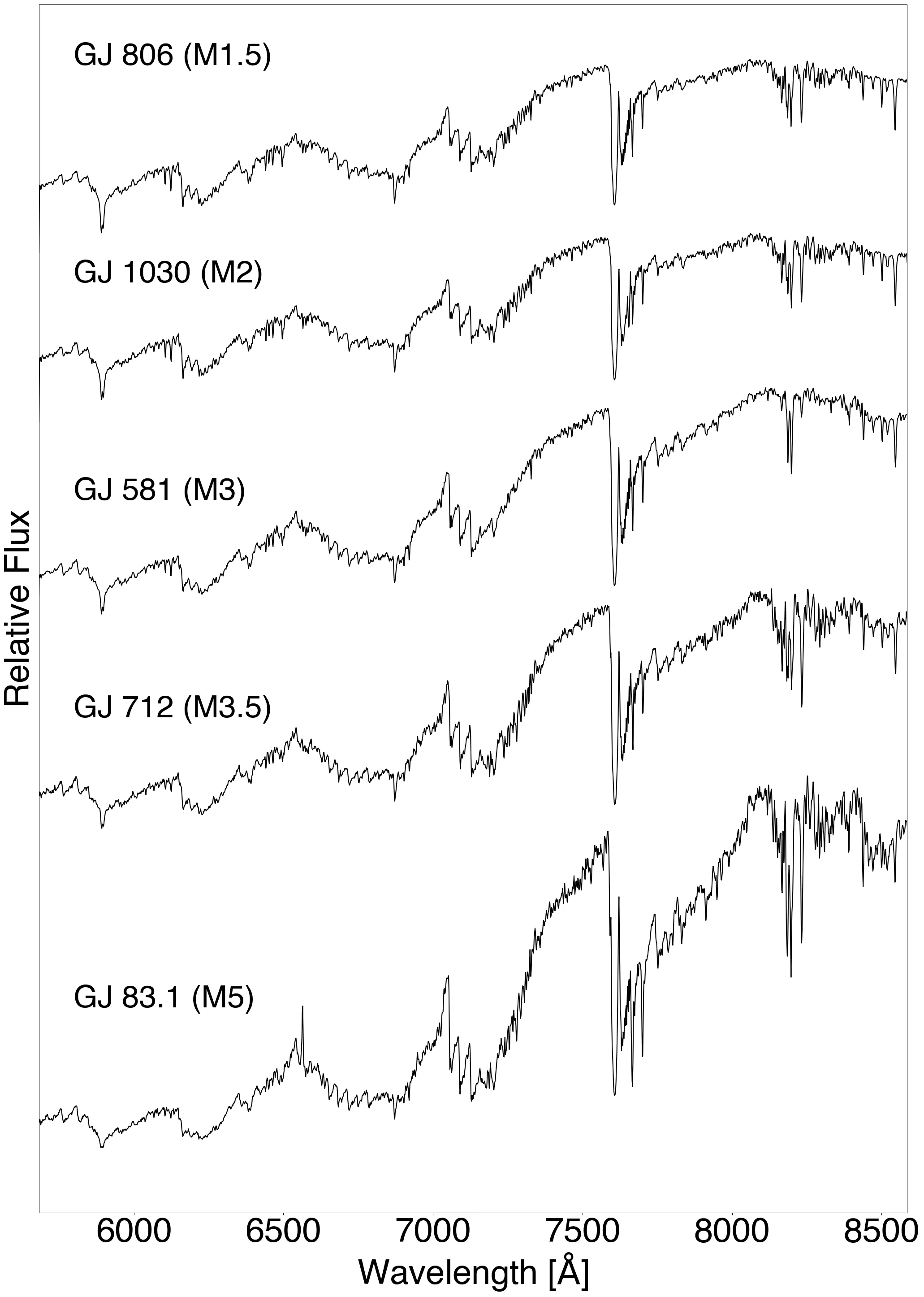
The researchers gathered photometry data (brightness measurements) for all ten objects, and for three of them they added spectroscopy — splitting the light into colors. It turned out that the stars themselves are nothing special: their masses, temperatures, and ages fall within the normal range. But here's the odd part: the three with detailed spectra show no signs of youth, even though young stars often have dust disks that produce a similar infrared excess. One star showed a weak hydrogen line, but that's more likely a flare on the star itself than a gas disk.
So far, the authors have not found a definitive explanation for the infrared excess. It could be dust left over from planet formation, or a distant background galaxy that happens to fall in the frame and shines in the infrared. For two stars, new images from the James Webb Space Telescope have already shown that very red distant galaxies are superimposed on them. To sort it out completely, we need even sharper instruments, like Webb itself or the ALMA radio telescope array. They will be able to tell whether we're looking at dust or a grand construction.
That very blanket enveloping these red dwarfs is still refusing to reveal its nature. But every new look through a telescope lifts its edge a little, and one day we'll see what's hiding inside.
Original abstract
as written by the authors arXiv:2607.25701
The infrared-flux excess of stars harbouring Dyson spheres represent one potential technosignature of extraterrestrial intelligence. In a previous Project Hephaistos paper, we highlighted seven M dwarfs within 300 pc with unusual infrared properties that seem to resemble those expected for Dyson spheres. In the present study, we present an analysis of photometric and, in some cases, spectroscopic data on these seven objects, plus three additional objects with similar properties, to further constrain their nature. The stellar parameters, derived from calibrated empirical relationships for M dwarfs, reveal no irregularities with respect to the overall M-dwarf population of main-sequence stars. While the infrared properties of our targets resemble those of circumstellar disks in a transitional state, the objects with spectroscopic data show no signs of youth usually associated with such objects. One of our spectroscopic targets does exhibit weak H$$\alpha$$ emission, but this is more likely attributed to stellar activity than to the gaseous accretion disk expected for a young star. After this analysis, we still find no clear explanation for the infrared excess of these stars, but note that observations with the JWST and/or the Atacama Large Millimeter/submillimeter Array would be able to probe scenarios in which the infrared excess is due to circumstellar dust emission or an infrared-bright background source that remains undetected at shorter wavelengths. For two of our stars, JWST observations have recently revealed superpositions with very red background galaxies.
The coolest of the studied red dwarfs has a surface temperature of about 2700 °C — half as hot as the Sun, but still hotter than lava in a volcano's throat.
The Dyson sphere idea inspired the episode "Relics" of the series "Star Trek: The Next Generation," where the crew of the Enterprise finds an abandoned sphere around a star.