Brown dwarf phenomena encompass the unusual atmospheric and magnetic behaviors of substellar objects that are too massive to be planets but too light to sustain hydrogen fusion. These objects exhibit complex weather systems, including patchy clouds, storms, and temperature variations, which have been directly imaged by telescopes like the James Webb Space Telescope (JWST). Brown dwarfs also show strong magnetic activity, producing radio emission and auroras, and some are 'rogue' planets drifting freely in space without a host star.
History
Brown dwarfs were first theorized in the 1960s by Shiv Kumar, but the first confirmed detection came in 1995. Detailed study of their weather and magnetic phenomena accelerated with the advent of infrared space telescopes like Spitzer and JWST in the 21st century.
How it works
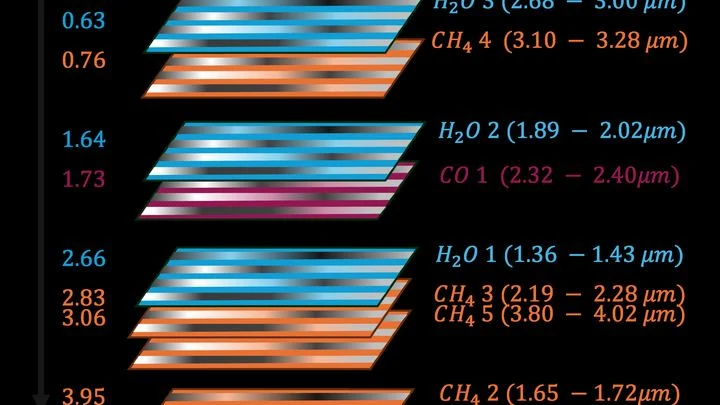
Brown dwarfs have atmospheres rich in molecules like water, methane, and ammonia, with clouds made of silicates or iron droplets. Their rotation drives atmospheric circulation, creating banded patterns and storm systems similar to Jupiter's but with different chemistry. Magnetic fields, generated by dynamo action in their partially ionized interiors, can accelerate charged particles, producing radio waves and auroralemission. Variability in brightness arises as clouds rotate in and out of view, and JWST's infrared spectroscopy has revealed chemical changes over time.
In practice
Studying brown dwarf atmospheres helps refine models of gas giant exoplanets, since both share similar physics. It also informs our understanding of star formation and the boundary between stars and planets.
Fun fact
Some brown dwarfs have surface temperatures cooler than a human's body temperature, yet they emit enough infrared light to be detected across interstellar distances.
A neutron star is the remnant of an exploded star, compressed so tightly that a teaspoon of its material would weigh as much as a mountain. Inside such an object, protons and neutrons are packed tightly together, and under enormous pressure, hyperons, particles containing a strange quark, can appear.
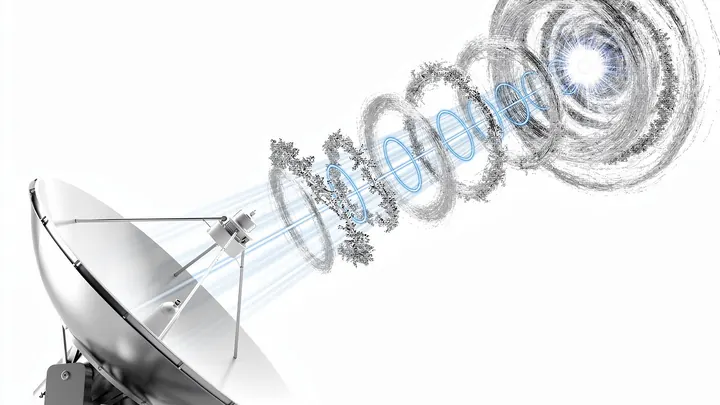
A lighthouse that blinks not every second but once every few minutes or even hours. That is exactly how long-period radio transients behave — cosmic sources discovered only recently.
A star wrapped in an invisible blanket warms up more than it should. That's exactly how ten red dwarfs look, which astronomers from the Hephaistos project have been monitoring. These stars lie within 300 parsecs (about 1000 light-years) of us and emit far more infrared energy than their modest sizes can explain.
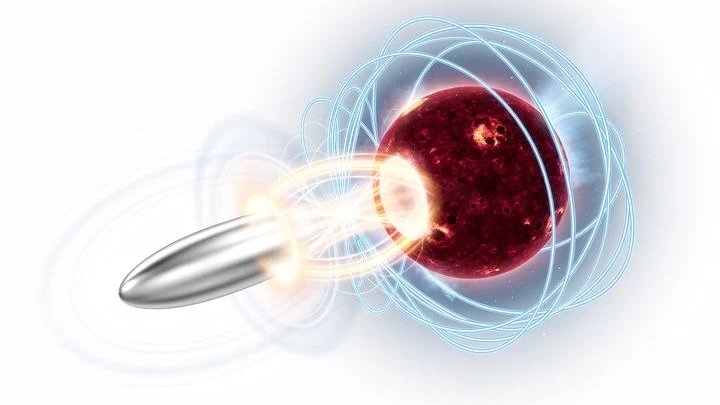
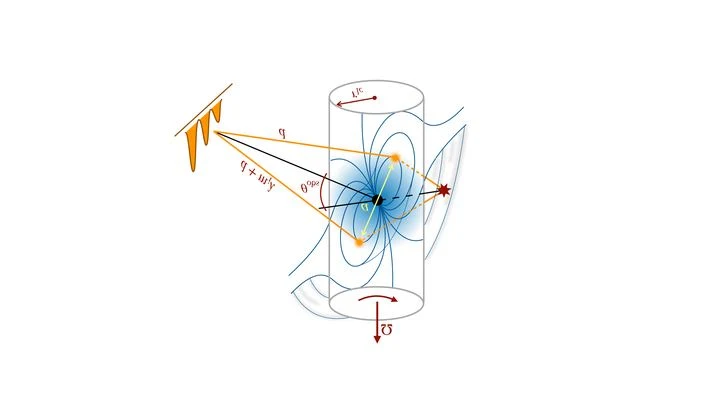
2,41 hours. That's exactly how long a day lasts on SIMP 0136 — a lonely planet-like object 6,1 parsecs away. That's twice as far as Proxima Centauri. Its mass ranges from 12,7 to 17,8 Jupiter masses, placing it on the boundary between planet and star.
10¹⁵ Gauss — that's the magnetic field found on some white dwarfs. It is billions of times stronger than what a compass shows on Earth. A white dwarf is not a star in the usual sense, but a cooled core the size of a planet. Inside, gravity opposes the pressure of degenerate electrons.
Radio astronomy began with the mysterious noise caught by the antenna of Karl Jansky and the rhythmic pulses that Jocelyn Bell Burnell playfully called 'little green men'.
The Moon is an airless sphere of dense rocky grit called regolith. When fast particles from space slam into it, muons are born in the soil — unstable relatives of electrons, but two hundred times heavier. Most fly downward and fade away in the depths. But those that pop upward into the vacuum can travel tens of kilometers before decaying.
In 2007, astronomers heard a mysterious millisecond click from space — that's how fast radio bursts, or FRBs, were discovered. Since then, they've become a cosmic-scale detective story: as bright as an entire galaxy and compressed into an instant, these signals race through the Universe at the speed of light.
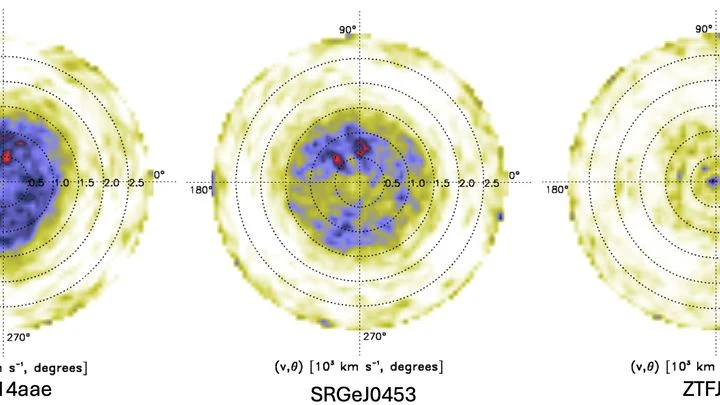
The James Webb Space Telescope has peered into a strange binary world. Here, a dead star, a white dwarf, slowly roasts its companion, a brown dwarf. The object, named ZTFJ0038+2030, completes a full orbit in just a few hours. One side of the brown dwarf always faces the white dwarf, much like the Moon faces Earth.
In 2022, astronomers began discovering strange cosmic beacons — long-period radio transients. Unlike fast pulsars, discovered by Jocelyn Bell Burnell in 1967, these objects flared with periods of tens of minutes and hours.
Using the JWST space telescope, astronomers conducted a chemical analysis of the centaur Chiron, an icy body from the fringes of the Solar System. It turns out its gas activity resembles a layered cake. Carbon dioxide evaporates from the surface, forming a top crust.
Planet WASP-121 b always shows the same face to its star, like a rock in a campfire. The dayside is so hot that ordinary hydrogen, the very stuff most of the universe is made of, can't take it: its molecules tear apart into individual atoms, and the temperature flips upside down: the higher you go, the hotter it gets.
Astronomers aimed JWST at the rocky exoplanet LHS 3844 b — a world orbiting another star, where a year lasts just 11 hours. The planet is tidally locked: one side always faces the star, with a permanent scorch of 770°C, while the night side is plunged into icy darkness.
Gravitational wave detectors work like sensitive microphones, picking up the trembling of space from distant cosmic catastrophes. When two black holes merge into one, the newborn object rings like a bell, and that ringing is a unique 'voice' of gravity.
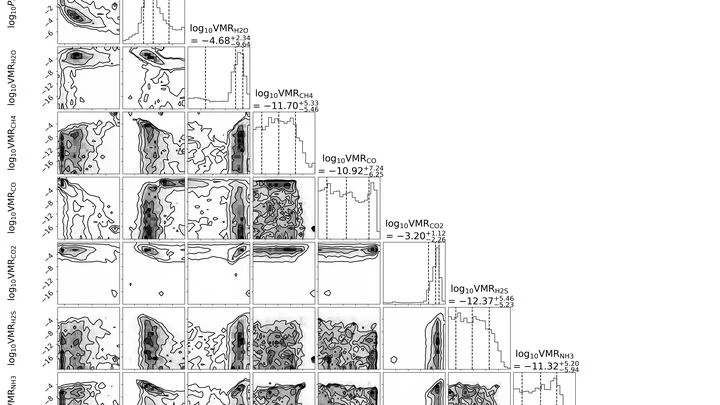
A world that for years refused to show its face. Planet GJ 1214 b is exactly such a case. It is larger than Earth but smaller than Neptune, and its dense envelope made the atmosphere invisible to telescopes: starlight passed through it without leaving clear traces. But astronomers' persistence and a new sensitive instrument provided the first clue.
During a thunderstorm, the sky acts like a giant battery: charge builds up in the cloud, and a lightning bolt discharges it. That charge is invisible, but cosmic particles (muons, which constantly rain down on Earth from space) can sense it. As a muon flies through a charged cloud, it speeds up or slows down slightly, and these changes reveal the voltage inside the cloud.
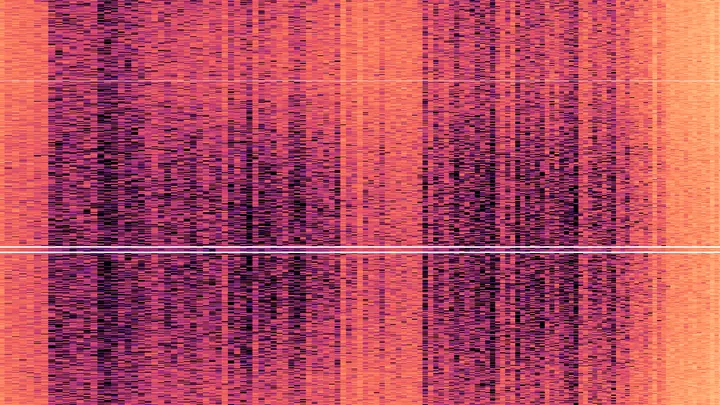
A radio telescope picks up a signal from the Crab Nebula, and instead of a smooth line, the screen shows bright and dark bands, like on a zebra's hide. This is the emission from the pulsar, a rapidly spinning neutron star left over from a supernova explosion.
The cosmos is full of objects that lacked the mass to become stars. These 'failed stars'—brown dwarfs — resemble campfire embers that never ignited, just slowly smoldering and cooling.
Astronomers have been wrestling for years with the mystery of fast radio bursts — ultra-short yet incredibly powerful radio signals from distant galaxies. Some flash repeatedly, like beacons with an irregular rhythm, while others are detected only once, leaving behind nothing but questions.
In three binary systems, a white dwarf, the dead core of a star, steals gas from its companion. The companion is so dim that it cannot be seen with an ordinary telescope. The James Webb Space Telescope looked at these pairs in infrared light, like a night-vision camera.
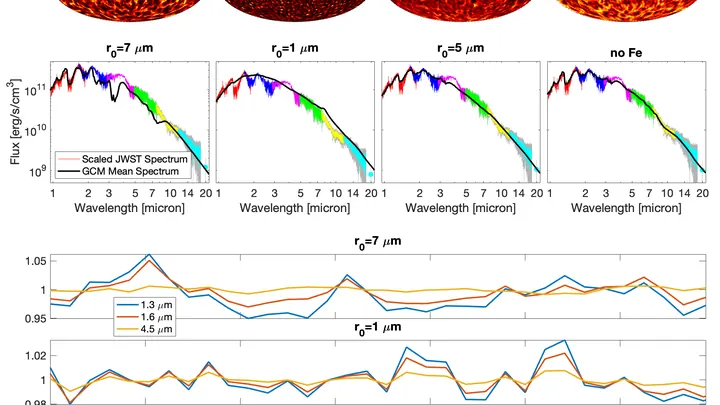
Far beyond the Solar System, a world called VHS 1256B wanders — a giant planet without a star. For a long time, astronomers couldn’t figure out why its brightness jumped by nearly 40% in just a few days. The answer came with the James Webb telescope: it turns out, colossal storms of silicate dust engulf the entire planet.
Brown dwarfs are heavier than planets but lighter than stars. Their atmospheres resemble a bubbling pot: clouds of scorching sand and iron droplets rise and fall.
The ARCADE2 radiometer on a high-altitude balloon detected an excess radio emission, while the ground-based EDGES experiment found an anomalously deep trough in the hydrogen spectrum at 21 cm. Both signals do not fit the standard cosmological model and point to an unknown source of soft photons.