Dark Matter from Magnetic Droplets express
In the first moments after the Big Bang, the universe was a searing 'soup' of particles. As it cooled, phase transitions occurred — much like water turning to ice. At one such moment, magnetic monopoles of dark matter could have been born: tiny clumps of field with a single magnetic pole.
The catch is that in the usual scenario, far too few monopoles are produced. The authors found a loophole: if the dark sector contains a very light particle, a dark fermion, its abundance plummets as the universe cools. Then almost all of the dark matter's mass comes from monopoles. Their mass is enormous: about $10^8$ GeV (one hundred million gigaelectronvolts). For comparison, a proton weighs roughly 1 GeV. Such a particle would evade ordinary detectors.
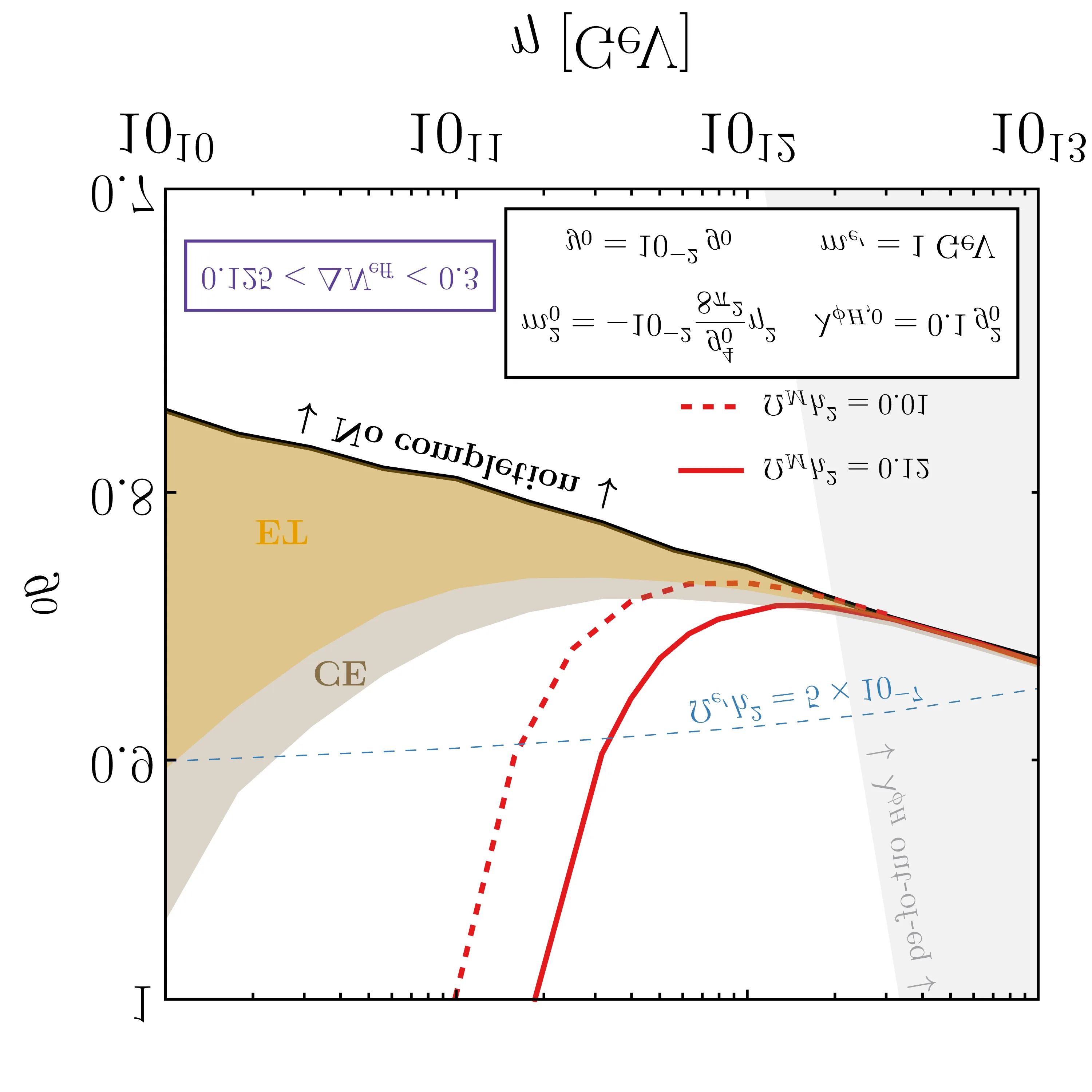
But the model leaves traces. First, it requires dark radiation — additional light particles that slightly alter the universe's expansion. This shift, denoted ΔN_eff, nearly reaches current observational limits. Second, if the phase transition was sharp, like the crack of ice in a hard frost, it would have generated gravitational waves. Their frequency falls within the range of future interferometers, such as the planned eLISA.
So dark matter, invisible today, might announce itself through ripples in spacetime. The opening image of the 'soup' ties back to the cooling universe, where at just the right moment 'droplets' of monopoles condense, and we hope to hear the echo of that distant transition.
Paul Dirac predicted the magnetic monopole back in 1931, but none has ever been found. If they do exist, they might make up all of dark matter — meaning there is five times more of them than ordinary matter.
In Alan Lightman's novel 'Einstein's Dreams,' time flows differently — similarly, here: monopoles born in the first fractions of a second have survived to this day and govern the motion of galaxies.