A Trap Made of Shadow: How to Hold a Particle in the Dark ✛ ✎
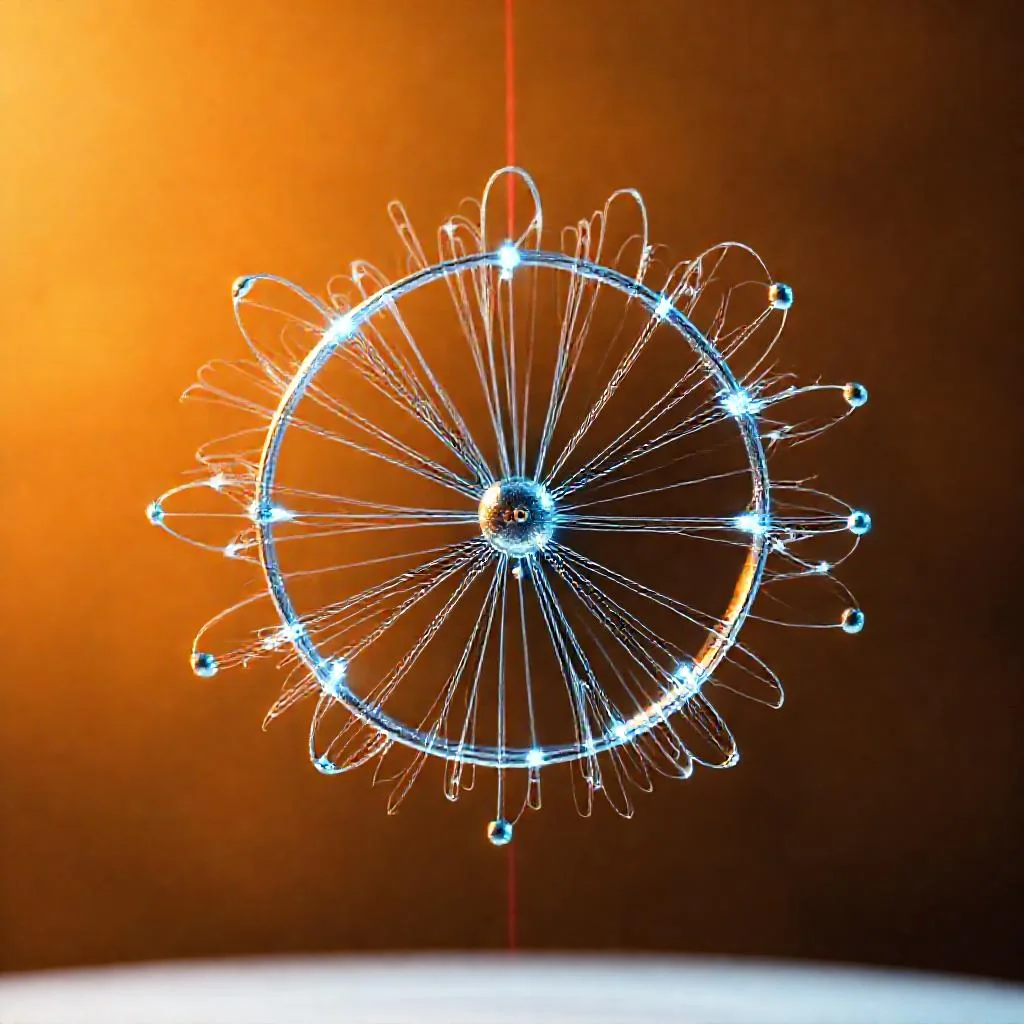
An optical tweezer works like a dimple: a particle rolls into the brightest part of the beam. But a silicon cylinder about one-hundredth the thickness of a human hair does the opposite: it looks for the shade. In the experiment, it was suspended in a dark stripe of a standing wave, where light cancels itself out. The particle hung there calmly, as if the light were pushing it away.
Why is that? Glass is always drawn to light because light slightly nudges the electrons inside, and they drag the particle along. Silicon, when its size is just right, responds to light in the opposite way: it gets pulled toward where there is less light. It's like a float that seeks not the crest of a wave but the trough between waves.
Previously, this had only been achieved with individual atoms, not solid particles. Now you can bring particles right up against surfaces and build quantum sensors that don't jitter from extra light kicks.
Silicon cylinders can withstand laser power that would vaporize a glass sphere of the same size, because at an intensity minimum they absorb almost no light.
The idea of holding an object in darkness echoes the concept of a 'dark trap' from science fiction, such as the stasis field in the series 'Star Trek', where matter is held without visible interaction.