A massive galaxy cluster acts as a giant lens. Its gravity warps the fabric of space, and the light of distant objects, bending around this curvature, is amplified and split into multiple images.
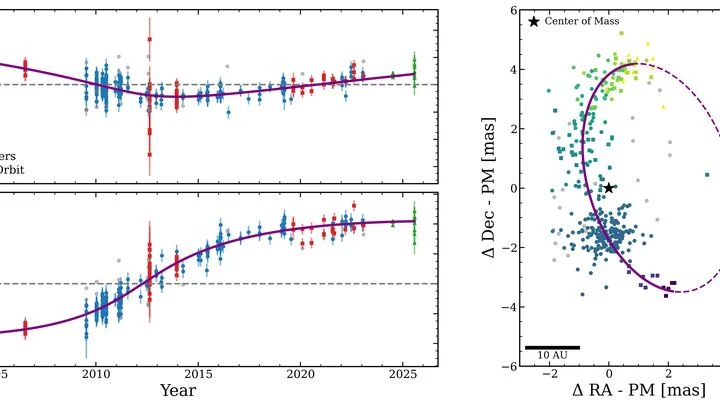
For 23 years, Hubble and James Webb have peered into the heart of Omega Centauri, a globular cluster where millions of stars crowd into a space just 150 light-years across. In this stellar beehive, the motion of the stars betrayed an invisible partner: a main-sequence star (one that has not yet left the main evolutionary branch) seemed to be tugged in a dance with an unseen weight.