A Black Hole with Three Event Horizons: A New Recipe ✛
A traditional black hole is a perfect sphere with a single point of no return. But a new model likens it to a matryoshka. Add tiny quantum loops (an idea from Rovelli) to the classic Schwarzschild portrait, along with ever-present dark energy — and you get three event horizons.
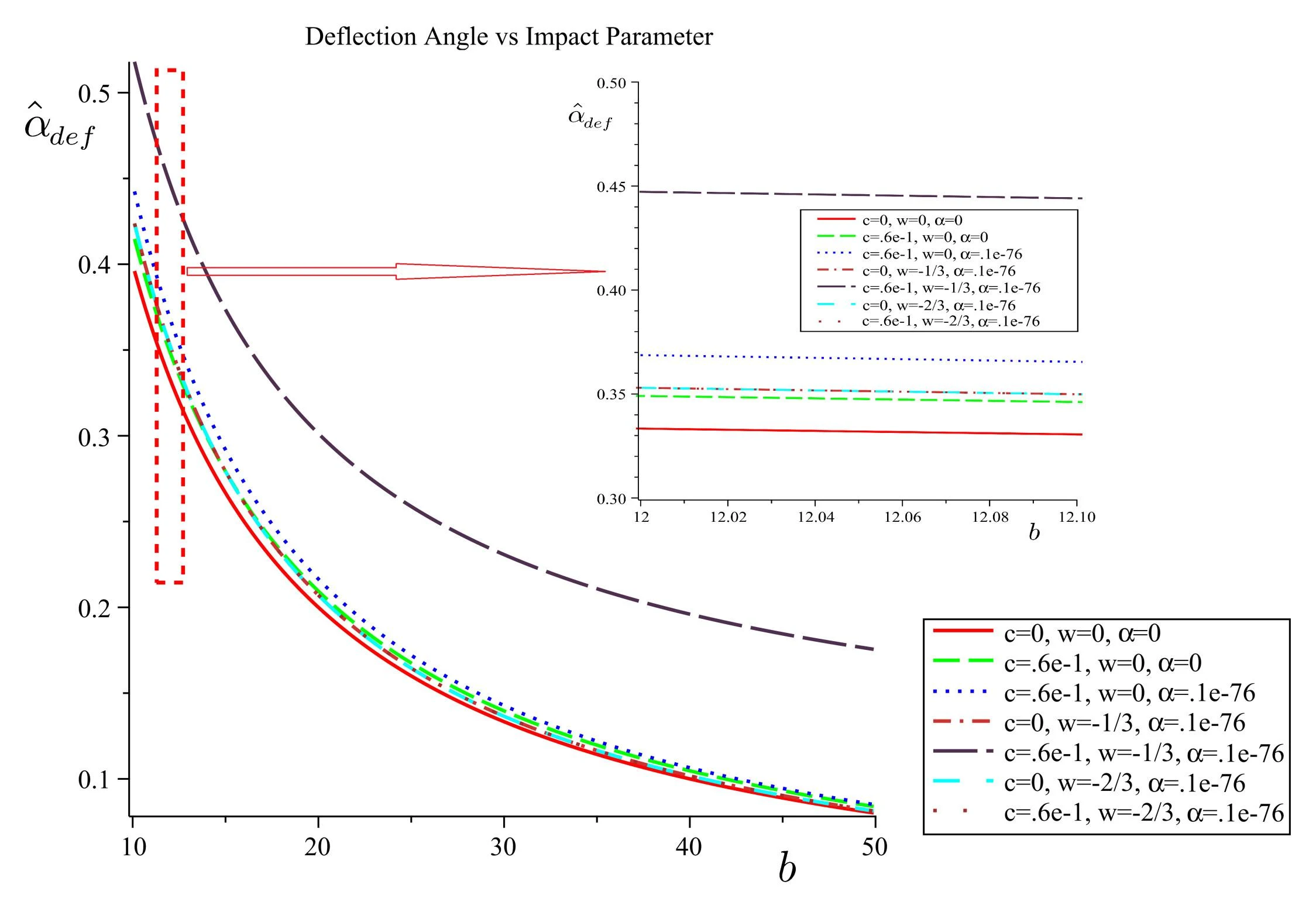
The shadow of such a hole against a glowing background is not just a dark disk, but a target with several rings: each ring traces a separate layer of the matryoshka. Most astonishingly, the innermost ring is a purely quantum effect: without the microscopic jitters of space, it wouldn't appear. By tweaking parameters, you can make the shadow pulsate or stretch into an oval — future telescopes will recognize these patterns. After a jolt, the hole vibrates, and its 'ringing' (spectrum of gravitational waves) gives away its inner structure: the frequency of the sound depends on how deep the quantum horizon is buried.
This layered structure isn't just a mental game. Shadows and waves from such holes will show how spacetime curvature and the accelerating expansion of the universe interact (a discovery by Adam Riess, recognized with a Nobel Prize). And also — whether our quantum theory of gravity is correct. Colliding matryoshkas will produce a unique ring that detectors might already be catching.
When matryoshka black holes collide, they ring not with a single tone, but a chord: each horizon contributes its own frequency. From this sound, you could deduce the thickness and number of layers.
In the movie 'Interstellar,' the black hole had only one horizon; if it had been a triple matryoshka, the journey would have turned into crossing three boundaries with different properties — and who knows what would have awaited inside.