Carbon Giant by a Dead Star ✛
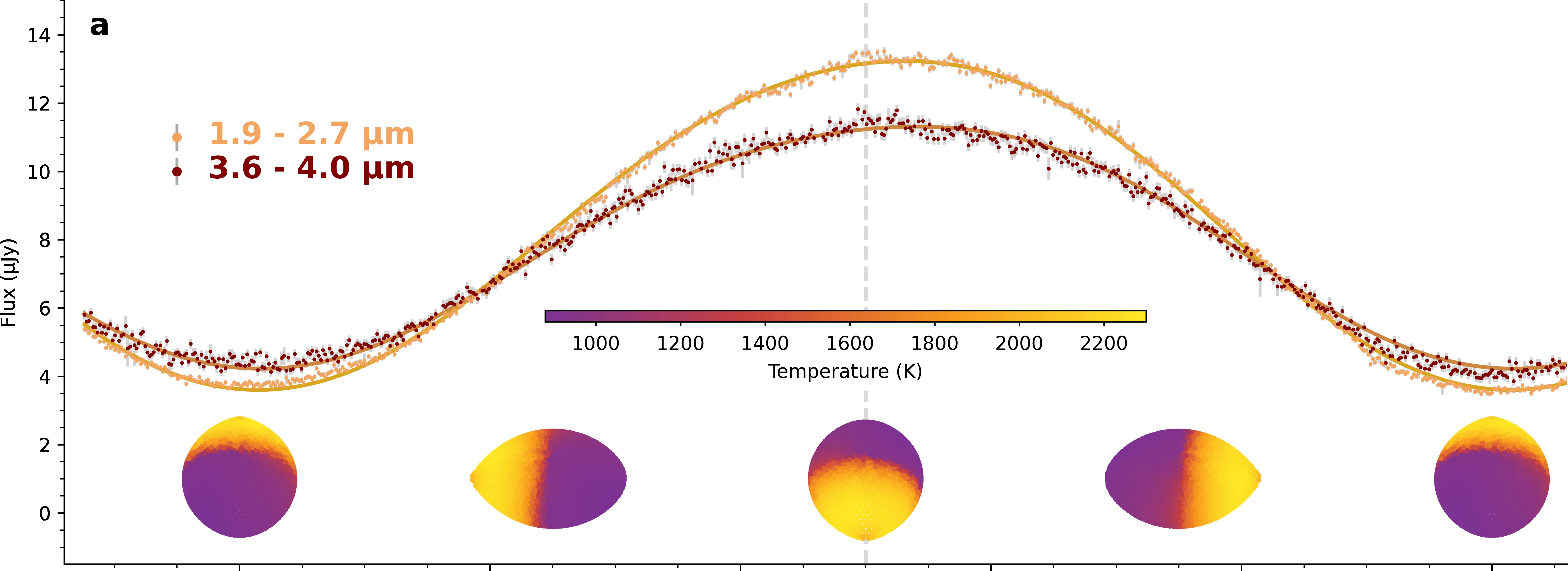
Using the James Webb Space Telescope, astronomers peered at the pulsar PSR J2322-2650b — the superdense core of an exploded star. Orbiting it is a gas giant the size of Jupiter, heated to a glow of molten steel. This pair has been dubbed the 'black widow': the dead star siphons material from its companion.
The planet's spectrum delivered a shock: instead of water vapor, the atmosphere turned out to be soot — chains of two and three carbon atoms. Carbon is a hundred times more abundant than oxygen compared to normal, and ten thousand times more than nitrogen. Such carbon riches don't fit the 'black widow' model, where the companion should be a molten metallic core. Apparently, world-building around dead stars is far more mysterious than we thought.
Planet PSR J2322-2650b completes a full orbit around the pulsar in 3.3 hours — faster than any human-made satellite in low Earth orbit.