Time from Disorder: How Atoms Revealed an Internal Clock ✛
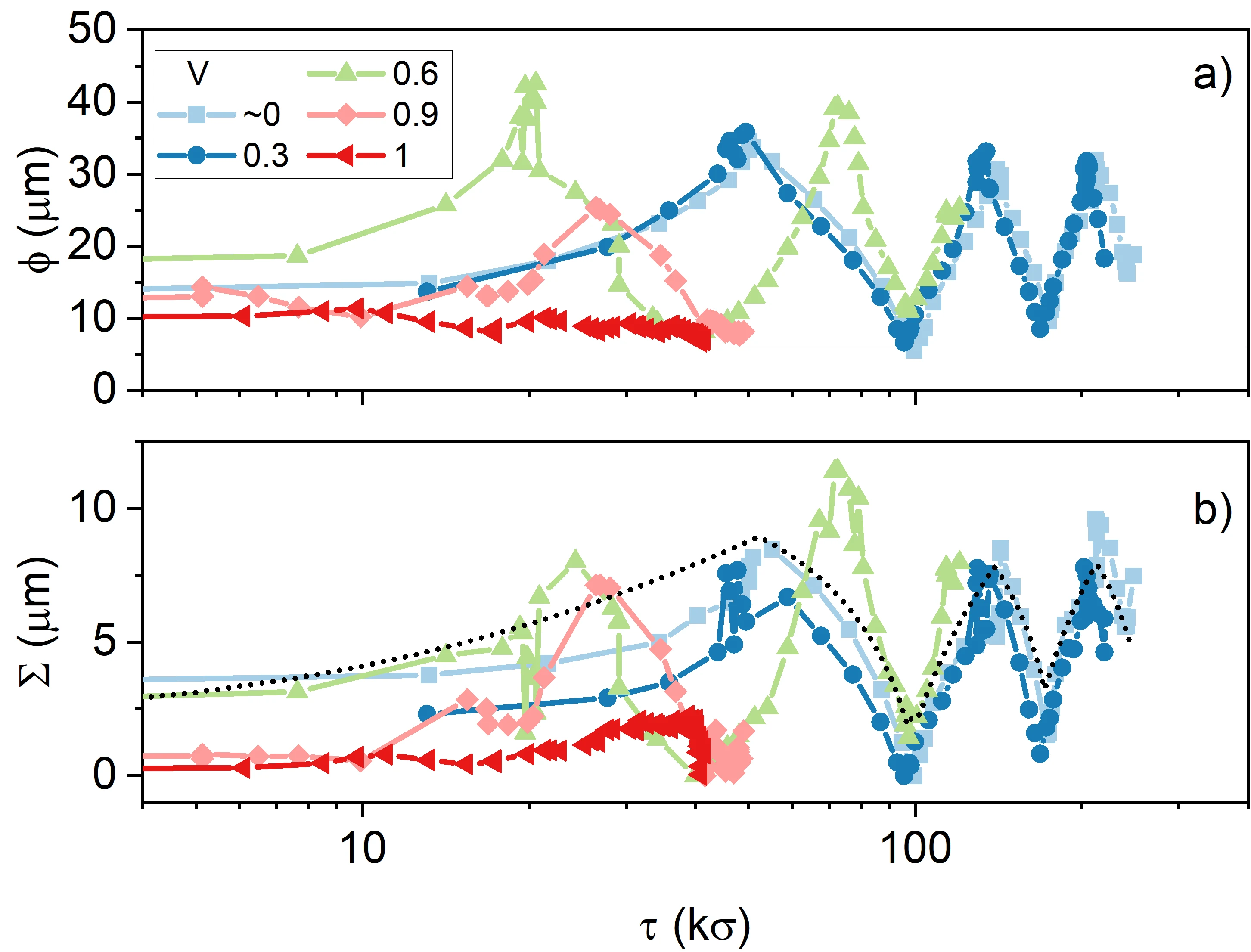
Scientists took a cloud of atoms, colder than space, and cut it in half with a laser. One half was in plain sight, the other hidden. Instead of clocks, they measured the growth of disorder — entropy. Through it, all events lined up in a clear chain, even as the visible part expanded and contracted. Disorder worked like clock hands: the greater the chaos, the further in time. In a room without windows, growing disorder is the only sign of time's passage. Based on the same principle, entropy made it possible to write an equation describing the hidden part — the shadow found its voice. The idea was predicted by John Archibald Wheeler and Bryce DeWitt back in the 1960s: time is not absolute, it arises from relationships. Now it's an experimental fact. This approach paves the way to understanding time inside black holes, at the moment of the Big Bang, and wherever spacetime is curved to its limits.
Disorder in a closed system never decreases: that's what gives time its direction from past to future.