Black hole merger confirms Hawking's area law ✛
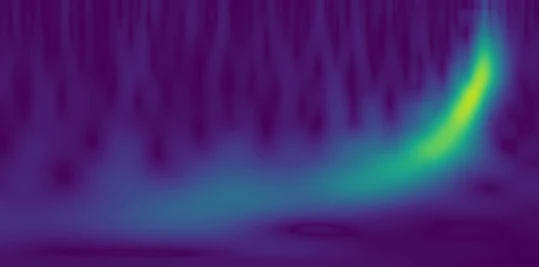
In early 2025, LIGO detectors picked up a burst of gravitational waves from the merger of two black holes — nearly twins with masses of 34 and 32 Suns. Their final dance sent ripples through the fabric of spacetime, as predicted by Einstein back in 1916. The signal was so crisp that it allowed a test of Hawking's theorem: the total area of event horizons never decreases.
The two holes behaved like inside-out soap bubbles: when ordinary bubbles pop, the total film surface shrinks. But for black holes, the final horizon must become larger than the sum of the initial ones. And that's exactly what happened — the area grew, as the law demands. This relentless growth ties the horizon to entropy, the measure of disorder that always increases in the universe. Perhaps this is what sets the arrow of time.
A twist: Hawking himself later realized that, due to quantum effects, black holes can slowly evaporate, shrinking their area. But in this event quantum corrections were negligible, and the classical law worked perfectly. Observations like these turn black holes into a proving ground for the deepest laws of nature.
LIGO's sensitivity can detect a length change 10,000 times smaller than a proton. That's like measuring the distance to the nearest star with the precision of a human hair.
The cinematic Gargantua from 'Interstellar' would behave the same way: its horizon would relentlessly grow with every swallowed object, as now confirmed by observations.