Yue Zhao

9 articles · 30 co-authors · latest: 2026-07-21
18 citations · h-index 2 · 7 papersData: Semantic Scholar

We have retold 9 papers by this author. 1 of them with a full read. most often about: black hole merger, EEG seizure detection, Neural Network Oscillations. 30 co-authors across our retellings.

Links in the knowledge graph
EEG Can't Tell Remission from Healthy
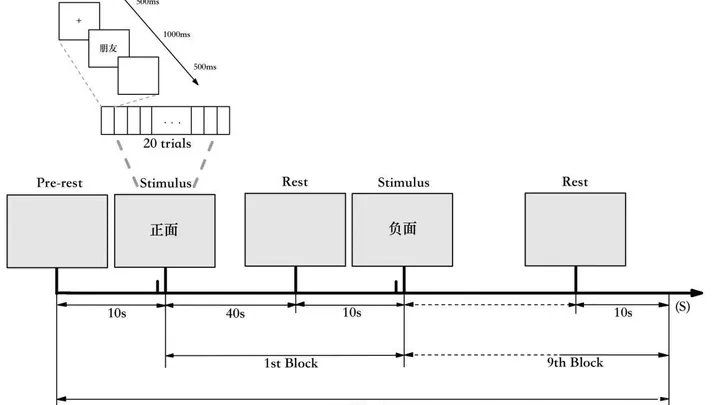
Depression is sometimes sought in the brain's electrical waves. The logic is simple: if a disease has stages (acute, maintenance, recovery) then the signals should change gradually, like volume when you turn a knob. Researchers took EEG recordings from 74 people: 24 in the acute phase, 23 in the maintenance phase, and 27 healthy.
General Relativity2026-03-261 minarXiv:2603.25938express
Tuning Into the Hum of Spinning Stars
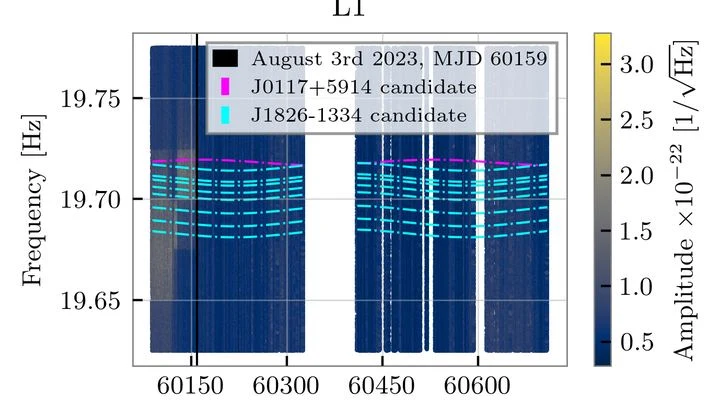
After a supernova explosion, a neutron star neutron star remains: a city-sized ball of unimaginably dense matter, spinning hundreds of times per second. Any tiny bump on its surface would make it wobble like an off-balance spinning top, humming faintly through the fabric of space.
Plasma Physics2026-03-291 minarXiv:2603.27828express
Plasma without a textbook
Plasma is a gas in which electrons are stripped from atoms, behaving like a soup of charged particles. To predict how such a soup flows and heats up, you need to know how particles collide and exchange energy.
Mesoscale2026-04-161 minarXiv:2604.14780express
Magnetic Hearing on a Circuit Board
Earth's magnetic field, the one that swings a compass needle, is strong. The new sensor picks up fields a hundred thousand times weaker, and it needs neither liquid helium nor bulky setups. Everything fits on a circuit board, just like the one inside your smartphone.
General Relativity2026-05-261 minarXiv:2605.27225express
Cosmology2026-05-262 minarXiv:2605.27227express
Gravitational waves measure the expansion rate of the universe
Imagine a giant inflatable balloon with galaxies painted on it. As it inflates, the pattern stretches and neighboring dots move apart. The rate of that stretching is the Hubble constant. Astronomers usually catch light from distant stars and see how much it has reddened due to the stretching of space.
HEP Phenomenology2026-06-181 minarXiv:2606.20393express
Neutrino Wind from Neutron Stars
In the depths of a neutron star, the remnant of an exploded star, matter is compressed so tightly that a teaspoon would weigh billions of tons. Within this superdense material, a special kind of force might be at work, one that affects only muon and tau neutrinos.
General Relativity2026-07-212 minarXiv:2607.19293express
Gravity Passes Another Test: 168 Mergers Confirm Einstein
A huge bowl of water. Drop a stone into it — ripples spread across the surface. The fabric of spacetime works much the same way: when two massive stars merge, they create ripples — gravitational waves. These waves travel to Earth and are picked up by giant detectors like LIGO and Virgo.