Magnetic Ripples: How Relativity Plays with Spins express
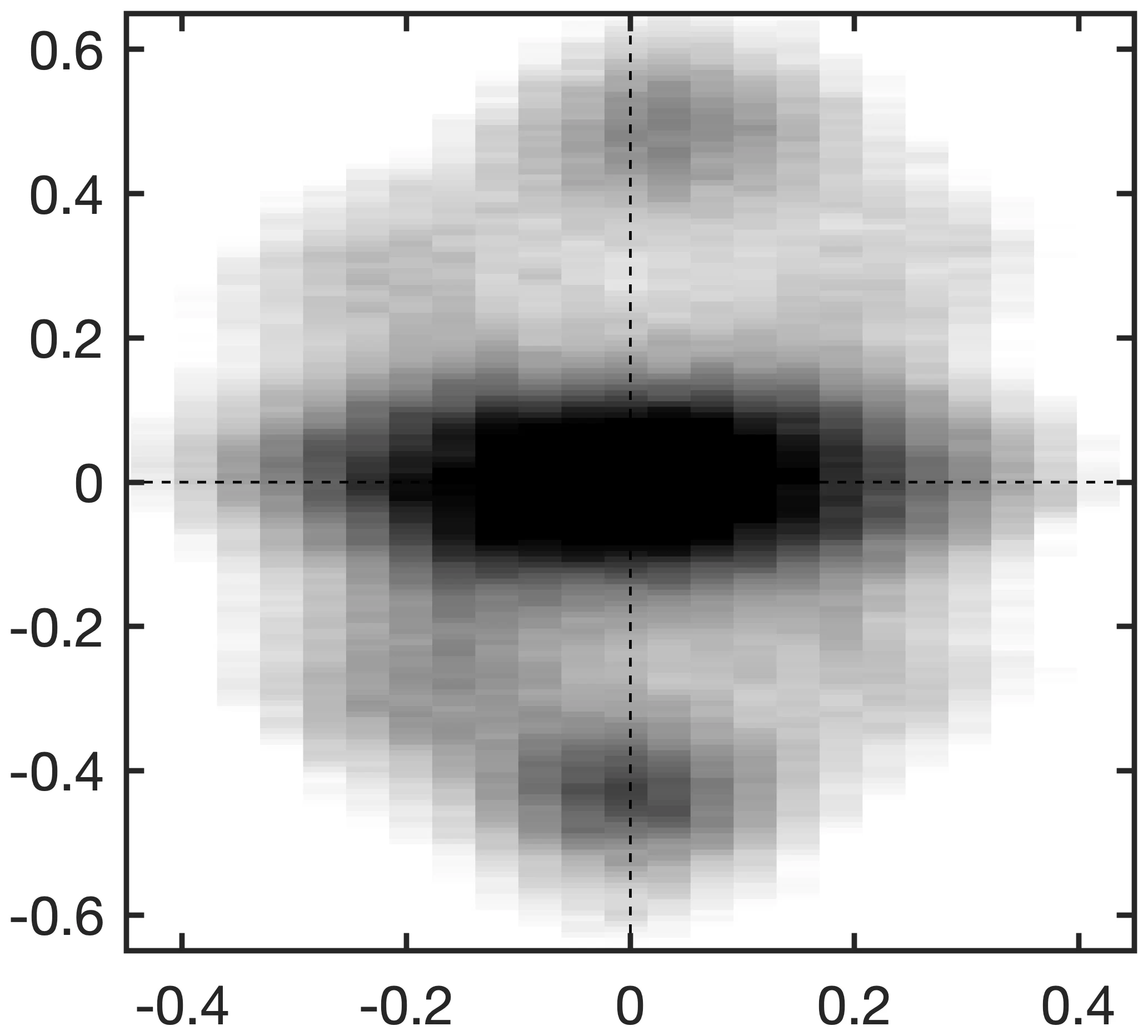
In a typical magnet, all spins of electrons (internal ‘arrows’-magnets, discovered by Pauli) point one way. Altermagnets, like MnTe, are trickier: these arrows alternate direction, like ripples spreading from a pebble tossed into water. But here’s the twist — the ripple arises from the electrons’ own motion.
Inside a crystal, electrons zip around at breakneck speeds. According to relativity, this makes them ‘feel’ a magnetic field that nudges the spin sideways. That’s how the Dirac equation explained spin-orbit coupling, with Lorentz transformations underlying this relativistic effect. Using spectroscopy (a technique that ‘snapshots’ spins), scientists have for the first time watched how this ripple’s orientation undulates in waves across MnTe.
While ordinary electronics shuffles charge, spintronics harnesses spins. Altermagnets promise devices free of stray magnetic fields that work at room temperature. It’s mind-boggling that we can see this shimmer only because the electrons in the crystal follow not everyday mechanics, but the rules of near-light speed.
Original abstract
as written by the authors arXiv:2511.01690
Altermagnetism is a recently identified phase with a d, g or i-wave spin symmetry of magnetic ordering. Its discovery opens new research fronts at intersections of magnetism and spintronics with fields ranging from superconductivity to topological and relativistic quantum physics. Here we demonstrate an unconventional relativistic spin polarization in an altermagnet by spin and angle resolved photoemission spectroscopy of electronic bands in single-domain MnTe. The relativistic spin-orbit coupling origin is revealed by observing that the alternating momentum-dependent spin polarization is orthogonal to the magnetic-ordering vector. The collinearity, even-parity and time-reversal-odd nature of the demonstrated relativistic spin polarization in the altermagnet is unparalleled in conventional forms of the relativistic spin polarization. Our experimental results and methodology are supported by non-relativistic spin-symmetry and relativistic magnetic-symmetry analyses, and microscopic ab initio ground-state and photoemission theory.
Spin-orbit coupling is a cousin of the force that keeps a gyroscope steady. But in the microworld, it’s ruled not by mechanics, but by the speed of light.
Science fiction once dreamed of ‘spin lattices’ for computational marvels. Altermagnets are making that dream real.