Quantum Sensors Will Hear the Hum of Dark Matter express
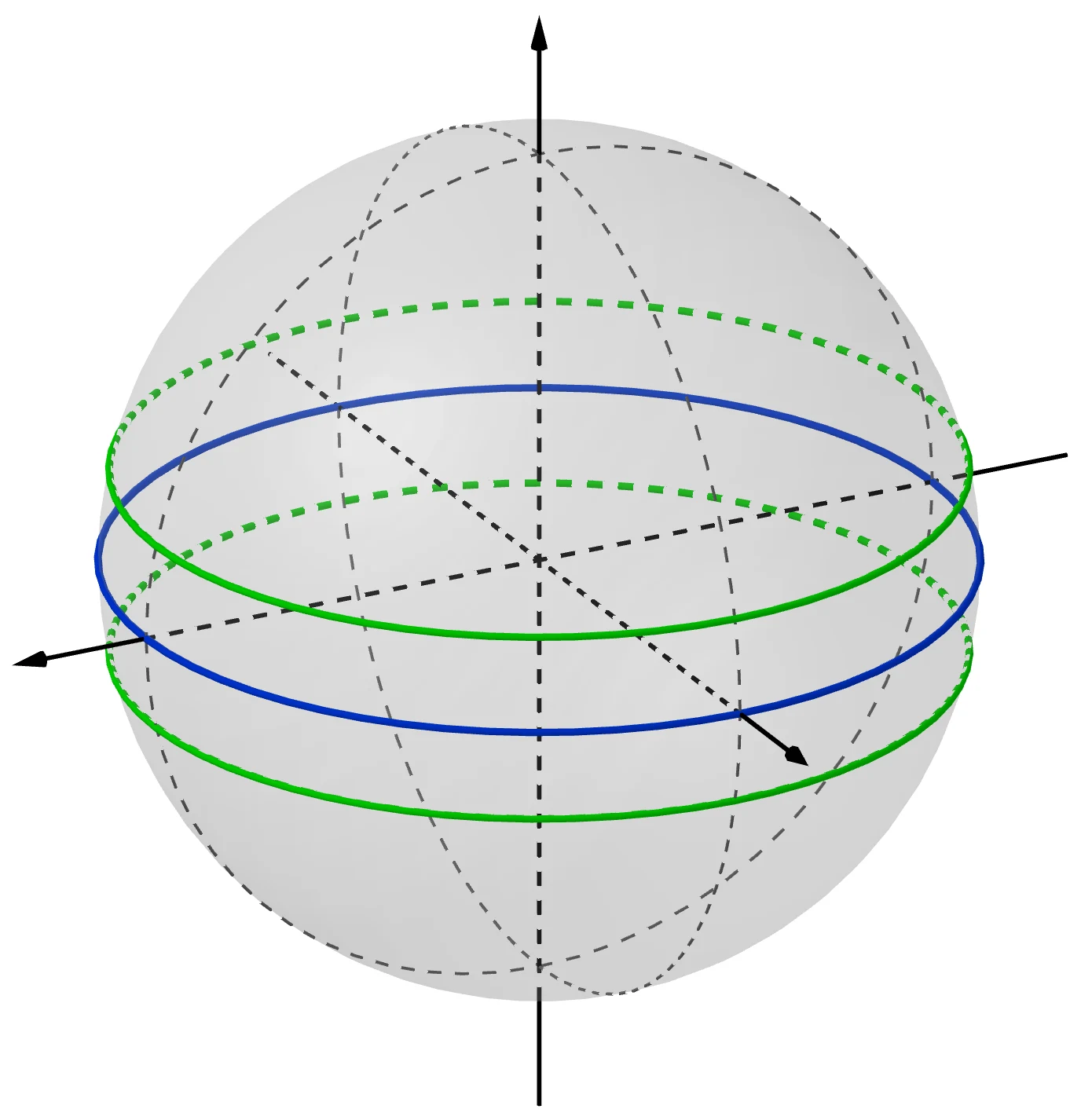
Dark matter makes up 85% of the matter in the Universe, yet remains invisible. It only reveals itself through gravity. We can catch it by its cosmic 'hum' — a faint vibration that permeates space. A single detector is powerless here: the signal is too quiet.
Physicists turn many sensors into a quantum ensemble. They link them in a special collective state — all tuned to the same note, like violins in an orchestra. Then sensitivity grows quadratically: 100 sensors hear like 10,000. More importantly, a little noise doesn't throw off this orchestra, unlike fragile single systems. Amazingly, this network can be assembled from existing lab components: superconducting chips and diamond defects.
When you separate a pair of detectors, a spatial note appears — a time delay between them — boosting accuracy. The method isn't limited to dark matter; it applies to any similar fields, including gravitational waves predicted by Albert Einstein. Thus, the quantum network becomes the Universe's universal ear.
Original abstract
as written by the authors arXiv:2512.14821
We identify symmetric Dicke states as the optimal quantum probes for distributed sensing of wave-like dark-matter fields. Within an ensemble-averaged quantum-metrological framework that incorporates the field's random phases and finite coherence, they maximize the Fisher information for short-baseline arrays with $$N_d$$ sensors and realize a robust $$N_d^2$$ enhancement. They also retain this collective advantage under amplitude-damping noise, whereas GHZ-type probes are highly fragile and rapidly lose their sensitivity once such noise is included. For two sensors at separations comparable to the dark-matter coherence length, the optimal entangled state acquires an additional spatial-correlation phase and outperforms both Dicke and independent probes. Our framework applies broadly to stochastic bosonic fields, including gravitational waves, and can be implemented with superconducting qubits, atomic ensembles, and NV centers.
Dicke states, the key to supersensitivity, were invented by physicist Robert Dicke back in the 1950s, long before the quantum boom.
The plot of Liu Cixin's novel 'The Dark Forest' is about invisible cosmic threats, much like trying to catch the inaudible whisper of dark matter.