A Solar Trap for Dark Matter ✎ express
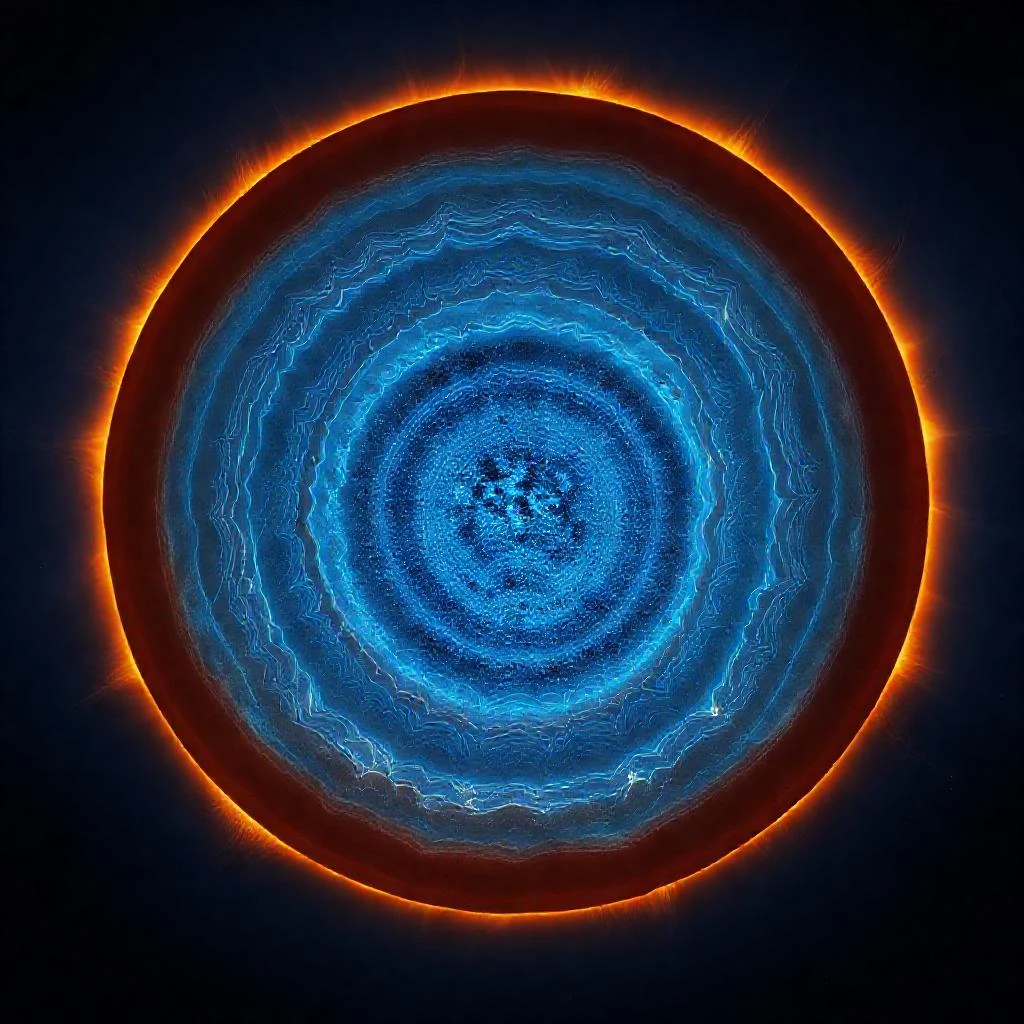
The Sun’s gravity creates an invisible goblet, in which dark matter of a special kind — ultralight — doesn’t splash around chaotically, but occupies strict energy steps, like transparent layers of liquid. So around the Sun, a natural spectroscope emerges, sorting the invisible substance into levels, just like electrons in an atom.
Usually, dark matter waves quickly lose synchrony. But in this solar trap, thanks to the distinct steps, some of the matter regains coherence after a long time — its oscillations merge in unison. A paradox emerges: instead of scattering, the signal amplifies itself. This phenomenon of recoherence means that the longer the observation, the higher the chance to catch a response.
Ideas about hidden mass trace back to Fritz Zwicky, and now the Sun itself becomes a detector whose sensitivity only grows with time. In essence, we can catch a dark phantom simply by listening to the cosmos for billions of years.
Usually quantum systems lose coherence quickly, but the solar bowl extends the coherence of ultralight dark matter to billions of years — comparable to the age of the Universe.