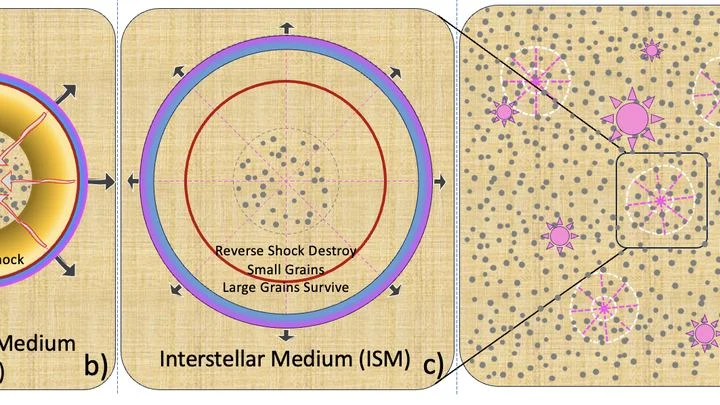
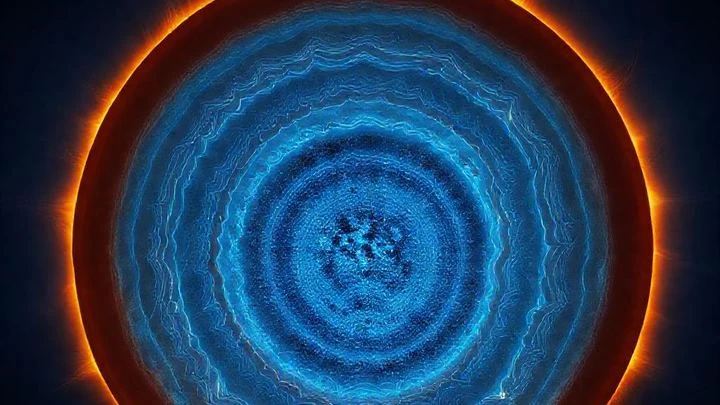
Dust obscuration refers to the absorption and scattering of light by interstellar dust and gas, which can hide astronomical objects like stars, galaxies, and even entire regions of star formation. This effect is a major challenge in observational astronomy, as it can bias our view of the universe, making some objects appear dimmer or completely invisible at certain wavelengths. Dust grains, composed of silicates, carbon, and ice, preferentially absorb blue light and re-emit it in the infrared, leading to reddening of starlight and the need for infrared observations to see through the veil.
History
The existence of interstellar dust was inferred in the early 20th century from the reddening of starlight, with Robert Trumpler providing key evidence in 1930 by showing that distant star clusters appear dimmer and redder than expected.
How it works
When light from a distant source passes through a dusty medium, photons interact with dust grains via absorption and scattering. The amount of obscuration depends on the dust column density and grain size distribution. Shorter wavelengths are more strongly affected, so the transmitted light becomes redder — a phenomenon called interstellar reddening. Astronomers correct for this using extinction curves, which quantify how much light is lost as a function of wavelength. In extreme cases, dust can completely block visible light, requiring observations in infrared or radio wavelengths to penetrate the veil.
In practice
Dust obscuration is a critical factor in astronomical surveys, such as mapping the Milky Way's structure and studying star formation regions. It also affects the calibration of standard candles like supernovae, which are used to measure cosmic distances.
Fun fact
Some of the most heavily obscured regions in the universe are so dense that they appear as dark clouds in visible light, but they glow brightly in infrared, revealing hidden nurseries of newborn stars.
A light ray passing near a massive body bends around it, like a runner rounding the corner of a stadium. For a neutron star, this deflection angle is usually assumed to be the same as for a point mass. But if the star is wrapped in an invisible halo of dark matter, the picture changes: light passing through the halo is deflected less than the total mass would predict.
In the coldest, darkest corners of space, dust grains get covered in ice, like a window on a frosty day. This ice isn't just frozen water: it also contains carbon monoxide and carbon dioxide. From such ice, comets and planets may eventually assemble. But until now, it was unclear how the dust grain itself affects the ice that forms on it.
In the dark outskirts of our Galaxy, far from bright star clusters, millions of black holes lurk. They are invisible: they don't shine and don't noticeably accrete matter. Conventional search methods, designed for dense stellar fields, are useless here. A different approach is needed.
Astronomers have proposed using the very fabric of space as a detector.
One hundred forty parsecs, a distance light traverses in four and a half centuries, separate us from the Taurus molecular cloud. Within its depths hide dark condensations: prestellar cores, where gas and dust slowly contract under their own weight.
In the galaxy NGC 1052 DF2, stars move at only 8 kilometers per second, as if there were no invisible mass around. For comparison: in our Milky Way, outlying stars accelerate to 200 kilometers per second, held by a massive dark matter halo.
Eight bright spots on the radio sky. They are all the same quasar HS 0810+2554, whose light passed through a gravitational lens — a massive foreground galaxy.
In the early universe, just a few hundred million years after the Big Bang, astronomers see strange objects — little red dots. They are compact, red, and in their spectra, broad Balmer lines scream the presence of supermassive black holes. But how did the hole manage to accumulate millions of solar masses in such a short time?
The Universe is a giant concert hall, where instead of walls and balconies, invisible clouds of dark matter float. This architectural ensemble is not static: it refracts and scatters the 'music' rushing through it — gravitational waves from merging black holes.
Two million years away, around the young star CI Tau, a gas-dust disk whirls — a protoplanetary cradle. ALMA observations have already shown rings and gaps in it, but the finest details remained invisible: their width is smaller than the instrument's resolution.
In the boundless night of space, galaxies come together in a slow gravitational dance, merging into one. Such collisions are not head-on impacts but rather like fingers moving slowly through water, leaving swirls and tails behind.
The hot broth of the early universe cooled unevenly. At some point, bubbles of a new phase began to pop within it, like steam bubbles in boiling water. But these bubbles weren't made of steam; they were made of a new state of matter in which particles of the dark sector clumped into larger lumps. That's how dark matter could have been born.
The early universe underwent a rapid expansion — inflation. In a tiny fraction of a second, minuscule quantum jitters were stretched to galactic scales and became the seeds of all large-scale structure.
Two rulers show slightly different lengths for the same table. That's roughly the situation in cosmology with the Hubble constant — the number that tells how fast the universe is expanding.
Type Ia supernovae are the final, blinding chords in the symphony of stellar evolution: when a white dwarf crosses the limit predicted by Chandrasekhar, it explodes so brightly that for a moment it outshines an entire galaxy.
Interstellar space is not a cosmic desert, but a super-fast highway. Trillions of asteroids and comets from other systems race past us, yet camera-telescopes only catch a few. Imagine a night highway: the headlights of a distant car flash brightly, but if it zooms by too fast, the camera shutter can't click in time.
A bonfire that no one sees, but everyone feels the warmth: that's how astronomers found a flare in a distant galaxy. Not by its light, but by the infrared radiation of heated dust. The galaxy SDSS J010320.39+140152.5 caught attention when its center suddenly blazed in the infrared, as if someone had thrown logs onto an invisible fire.
The beacon flares up and then nearly goes out, even though the lamp inside burns steadily. That is exactly what astronomers saw when they pointed their telescopes at the galaxy I Zwicky 1. At its center sits a supermassive black hole that devours gas and dust so greedily that a scorching disk forms around it, shining brighter than an entire galaxy.
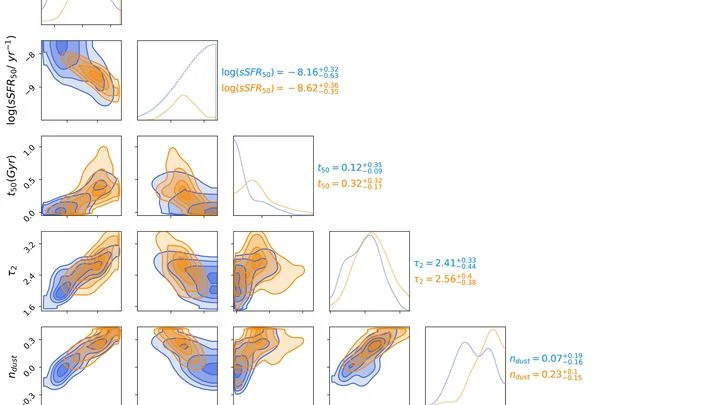
The JWST telescope has spotted a multitude of bright galaxies in the young universe. Their ultraviolet light was barely absorbed by cosmic dust — defying previous expectations.
Recently, astronomers spotted three interstellar comets coming from deep space. One of them, 3I/ATLAS, turned out to be unexpectedly large: its nucleus is several kilometers across.
A neutron star is the dead core of a massive star, crushed to the size of a city. A teaspoon of its material weighs as much as a mountain. Dark matter particles fly through such a dense medium almost unimpeded, but occasionally they do hit neutrons and get stuck, like bullets bogging down in deep sand.
The black hole GRS 1915+105 usually hides behind a dense gas curtain: its X-ray emission is heavily absorbed on its way to us. But in April 2023, it suddenly flared: the X-ray flux jumped nearly tenfold.
Gravitational waves are ripples in the fabric of spacetime, spreading from sources like circles on water from a thrown stone. When a wave passes a galaxy, its path bends, like water ripples meeting an underwater boulder.
At the heart of the Milky Way spins a stellar bar — an elongated cluster, like a rotating paddle. Its gravity creates a rhythmic field around it, like waves from a speedboat.
A flashlight wrapped with red tape on its sides shines white straight ahead and reddish from the side. Active galactic nuclei work the same way: at the center, a supermassive black hole is surrounded by a disk of hot gas and cosmic dust. Dust accumulates in the plane of the disk. Looking from above, we see a bright blue glow.
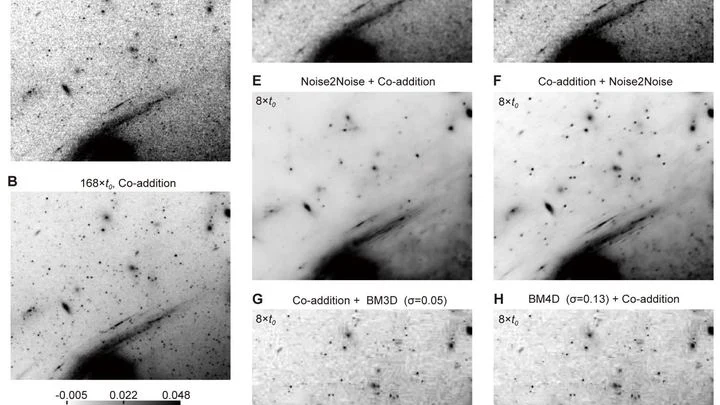
The night sky in a telescope image looks like a photo taken through a fogged-up window: bright stars are visible, but everything faint drowns in a murky haze. That haze is noise — random interference from electronics, heat, and the atmosphere itself.
Hidden in the heart of the Alps is the Large Hadron Collider. From time to time its detectors register sudden bursts — scientists call them UFOs (Unidentified Falling Objects). According to one theory, these are not equipment malfunctions at all, but traces of dark matter.
A distant red object usually means one thing: we're seeing a dust veil over a scorching disk falling into a black hole. But when the James Webb split its light into shades, a shadow appeared inside — just like steam from boiling water intercepts rays.
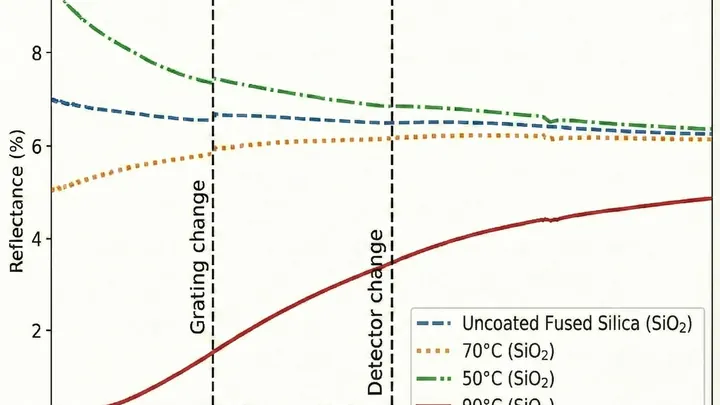
When light hits a transparent plate, some of it bounces off the surface. For astronomers, that means losing precious photons from distant stars. New 3D-printed microlenses made from IPX Clear resin transmit visible and near-infrared light, but at the air boundary they lose about 8%.
The solution came from nature.
In the dense Virgo galaxy cluster, astronomers have spotted six strange clouds of neutral hydrogen — gas that emits no light and is therefore invisible to ordinary telescopes. Radio telescopes can pick it up, but where it came from was unclear.
The cosmos is full of objects that lacked the mass to become stars. These 'failed stars'—brown dwarfs — resemble campfire embers that never ignited, just slowly smoldering and cooling.
Astronomers pointed the James Webb at three galaxies whose light traveled 12 billion years. Early data pointed to incredibly fast growth — like an infant reaching adult height in just a year, clashing with the expansion of the Universe.
At the center of our Galaxy lies a dense forest of dust and gas. Starlight barely penetrates this thicket, like a flashlight in fog. But it is precisely there, in this dense cloud, that new stars are born.
Scientists decided to look into this fog. They took light from 15 bright stars that shine through cold clouds.
In 2014, astronomers spotted a massive yellow star in the Andromeda galaxy. By 2022, it had vanished without a trace — without the usual blinding explosion of a supernova. It was as if someone simply switched off the light.
Some stars fizzle out like a dud firework: instead of a bright blast, just a cloud of smoke. Usually, a massive star ends with a supernova explosion, leaving a black hole. But sometimes there's no bang: the star collapses straight into a black hole, almost unnoticed.
The Sun’s gravity creates an invisible goblet, in which dark matter of a special kind — ultralight — doesn’t splash around chaotically, but occupies strict energy steps, like transparent layers of liquid. So around the Sun, a natural spectroscope emerges, sorting the invisible substance into levels, just like electrons in an atom.
As early as Vera Rubin found that stars on the outskirts of galaxies move too fast — as if held by an invisible web. And Fritz Zwicky was the first to suspect that clusters of galaxies hide enormous invisible mass. Today we call it dark matter and try to understand what it's made of.