Light from Within: How to See 12 Centimeters Deep into the Body express
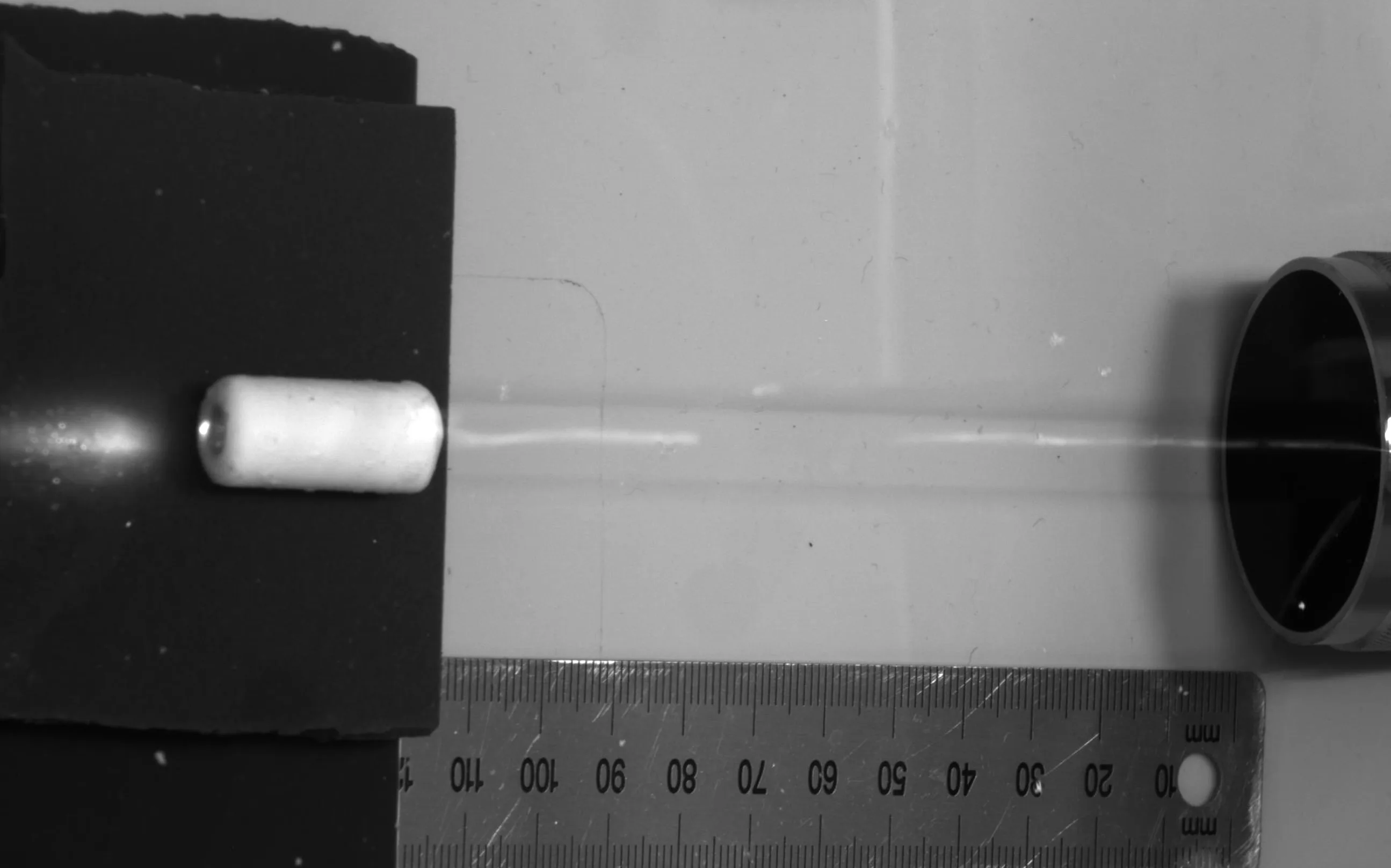
Light is a great tool for studying tissues, but it fades fast deep inside the body. Within a few millimeters, photons scatter so much that you can't make out anything. Scientists came up with a workaround: instead of shining light from outside, deliver a tiny light source right inside. The challenge is how to power that source without wires.
The solution came from ultrasound. Low-frequency sound waves pass through the body with almost no loss: that's why ultrasound imaging can see deep organs. In the new device, ultrasound not only "lights" the way but also carries energy: a compact receiver converts acoustic vibrations into electricity, which powers a pulsed laser diode. The diode emits short flashes of light, tissues absorb them, heat up by fractions of a degree, and expand — generating a weak ultrasound wave. A sensor outside picks up that wave, and from these signals, a map of optical absorption is reconstructed.
The researchers tested the method on a phantom 12 centimeters thick — about the depth of an adult's abdominal cavity. The device, the size of a pill, handled the job, even though ordinary external light wouldn't have made it a tenth of that distance. In the future, this approach could let us look into the gastrointestinal tract, blood vessels, and other areas that neither an endoscope nor external lighting can reach.
Ultrasound at around 1 MHz attenuates in soft tissues hundreds of times slower than visible light, so it's used both for diagnosis and for delivering energy.
The idea of "swallowing a light source" recalls capsules from science fiction films that travel through the body and transmit images to a doctor's screen.