A Baby Galaxy from the Cosmic Noon express
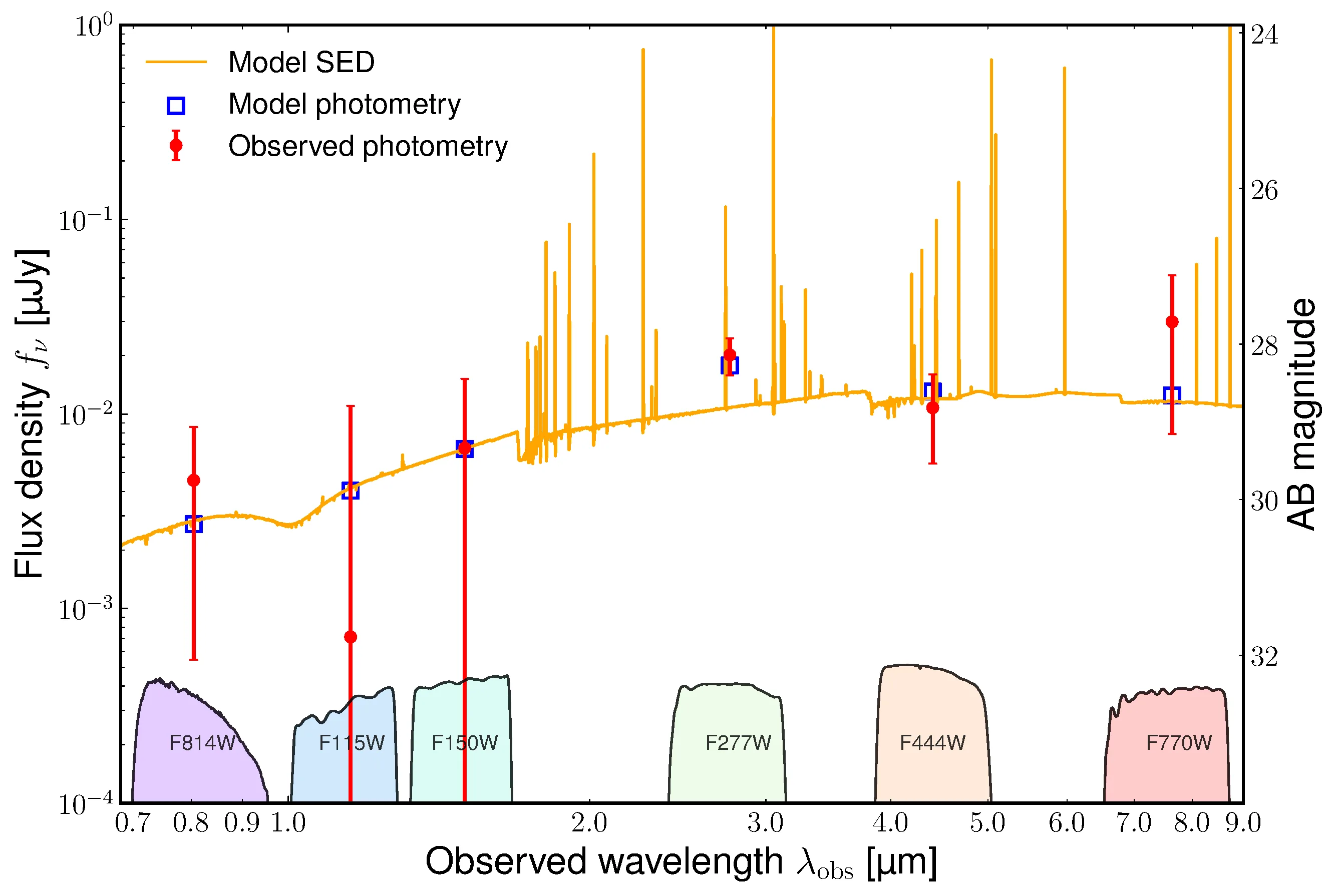
In the deep cosmos, more than 12 billion light-years away, the James Webb Space Telescope has spotted a galaxy that looks like a visitor from the dawn of creation. Its light has been traveling to us since the universe was only about two billion years old — a time when galaxies were growing especially vigorously, a period astronomers call the cosmic noon. The galaxy CAPERS-39810 turned out to be surprisingly 'clean': it contains very few heavy elements, which astronomers for short call metals.
Metals are everything heavier than hydrogen and helium. They are born inside stars and spread out when stars explode, gradually enriching the gas from which new stars and planets later form. In CAPERS-39810, for example, oxygen is about 25 times less abundant than in our Milky Way. This means the galaxy has barely been touched by stellar explosions: its matter remains almost the same as it was right after the Big Bang.
The galaxy's spectrum showed bright emission lines of hydrogen and helium: they glow when young, hot stars ionize the surrounding gas. From these lines, scientists estimated the chemical composition. Such 'primitive' galaxies at large distances are hard to find, but each new discovery is like a window into an era when the universe was just learning to create complex substances.
The word 'metals' in astronomy is misleading: it refers to all elements heavier than helium, including oxygen, carbon, and even nitrogen, which makes up the air we breathe.
In Carl Sagan's novel 'Contact,' the heroine searches for signals from extraterrestrial civilizations, but galaxies like CAPERS-39810 remind us that long before any life, the universe was nearly sterile — only hydrogen and helium.