Dust, Light, and Invisible Lines express
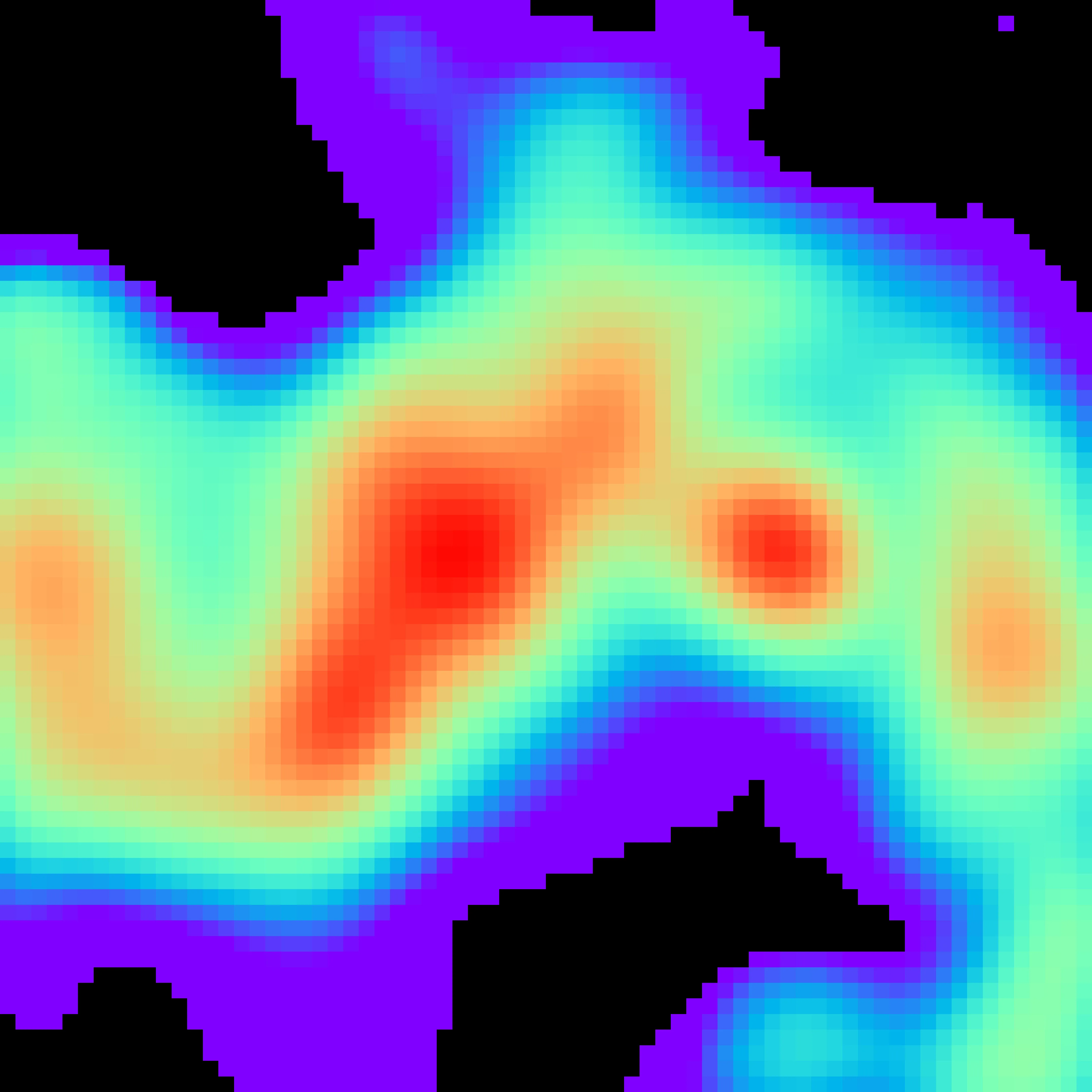
In the dark cloud L43, where stars are born, dust grains twirl like tiny compasses. Light from a young star pushes them, while the magnetic field lines them up in a specific direction. When a grain is turned sideways to us, its heat reaches us polarized, like light passing through a narrow slit. From this polarization, astronomers read the map of magnetic lines.
The team observed the cloud at three wavelengths: 154, 450, and 850 micrometers. It turned out that at shorter wavelengths, the dust is less aligned. It's like a crowd where the tall people keep in step, but the short ones wander off. The reason lies in temperature: hot grains spin faster and are less obedient to the magnetic field. By measuring how aligned the dust is, astronomers calculated the field strength: from 13 to 60 microgauss. For comparison, the field at Earth's surface is about 500,000 microgauss, so the cosmic field is thousands of times weaker.
But it's not that simple. Light from the star passes through the cloud, encountering grains of different temperatures and compositions along the way. It's like looking at a forest: the near trees are clear, the far ones blur together. So the field strength measured at different wavelengths varies. The authors compared the data with a computer model where light passes through the cloud layer by layer. The model showed that the difference partly arises because at different wavelengths we see different layers of the cloud. But it's also possible that the magnetic field itself slightly changes direction deeper inside. This method is like an X-ray for cosmic dust: it lets us see inside the cloud without destroying it.
Original abstract
as written by the authors arXiv:2602.16519
Polarized emission from interstellar dust grains is commonly used to infer information about the underlying magnetic field from the diffuse interstellar medium to molecular cloud cores. Therefore, the ability to accurately determine properties of the magnetic field requires a thorough understanding of the dust alignment mechanism. We investigate the influence of anisotropic radiation fields on the alignment of dust particles by magnetic fields, known as radiative torque (RAT) alignment. Specifically, we take advantage of the unique spatial configuration of the molecular cloud core L43, which contains an embedded yet optically visible star acting as a local source of anisotropic illumination. Based on polarization maps obtained at wavelengths of $$154 \mu\mathrm{m}$$ (SOFIA/HAWC+), as well as $$450 \mu\mathrm{m}$$ and $$850 \mu\mathrm{m}$$ (JCMT/SCUBA-2), which show variations in the degree and angle of polarized emission across all wavelengths, we applied the differential measure analysis method to infer magnetic field strengths and analyze the global polarization spectrum of this source. We derived plane-of-sky magnetic field strengths ranging from approximately 13 to 60 $$\mu\mathrm{G}$$, varying with wavelength, and find a negative slope of the polarization spectrum. Compared to 3D radiative transfer simulations, this finding can be attributed, at least partially, to variations in dust properties and temperatures along the line of sight. However, the additional influence of variations in the magnetic field orientation along the line of sight cannot be ruled out. Our results favor radiative torques as the primary alignment mechanism, as they indicate that the degree of polarization is dependent on temperature and hence the strength of the local radiation field.
The magnetic field in cloud L43 is thousands of times weaker than that of a refrigerator magnet, yet it governs the birth of stars.
In Stanislaw Lem's novel 'Solaris', a sentient ocean controls gravity; here, dust grains, obeying light and magnetic fields, reveal the structure of the invisible.