Light flips the switch on graphene express
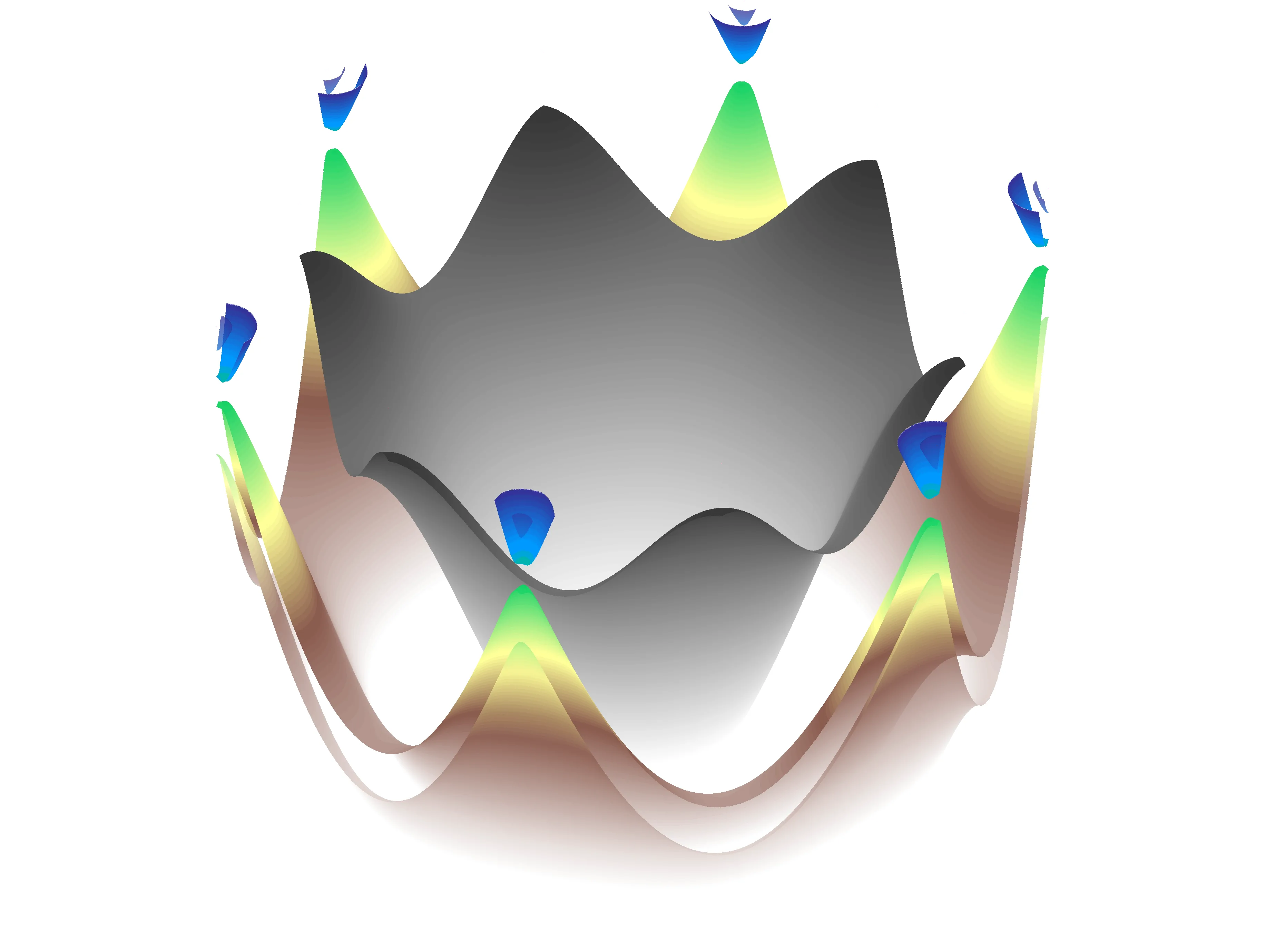
A laser flash hits a one-atom-thick layer of silver sitting on bilayer graphene, and within quadrillionths of a second, a gap opens in graphene's electronic structure where none existed before. It's as if an ordinary wire momentarily became a semiconductor: electrons stop flowing freely, and a band gap appears.
The cause is charge transfer between layers. Light knocks out electrons, they hop from silver to graphene, and the electric field at the interface changes. This field acts like an ultrafast shutter: it rearranges graphene's energy bands, opening a gap. At the same time, a flood of hot electrons is born, which enhance screening — the ability of charges to damp external fields. Screening, like a blanket, muffles the field, and the gap closes again, becoming even smaller than it was in the calm state.
The experiment was carried out using time- and angle-resolved photoemission spectroscopy. A short laser pulse kicks electrons out of the sample, and a detector catches them one by one, measuring their energy and direction. This allows tracking the electronic structure in real time, frame by frame, with femtosecond steps. The bilayer graphene in this work is stacked in a special way — the so-called Bernal stack, where the layers are slightly shifted relative to each other, like bricks in a wall.
Two mechanisms, charge transfer and hot electrons, act in opposite directions. The first opens the gap, the second closes it. By tuning the intensity and duration of the flash, one can choose which process wins. This puts into physicists' hands a tool for ultrafast control of graphene's properties, and in the long run, for creating optical transistors operating at frequencies inaccessible to conventional electronics. The same approach will help study exotic quantum states in bilayer graphene far from equilibrium.
A one-atom-thick layer of silver on graphene is like foil rolled to its limit: just a single 'page' of atoms, yet it can carry charge and alter the properties of its neighbor.
In Neal Stephenson's novel The Diamond Age, matter is programmed at the atomic level; controlling graphene's electronic properties with light is a step toward such engineering.