Droplets of Light Catch Molecules express
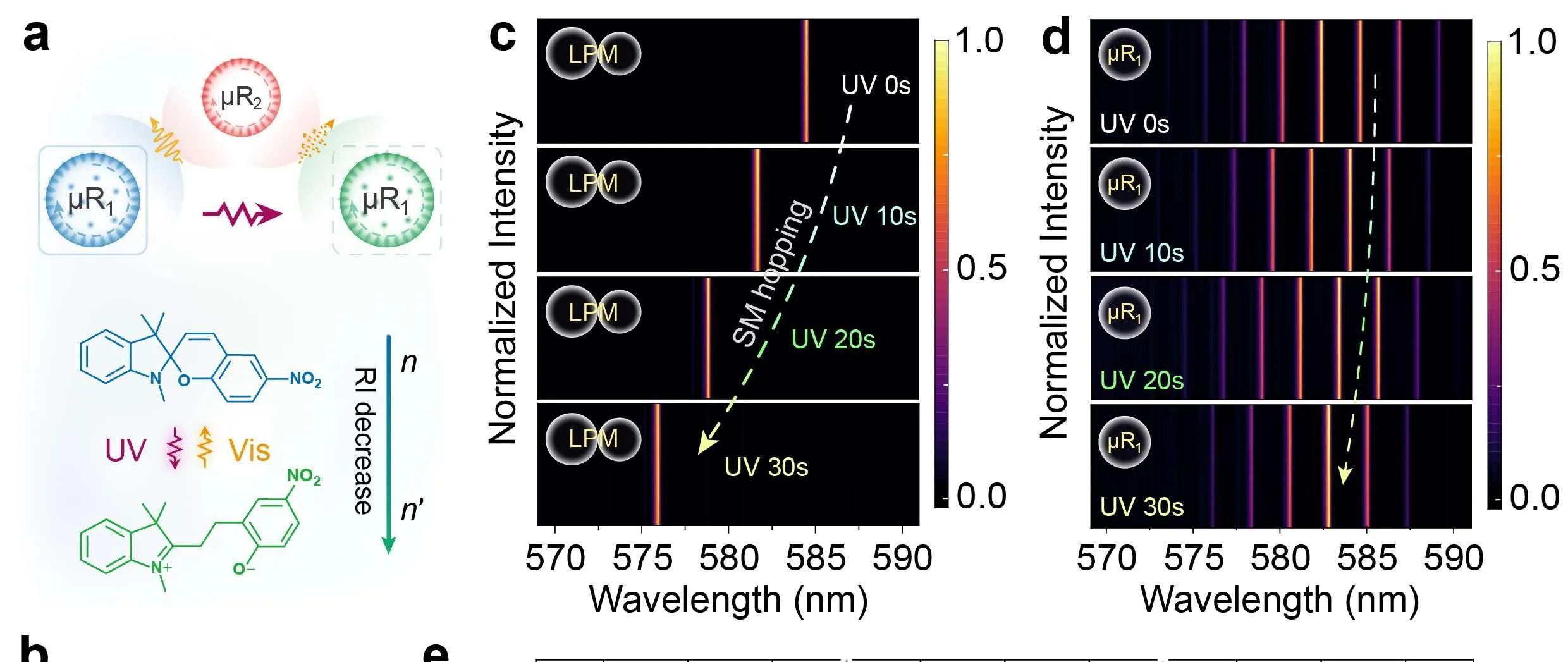
Two liquid droplets hanging side by side begin to sing in unison. One droplet is like a string tuned to a certain pitch, and together they form a laser that shines with a single, pure color. That's how a new type of sensor, a liquid photonic molecule, works.
The secret is that the droplets are slightly different in size. Their light waves overlap like the teeth of two combs with different spacing: only some teeth align, leaving one bright beam. This allows the laser to operate with very low pumping, just 610 nanojoules per square millimeter, like lighting a match from the warmth of a palm.
But the main thing is sensitivity. When even a single molecule of the target substance enters the droplet, the laser's color shifts dramatically. It's like hearing one wrong note in an orchestra — immediately noticeable even though there are many musicians. The scientists achieved detection of 30 attomoles: that's 30 molecules per billion billion water molecules. For comparison, it's like finding one grain of sand in a mountain-sized pile of sand.
Such a sensor doesn't need staining or preparation: it glows on its own and reports its finding. In the future, similar droplets could work directly inside living tissues, tracking diseases at the earliest stage.
30 attomoles is roughly 18,000 molecules. If a molecule were the size of a pea, 18,000 peas would fill just a small glass.
In the series 'Star Trek,' the medical tricorder instantly diagnoses diseases from a drop of blood — liquid photonic molecules are a first step toward such a device.