Pulsars Around a Black Hole: Cosmic Clocks express
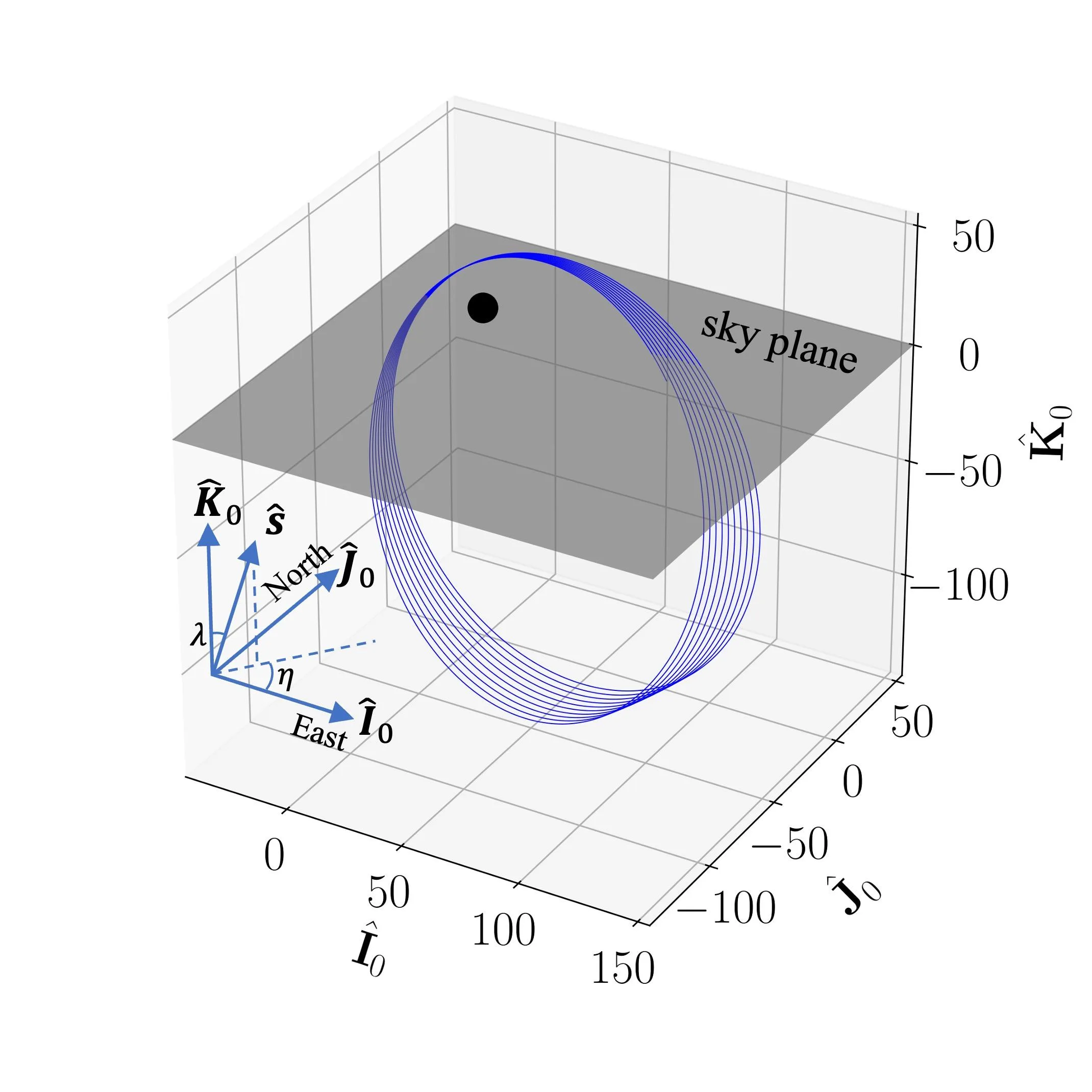
At the center of our Galaxy lurks the supermassive black hole Sagittarius A* — a heavyweight that holds stars in its grip. Astronomers dream of finding pulsars near it: these cosmic lighthouses emit radio pulses with the precision of atomic clocks. If you catch such a pulsar in orbit around the black hole, you can measure how space and time are warped in its vicinity.
New work offers a realistic model for such observations. The scientists accounted not only for the pulsar's ordinary motion but also for subtle delays that arise when a light ray bends around the black hole. For the first time, they included the proper motion of Sagittarius A* — the black hole is not stationary; it shifts slightly, and this affects measurements.
The model was tested against possible disturbances — for instance, if the pulsar turns out to be ordinary rather than millisecond, its signal may be noisy. It's like listening to a ticking clock in a noisy workshop: you need to pick out the useful signal. The authors showed which black hole parameters can be measured most accurately and proposed a data analysis procedure. Such a model will become a working tool for future sky surveys conducted by next-generation radio telescopes.
Pulsars are so stable that they are used to check Earth's atomic clocks — they rival the best laboratory standards in precision.
In Michael Crichton's novel "Sphere," characters use signals from deep space to understand the unknown — pulsars around a black hole could be just such signals.