A Cold Detector and Extra Signals express
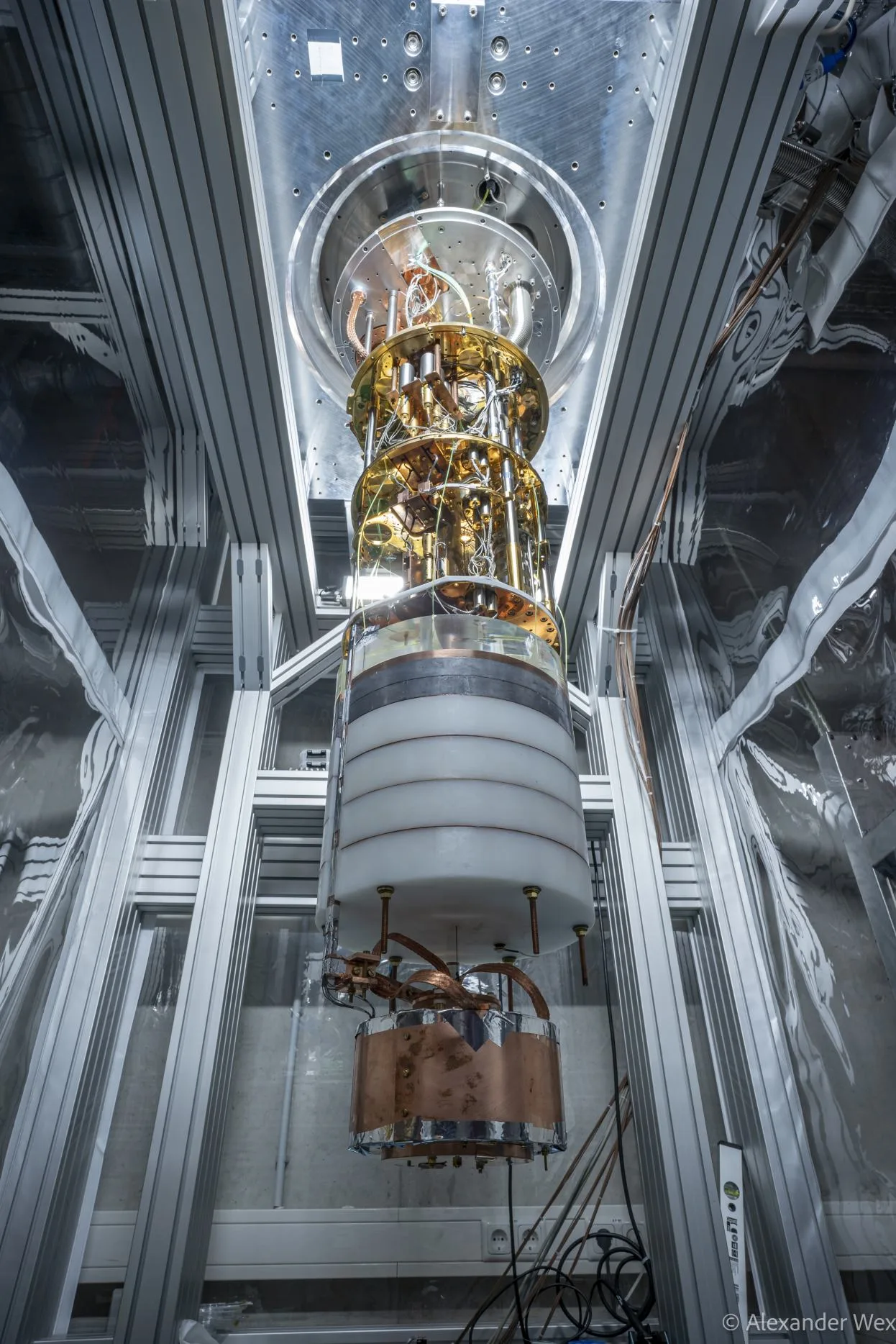
In a dark chamber where the temperature sits just four degrees above absolute zero, a sapphire crystal the size of a grain of rice lies waiting. When a neutrino, a ghostly particle that barely notices matter, flies through it, the crystal shudders and warms by a tiny fraction of a degree. Ultrasensitive sensors at the crystal's edges catch this thermal response.
But the instrument hears more than neutrinos. Below an energy of a few hundred electron-volts (a million times smaller than the energy of a mosquito bite), a swarm of extra signals appears. Physicists call this the low-energy excess and still don't know what causes it. In the new study, they tested two ideas: whether stray particles passing through the detector are responsible, and how the crystal's cooling rate before measurements affects the signals.
The first idea was ruled out: the level of external noise was varied, but the number of extra signals stayed the same. The cooling rate, however, turned out to matter. When the crystal cooled slowly, there were noticeably fewer extra signals at the start of measurements. After that, regardless of conditions, their number decayed following the same power law: roughly like melting snow, which disappears quickly at first and then more and more slowly. The exponent came out the same for all datasets: −0.59 with an uncertainty of 0.06.
This means the extra signals are born somewhere inside the detector itself and gradually "burn out" over time. Understanding this will help future experiments clean their data from background and catch elusive neutrinos more precisely.
Original abstract
as written by the authors arXiv:2603.07687
The NUCLEUS experiment aims to detect coherent elastic neutrino-nucleus scattering of reactor antineutrinos using low-threshold, gram-scale cryogenic calorimeters. Similar to other low-threshold experiments, NUCLEUS observes a sharp rise in the event rate below a few hundred eV, referred to as the low energy excess (LEE), whose origin remains yet unidentified. Building on results from the NUCLEUS testing and commissioning at the Technical University of Munich and from previous characterization campaigns, we present a comprehensive study of the background rate measured with a sapphire detector equipped with two transition-edge sensors under various experimental conditions. We find no evidence for a dependence of the LEE rate on the particle background level, whereas the results indicate that slower cooling-down procedures lead to lower initial LEE rates. The behavior of the LEE rate during the same cooldown is comparable across the measurements and is best described by a power law with a common exponent across datasets of $$(-0.59 \pm 0.06)$$, when time is expressed from the moment the detector reaches the 4 K temperature. These findings provide valuable guidance for future LEE mitigation strategies in the NUCLEUS experiment.
An energy of a few hundred electron-volts corresponds to a temperature of millions of degrees if converted per particle, but in the crystal, it's just a tiny jitter of atoms.