Light That Doesn't Heat Water express
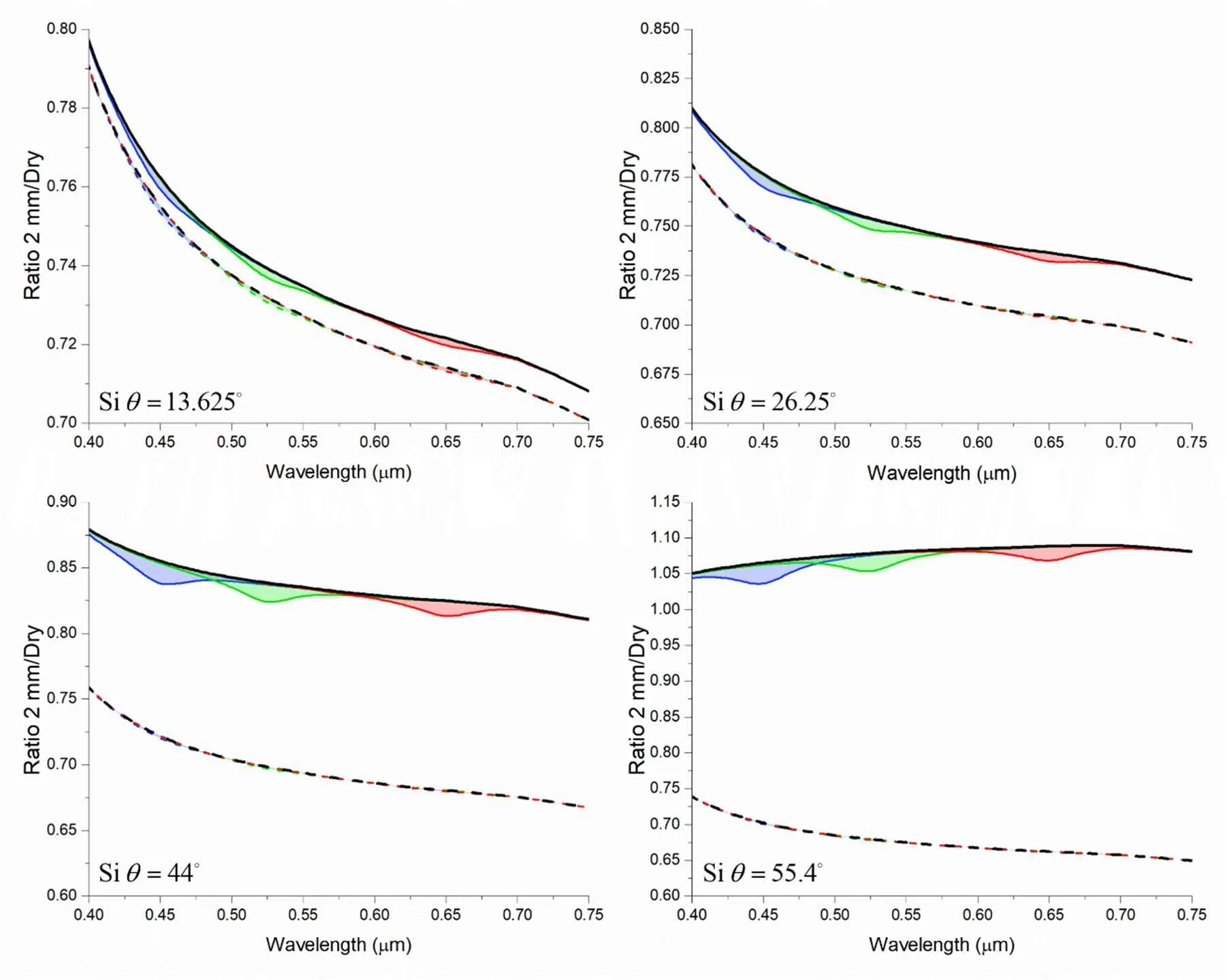
A water droplet on a leaf disappears faster under the sun than heat calculations would predict. A few years ago, a hypothesis emerged: light itself, without heating, could knock water molecules off the surface. This was dubbed the photomolecular effect. If it exists, clouds, climate, and even everyday clothes drying could work differently.
The authors of the new study decided to test the idea with precise measurements. They directed polarized light (waves oscillating in one plane) at water and compared the reflection from the surface with and without water. If light were lost at the liquid-air interface, the reflection would change. They used two types of substrates: lightly doped silicon (a semiconductor) and platinum (a metal). Their optical properties were measured beforehand using ellipsometry (based on the change in light polarization upon reflection). The result matched the classical model where the surface absorbs nothing.
So, in practice, light does not "tear off" water molecules in any noticeable way. The effect is either much weaker than thought or occurs only under special conditions — different humidity, water purity, or light intensity. For now, good old heating remains the main culprit in evaporation.
Polarized light reflects off water differently depending on the angle: at Brewster's angle (about 53° for water), the reflected light is completely polarized, a property used in polarized sunglasses.