Optical depth is a dimensionless number that quantifies how transparent or opaque a medium is to electromagnetic radiation. It measures the cumulative effect of absorption and scattering along a line of sight. An optical depth of zero means the medium is perfectly transparent; an optical depth of 1 means that about 63% of the photons are removed (the intensity drops by a factor of e). Values much greater than 1 indicate an opaque medium, while values much less than 1 indicate a nearly transparent one.
History
The concept was formalized in the early 20th century, particularly through the work of Karl Schwarzschild and Arthur Schuster on radiativetransfer, building on earlier work by Stokes and others.
How it works
When light passes through a medium, each interaction (absorption or scattering) removes a photon from the beam. The optical depth τ is the integral of the extinction coefficient (absorption plus scattering) along the path. The transmittedintensity is I = I₀ e^(-τ). If τ is large, the medium is effectively opaque, and we only see radiation from its surface. If τ is small, we can see deep into the medium. In astrophysics, optical depth is used to define the 'surface' of a star (where τ ≈ 2/3) and to describe how radiation escapes from nebulae, accretion disks, and the early universe.
In practice
Optical depth is used in atmospheric science to measure air pollution and cloud thickness, in medical imaging for X-ray and optical tomography, and in astrophysics to model stellar atmospheres and interstellar dust.
Fun fact
The cosmic microwave background radiation we observe today was emitted when the optical depth of the universe dropped below 1, about 380,000 years after the Big Bang.
A hunter sets snares in the woods. They know the animal's habits but not whether it will ever show up. In much the same way, physicists set up detectors in hopes of catching particles of dark matter — the invisible substance thought to make up most of the Universe's mass.
A new study offers hunters an unusual tool: not a trap, but a measuring tape.
Cosmologists are facing a curious situation: two reliable tools draw slightly different maps of the same universe. One tool is the map of ancient light (the cosmic microwave background), and the other is the map of galaxy distribution. They broadly agree, but in details they diverge.
Spectroscopy has always been a way to hear the unheard. Back in the 19th century, Johann Balmer deciphered the elegant lines of hydrogen — a simple numerical harmony that foreshadowed quantum theory.
In the 1930s, Fritz Zwicky first noticed that galaxies in clusters were moving too fast — something invisible was holding them. Later, Vera Rubin measured the rotation of spiral galaxies, confirming that space is permeated by dark matter.
The cosmic microwave background is the afterglow of the Big Bang, which we see at millimeter wavelengths. But it also has a long-wavelength tail extending into the radio range.
A squad of soldiers marches across a parade ground. As long as everyone keeps in step, the movement remains sharp and coordinated. But if someone falls out of line, the order is lost. In the microworld, electrons play the role of such a squad: when their oscillations are synchronized, the substance emits a narrow, sharp line.
Any light measurement runs into a fundamental limit: photons hit the camera sensor unevenly. This natural ripple (shot noise) blurs fine details, like trying to pick out a quiet instrument in an orchestra through the noise of the hall.
A water droplet on a leaf disappears faster under the sun than heat calculations would predict. A few years ago, a hypothesis emerged: light itself, without heating, could knock water molecules off the surface. This was dubbed the photomolecular effect. If it exists, clouds, climate, and even everyday clothes drying could work differently.
A distant galaxy birthing hundreds of stars should glow in oxygen. That's what astronomers thought: hot young stars heat the gas, which then emits a characteristic infrared glow at a wavelength of 63 microns. It's like steam rising from a boiling pot — a sure sign of vigorous activity.
A speck of glass floats in a laser beam. Air molecules, photons, even Earth's gravity give it little pushes, and by watching its jitter, you can tell what pushed it. But every measurement has a limit: the particle's own noise hides weak signals. Quantum mechanics sets that limit, but it can be bypassed.
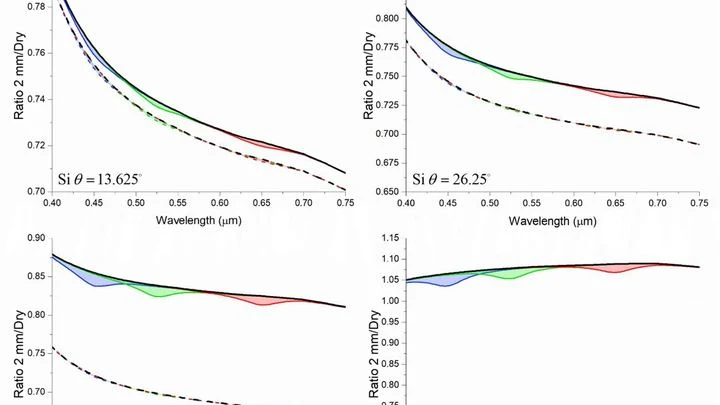
In Chile's Atacama Desert, at an altitude of nearly five kilometers, stands a radio telescope that catches millimeter waves from the depths of space. These waves carry the heat of distant galaxies, but first they must pass through a window — a thin plate of silicon that separates the cold receiver from the warm outside world.
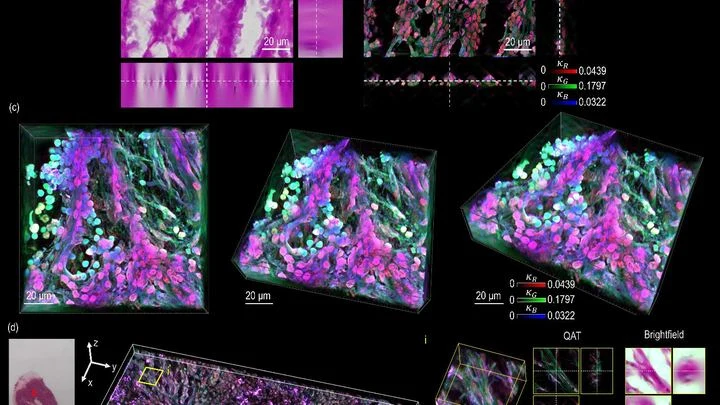
Light passing through a stained cell loses some of its strength, like a flashlight beam cutting through a glass of tea. The denser the color, the more light is absorbed. But until now, a microscope could only show a flat shadow of this process, not its volume.
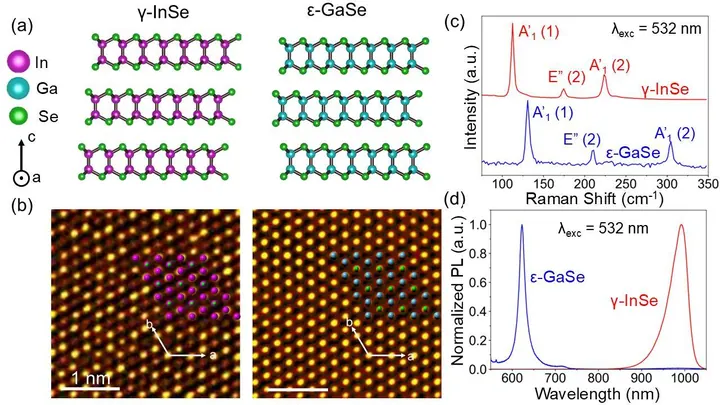
Light passing through a window pane refracts the same in all directions. But in thin layered crystals, it's a different story: light traveling along the layers sees the material differently than light traveling across them. It's as if a sheet of paper were transparent but transmitted light differently along and across its fibers.
Although invisible, dark matter’s gravity governs the motion of stars and galaxies. It was first proposed by Fritz Zwicky in the 1930s, and later confirmed by Vera Rubin. Scientists have long suspected it accumulates around black holes, but direct proof was lacking.
Light from a single source can be made to 'meet' itself, and then fringes appear on the screen, like ripples from two pebbles dropped into water. Physicists have long known how to do this with two photons, but making four particles of light merge at once was tricky: single-photon sources lost too many particles along the way.