A Magnetic Switch for Future Electronics express
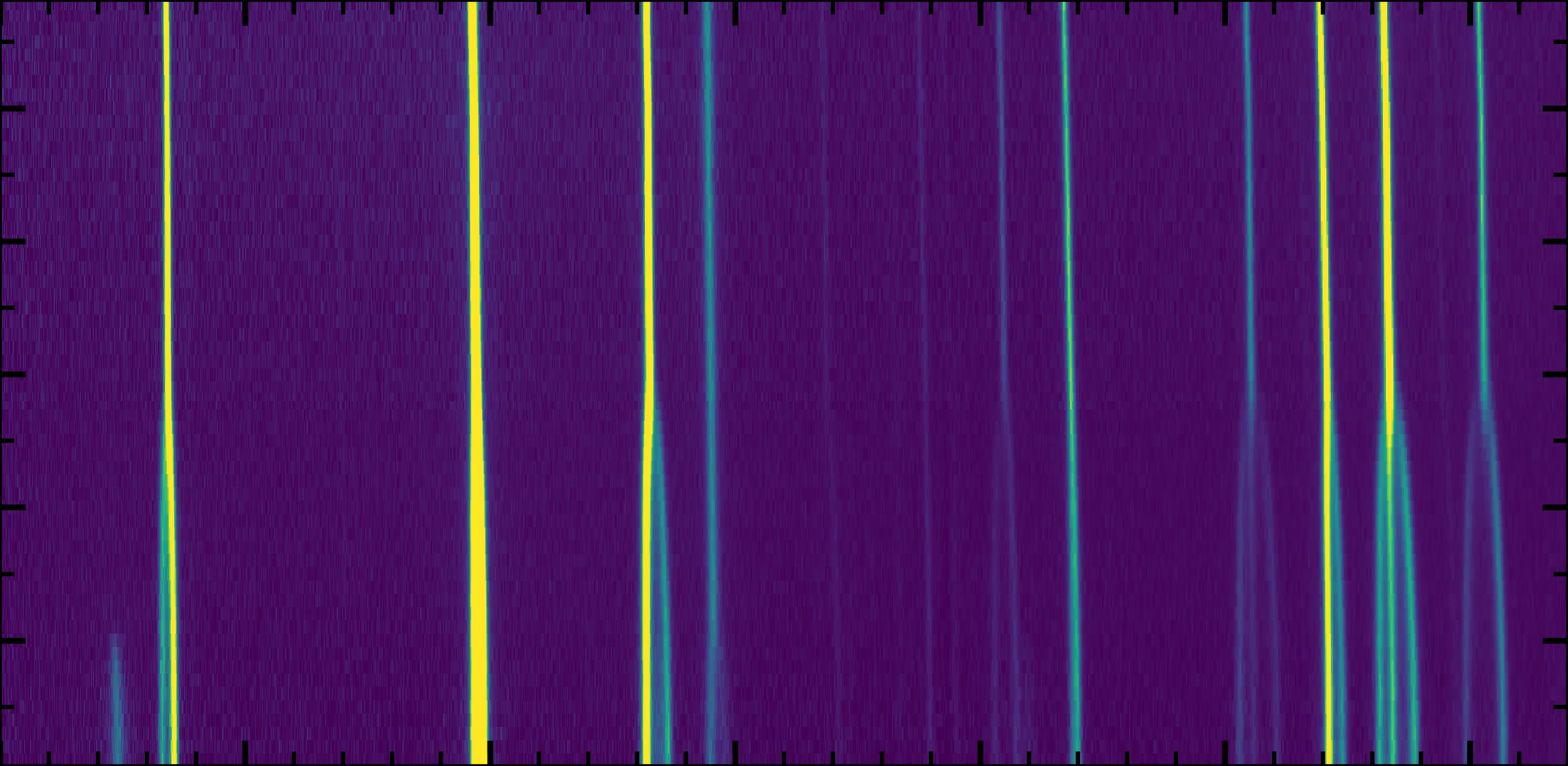
The crystal changes its internal geometry like a building frame that slightly twists during an earthquake. In the manganese-gallium alloy (Mn₃Ga), at around 485 Kelvin (about 212°C), a magnetic transition occurs: the atoms align into an antiferromagnetic order, where neighboring magnetic moments point in opposite directions. Upon further cooling to room temperature, the crystal lattice distorts slightly — from hexagonal to monoclinic, as if a rectangular box were gently squeezed from one corner.
This shift alters the arrangement of Weyl points — special points in momentum space where electrons behave like massless particles, akin to light. In the initial state, the Weyl points form a type-II configuration, and after the transition, they adopt a different configuration. Along with this, the anomalous Hall effect changes dramatically: the transverse electric field that arises without an external magnetic field becomes noticeably stronger, and a topological Hall effect emerges — an additional contribution linked to the nontrivial texture of the magnetization.
The practical value lies in the fact that the switching occurs at temperatures close to room temperature and is controlled simply by changing the temperature. This opens the door to spintronic devices, where information is encoded not by charge but by the electron's spin. The material Mn₃Ga is already known for its antiferromagnetic properties, and now it becomes a candidate for creating switches and magnetic field sensors.
Original abstract
as written by the authors arXiv:2603.20610
Topological phase transitions provide a unique window into the interplay between structure, magnetism, and Weyl physics in magnetic Weyl semimetals. However, realizing an intrinsic Weyl phase transition between two distinct Weyl states near room temperature remains challenging. Here, we demonstrate that a magnetostructural transition effectively induces such a transition in the kagome magnet Mn$$_3$$Ga. High-resolution neutron diffraction, magnetization characterizations and first-principles calculations reveal that Mn$$_3$$Ga undergoes a chiral antiferromagnetic transition below 485 K, followed by a magnetostructural transition to a monoclinic structure with highly canted antiferromagnetic order near room temperature. These cooperative changes in lattice and magnetic symmetries reorganize Weyl nodes, driving a transition from a primary type-II Weyl state to a distinct Weyl state, accompanied by dramatic variations in the anomalous Hall effect and appearance of topological Hall effect. Our findings open a new pathway for discovering novel topological Weyl states and potential spintronic applications.
A temperature of 485 Kelvin is about 212°C, slightly above the boiling point of water in a pressure cooker. That means the transition occurs at a heat level you could achieve on a regular stove.