The Noise That Poses as Gravity express
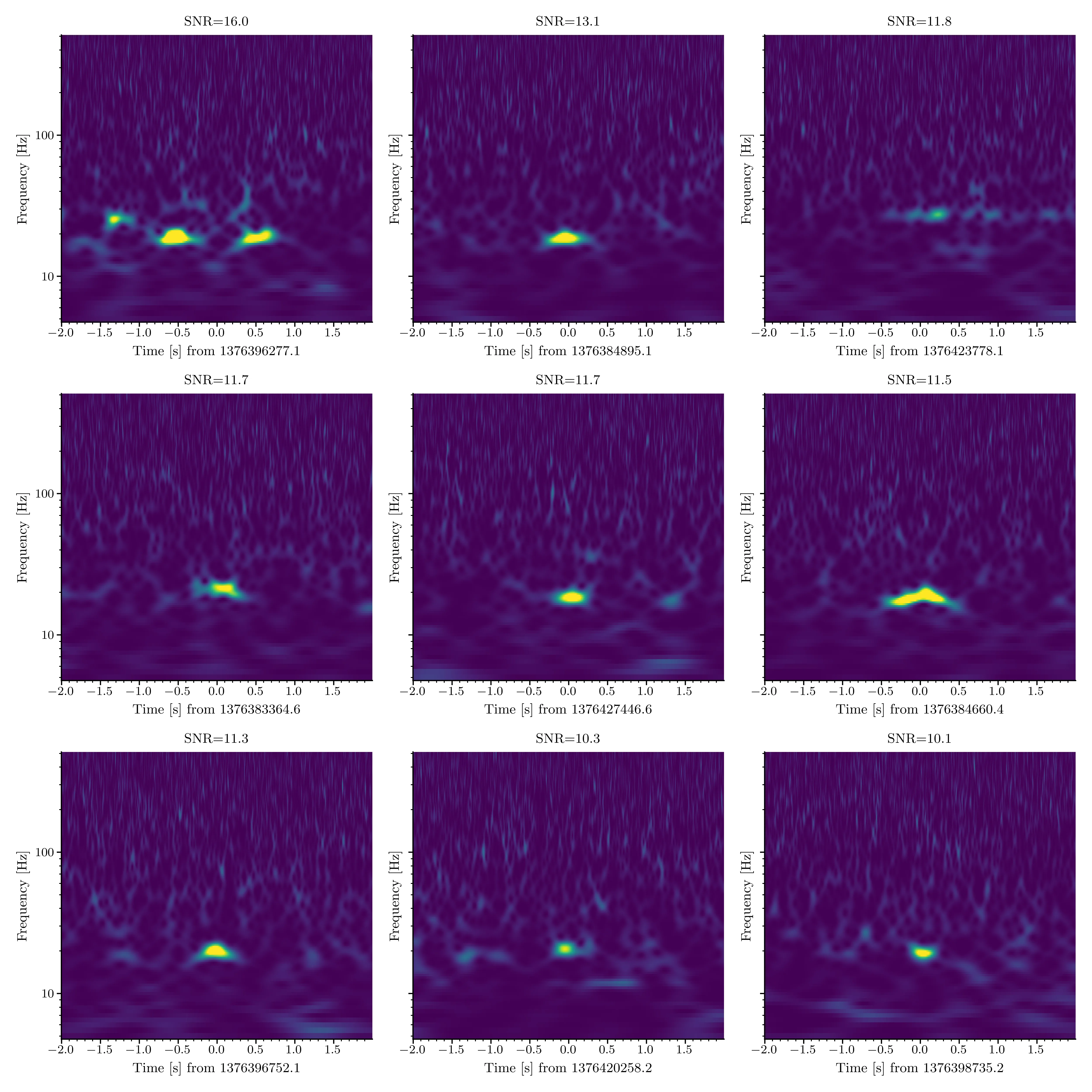
In the headphones used to listen to a distant orchestra, there is an occasional crackle. The crackle can be so loud that it drowns out the music or even blends in with it. That is roughly how ground-based gravitational wave detectors work: they pick up the trembling of space from collisions of black holes and neutron stars, but at the same time they hear their own noises — short clicks and squeaks that scientists call glitches.
Glitches are not just a minor annoyance. They reduce the sensitivity of the instruments and can overlap with a real signal, distorting conclusions about what happened in space. To distinguish a cosmic signal from earthly crackling, you need to know how often glitches occur. Previously, they were counted by loud events that exceeded a set threshold, but weak glitches were lost in the process. The new method proposed in the paper works differently: it estimates the glitch rate from the entire noise statistics, without discarding quiet events.
The authors applied the method to data from the fourth observing run of LIGO-Virgo-KAGRA and obtained an estimate of the glitch rate over a 24-hour interval. It turned out that the result is consistent with previous counts, but the new approach gives a more detailed picture of how the rate changes over time. And when the method was applied to the retracted gravitational wave candidate GW230630_070659, it turned out that it was most likely a pair of coincident glitches, not a signal from space.
Such a tool helps separate the wheat from the chaff in the data stream. The more accurately we know the behavior of noise, the more confidently we can talk about real discoveries, and not waste time on false alarms.
Glitches can be caused by a wide variety of things: from train vibrations and earthquakes to scratches on mirrors or electronic glitches. Sometimes they are even given names, like 'whistle,' 'blip,' or 'bloop'—based on the characteristic shape of the signal.
In Stanislaw Lem's novel 'His Master's Voice,' scientists try to distinguish a signal from an extraterrestrial civilization from natural noise, and face the same problem as gravitational wave hunters.