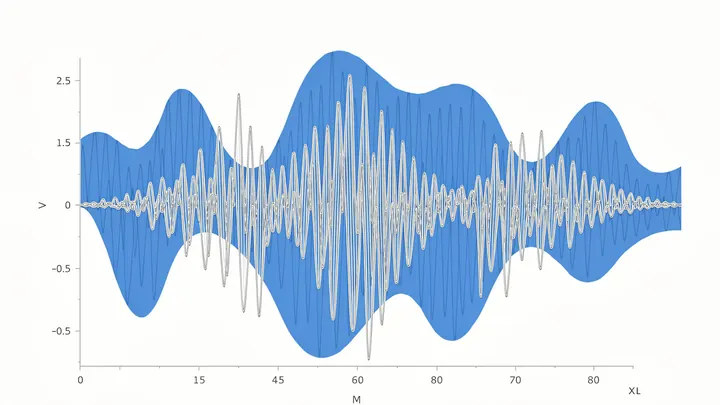
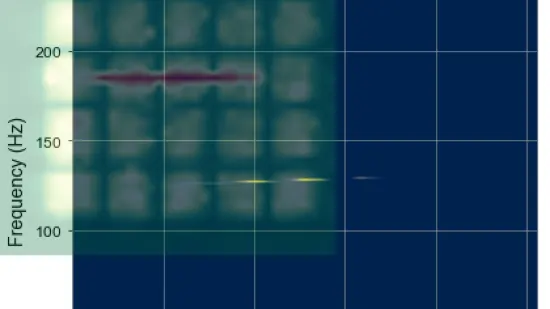
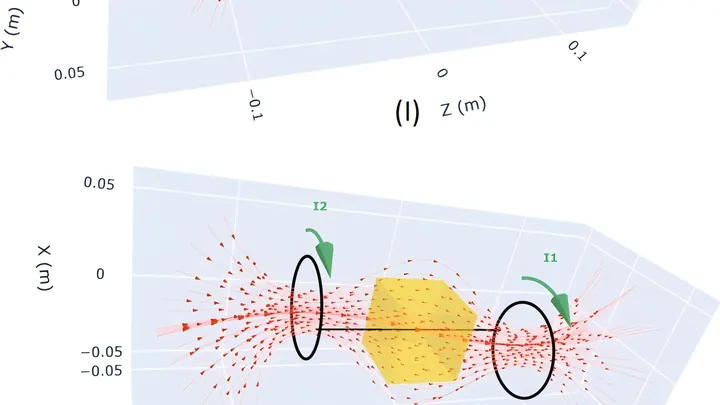
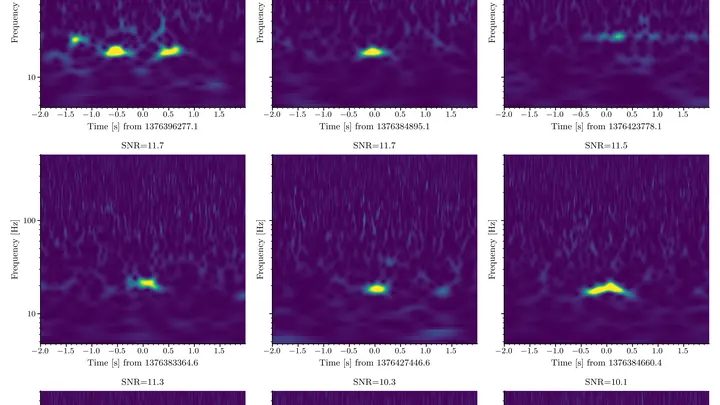
Gravitational wave detectors like LIGO are incredibly sensitive, but that sensitivity comes at a price: they are constantly bombarded by noise from seismic vibrations, thermal fluctuations, and even quantum effects. This noise can mimic or mask genuine signals. Noise filtering is the art of separating the faint gravitational wave signal from this cacophony. Traditional methods use frequency filters and matched filtering, but modern approaches increasingly employ machine learning to identify and remove noise artifacts, known as 'glitches'.
History
Noise filtering has been a challenge since the first gravitational wave detectors were built in the 1960s. The modern era of machine learning for glitch classification began around 2016, with the Gravity Spy project using citizen science and neural networks to classify glitches in LIGO data.
How it works
The detector output is a continuous stream of data with noise and occasional signals. Noise filtering typically involves several stages: first, known noise sources (like seismic waves or power line hum) are removed using adaptive filters. Then, matched filtering correlates the data with theoretical waveforms to find signals. For glitches — short, non-stationary noise bursts — machine learning classifiers are trained to recognize their signatures and flag them for removal. Some AI methods, like the 'shadow theater' approach mentioned in the corpus, can even generate synthetic glitches to train better classifiers.
In practice
Effective noise filtering is essential for every detection claim — it ensures that what looks like a signal isn't just a noise artifact. It also improves the sensitivity of searches for continuous waves and stochastic backgrounds.
Fun fact
Some glitches in LIGO are caused by airplanes flying overhead, and the noise they create can be so distinctive that machine learning classifiers can identify the specific aircraft model.
A noisy café. You're trying to make out two quiet conversations: one from the table by the window (black hole mergers), the other a barely audible whisper from the far corner (echoes of the universe's birth). But the hiss of the espresso machine and street noise (detector jitter) drown everything out. New work teaches a computer to separate these sounds.
In 2019, the LIGO facility recorded a gravitational waves, a ripple in the fabric of spacetime, whose time-frequency map resembled a strange comb. Each such signal from a black hole merger leaves a unique pattern, like a fingerprint.
Active noise cancellation creates 'anti-sound' to neutralize noise. But ordinary systems are blind: they don't know where the sound is coming from. In rooms with an echo, it's like boxing with a blindfold on — you're canceling blindly.
The Universe is a giant concert hall, where instead of walls and balconies, invisible clouds of dark matter float. This architectural ensemble is not static: it refracts and scatters the 'music' rushing through it — gravitational waves from merging black holes.
Gravitational waves from merging black holes sound like bass chords, pulsars tap out a rhythm, and the cosmic microwave background carries echoes of the Big Bang. But there is a silent player — dark matter, whose presence is betrayed only by gravitational effects.
The LIGO and Virgo detectors catch gravitational waves from mergers of black holes and neutron stars. But among the cosmic signals, their sensitive arms are constantly crossed by shadows — short-lived noise artifacts, glitches, that stage a true shadow theater.
The universe is permeated by invisible mass, dark matter, whose existence was first proposed by Fritz Zwicky in the 1930s, based on his observations of galaxies moving in clusters.
A translator records a multi-hour conversation. If they try to hold the entire dialogue in their head, they're bound to garble details by the end. That's roughly how gravitational observatories work: they listen to the 'conversation' of massive bodies spiraling together.
Gravitational telescopes listen to the cosmic 'music' — gravitational waves from distant cataclysms. But their recordings are full of 'scratches' — short terrestrial glitches. Previously, assessment was done over the entire track at once, and faint clicks were lost.
A rock concert blares at full volume, and you're trying to catch your friend's whisper. That's roughly how radio detectors feel when they pick up signals from cosmic dust particles. A particle slams into the atmosphere and spawns an air shower, a cascade of millions of secondary particles, and this shower emits a short radio pulse.
Two dots on the surface of a balloon: that's all the reference points you have when trying to figure out how it inflates. That's roughly how cosmologists reconstruct the history of the universe's expansion.
When black holes collide, the very fabric of spacetime trembles. That rumble, gravitational waves, gets picked up by detectors, but decoding the signal used to take hours of computer simulation.
A pot of water sits on the stove. When the water boils, it suddenly turns into steam: that's a phase transition. In the first moments after the Big Bang, the Universe underwent something similar, but it wasn't liquid and gas that changed, but fundamental fields.
In the headphones used to listen to a distant orchestra, there is an occasional crackle. The crackle can be so loud that it drowns out the music or even blends in with it.
The Taiji detector, planned for launch into space, will pick up the trembling of space caused by collisions of enormous black holes. But its data is frequently marred by random bursts, like static crackling in a radio receiver.
When a massive star dies and collapses into a supernova, a neutron star is born — a city-sized sphere with the Sun's mass. Its matter is so compressed that a teaspoon weighs more than Mount Everest. Physicists are trying to learn the "recipe" of this matter — the equation of state that explains how matter behaves under extreme pressure.
The proton is not a smooth ball but a tangle of quarks and gluons in constant motion, exchanging energy. Finding out exactly how energy, pressure, and spin are distributed inside it is impossible to do directly: measurements yield only sparse, noisy points. It's like trying to guess a face from a few blurry photos taken from different angles.
Detectors of gravitational waves usually compare the signal with ready-made templates, as if searching for a familiar melody in the noise. This allows them to track only known scenarios, such as black hole mergers.