Nuclear Reaction Defines the Abyss for Black Holes express
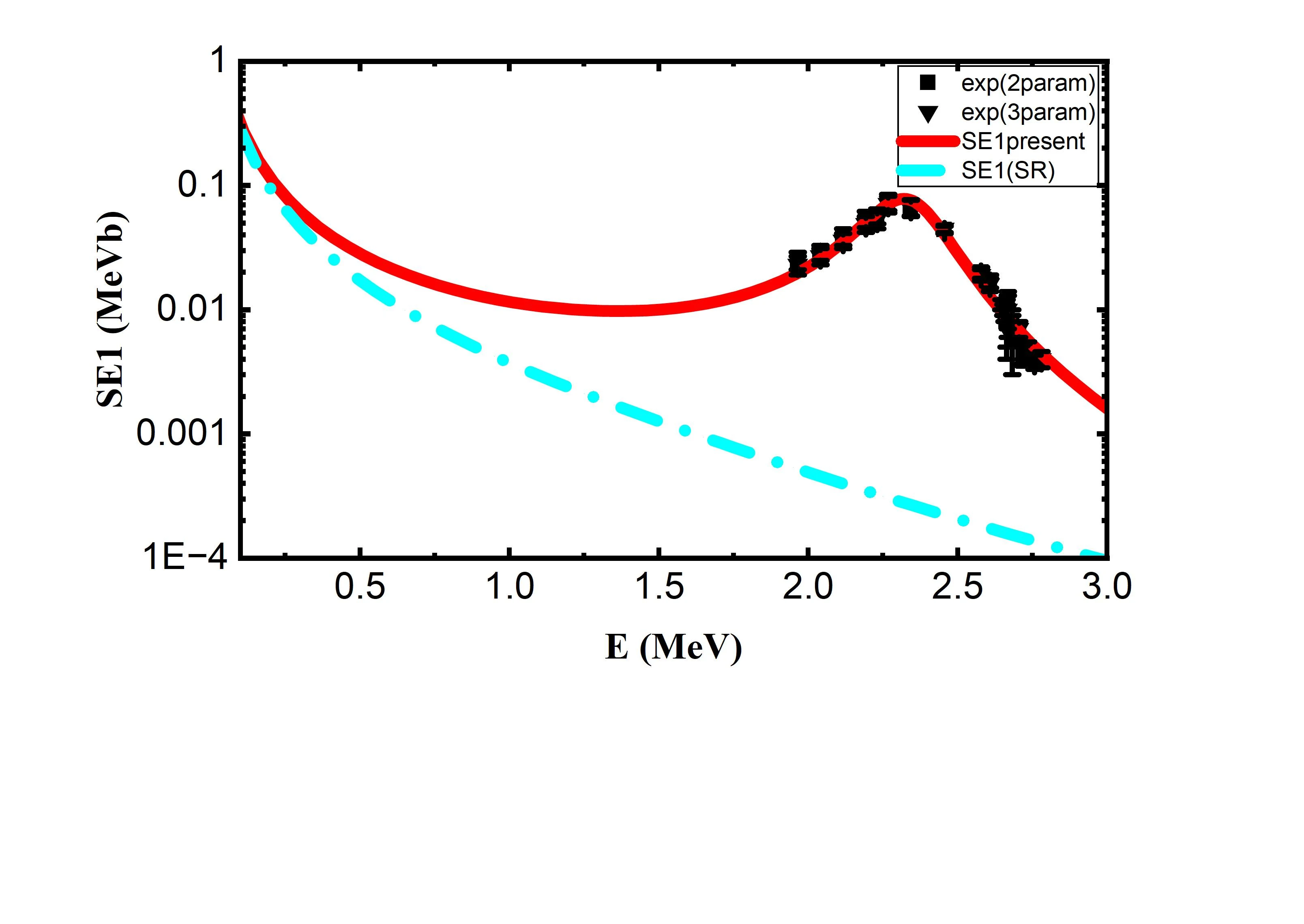
Gravitational waves have laid bare an abyss: black holes with masses between 60 and 120 Suns are almost never born. This chasm is carved out by pair-instability supernovae — explosions that leave not even a speck of the star. Whether the star falls into the abyss or survives on its edge depends on the reaction of carbon with helium, which governs the core composition.
This process is leisurely: even a tiny speedup would turn all carbon into oxygen, depriving the universe of life. Fred Hoyle first realized the reaction is tuned exquisitely finely, otherwise carbon would be hundreds of times scarcer. New data have narrowed the possible rates by nearly half. It turns out the edge of the abyss lies farther out than thought: the lightest ordinary black holes start at 61–75 solar masses. A shift of just a couple percent, and the boundary leaps by tens of masses.
Original abstract
as written by the authors arXiv:2605.07027v1
Gravitational-wave observations have renewed interest in the black-hole mass gap and in the maximum mass of first-generation black holes below its lower edge. The \(^{12}{\rm C}(\alpha,\gamma)^{16}{\rm O}\) reaction plays a central role in this problem because it determines the carbon-to-oxygen ratio after core-helium burning and thereby affects the later evolution of massive stars toward pulsational pair instability and pair-instability supernovae. Recent attempts to constrain \(S(300~{\rm keV})\) from gravitational-wave population inferences face important limitations, because the lower edge of the black-hole mass gap is not directly measured. It is inferred model dependently from assumptions about stellar evolution, metallicity, mass loss, rotation, binary evolution, hierarchical mergers, selection effects, priors, and the adopted population model. Therefore, values of \(S(300~{\rm keV})\) inferred from black-hole populations must remain consistent with independent nuclear-physics constraints. In this work we reanalyze the low-energy \(^{12}{\rm C}(\alpha,\gamma)^{16}{\rm O}\) \(S\) factor using updated information on the subthreshold \(1^{-}\) and \(2^{+}\) ANCs and on the ground-state ANC of \(^{16}{\rm O}\), together with direct capture data. These constraints favor a lower \(S(300~{\rm keV})\) than the older central evaluation and disfavor very large values required by some black-hole-population interpretations. Using the resulting ANC-constrained \(S(300~{\rm keV})\) range and the transformed relation between this quantity and the lower edge of the pair-instability mass gap, we estimate \[ \frac{M_{\rm BH}}{M_\odot}\simeq 61\text{--}75 . \] Thus, the present nuclear-physics constraints favor a relatively high lower edge of the first-generation black-hole mass gap.
The carbon-helium reaction is so slow that the slightest acceleration would deprive the universe of carbon-based life.