Nuclear Reaction Draws the Line for Black Holes express
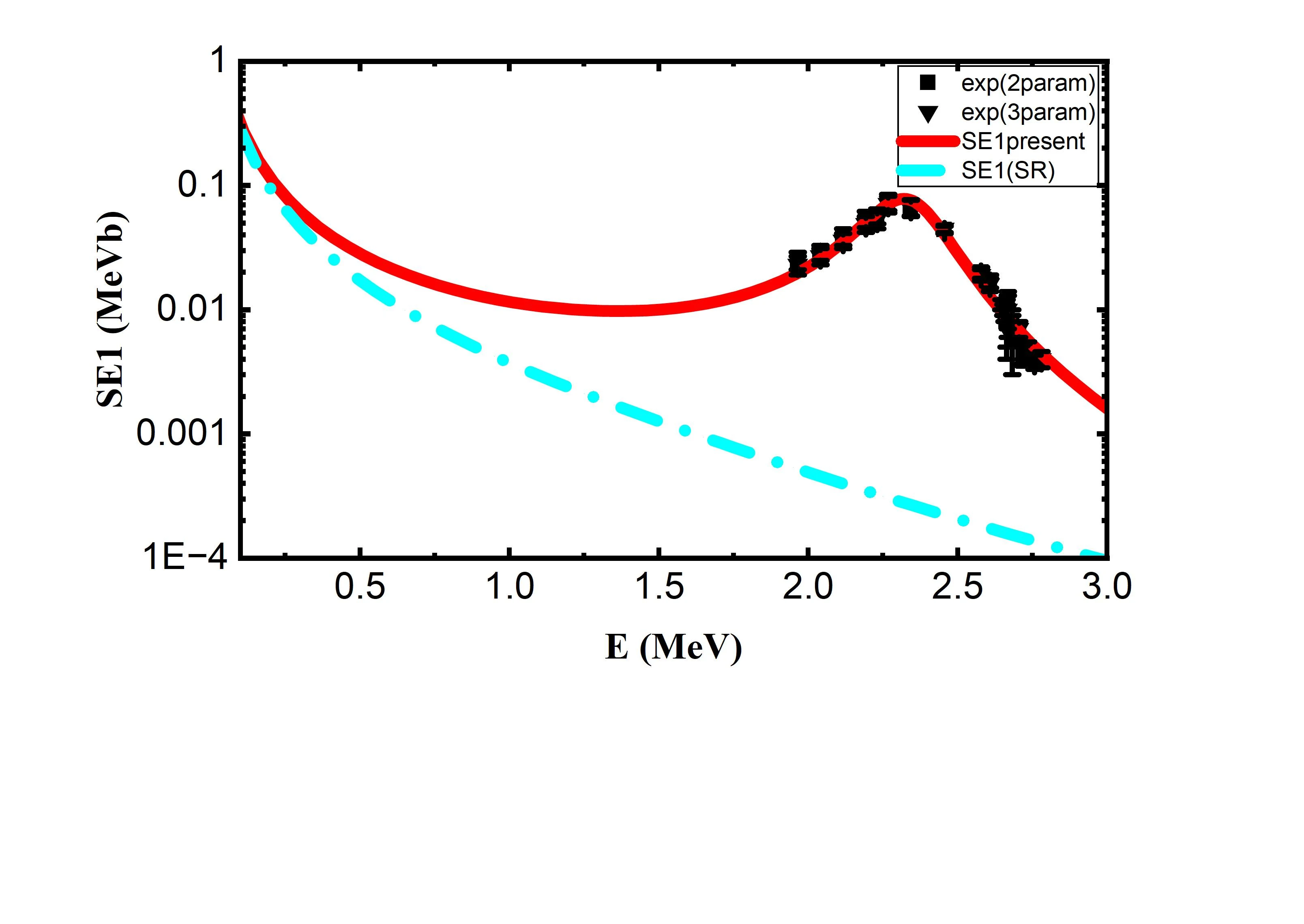
Gravitational waves — ripples in spacetime predicted by Einstein — have exposed an abyss: black holes with masses between 60 and 120 solar masses are almost never born. This gap in the mass distribution is carved out by pair-instability supernovae — catastrophic explosions of massive stars in which electron-positron pairs are born in the core, and the star is completely destroyed, leaving not even a speck of dust. Whether a star ends up in the gap or survives at its edge is decided by the nuclear reaction of carbon with helium (the alpha process), which governs the composition of the stellar core in the late burning stages. It is precisely its rate that determines how much carbon remains in the core before collapse, and thus whether the star will follow the path of pair instability or form an ordinary black hole.
This process is leisurely: even a tiny acceleration would turn almost all carbon into oxygen before the final stages, and then carbon chemistry — and with it life as we know it — would never have arisen in the Universe. Fred Hoyle was the first to realize that the reaction is tuned with extreme precision: he calculated that if its rate were slightly different, there would be hundreds of times less carbon in stars. New laboratory data, obtained by studying the reverse reaction (photodisintegration of oxygen-16), have narrowed the uncertainty in the rate by almost half. It turns out that the edge of the gap lies farther than previously thought: the lightest ordinary black holes (i.e., those not arising from pair instability) start at 61–75 solar masses. This is an extremely sensitive result: a shift in the reaction rate of just a couple of percent — and the boundary of the gap flies off by tens of masses, noticeably changing the whole picture of black hole birth.
The carbon-helium reaction is so slow that the slightest acceleration would deprive the Universe of carbon-based life.